320km of Desert Grit: Racing the Sun Across Saudi Arabia
The clock reads 6:15 a.m. in AlUla. The air carries that sharp, pre-dawn desert bite that reminds you exactly where you are. To the east, the sun hasn't yet breached the horizon, but the silhouette of ancient sandstone cliffs looms over us like giants. My partners for this suffer-fest, Alex Paton and Ollie Bridgewood from GCN, aren't just here for a leisurely spin. We have a 320-kilometer line drawn across the map of Saudi Arabia, stretching from this desert oasis to the coastal city of Umluj. The mission? Reach the Red Sea before the sun dips below the water. We have ten hours. The math is simple, but the reality of the desert rarely is.
The Brutal Geometry of the Desert
Starting a 300km+ ride requires a specific kind of mental compartmentalization. You can't think about the finish line when you're only five kilometers in; you have to think about the rhythm. We rolled out on Pinarello Dogma F bikes, machines built for exactly this kind of high-speed endurance. Alex opted for the Princeton CarbonWorks Max 7580 wheels, a deep-section choice that signals one intention: riding on the front and smashing the wind.
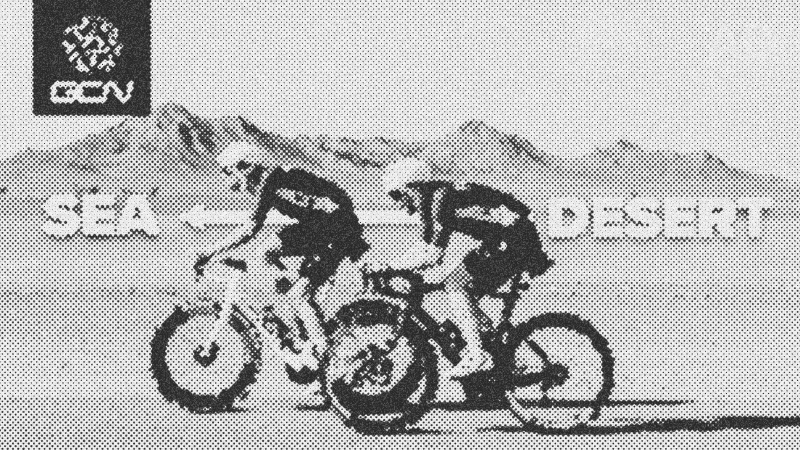
In these early hours, the desert feels deceptively welcoming. The AlUla bike path provides a smooth ribbon of tarmac through the sand, and the scenery is a rotating gallery of archaeological heritage and agricultural pockets. But there’s a shadow over the morale. Alex and Ollie have history with long rides in the heat; last time they attempted 300km together, Alex hit a wall so hard he ended up in tears. This journey isn't just about the distance; it's a redemption arc against the climate.
Fueling the Machine
You don't survive ten hours at a 32km/h average without a meticulous fueling strategy. Alex was targeting roughly 90 grams of carbohydrates per hour, relying heavily on Precision Fuel & Hydration chew bars and gels. When the body burns through 5,000 calories before the day is even done, the "pudding trolley" becomes your best friend.
By the three-hour mark, we had covered 140 kilometers, averaging a staggering 37 km/h. On paper, we were flying. But the desert has a way of balancing the scales. As soon as the route turned, we were no longer dancing with a tailwind. We were staring down the barrel of a 100-kilometer continuous climb, and the wind had decided to push back with everything it had. Our speed plummeted from 37 km/h to a grueling 28 km/h. This is where the mental toughness of an outdoor athlete is forged—not in the easy miles, but in the crawling ascent when the horizon never seems to move.
Landscapes in Flux
One of the most striking elements of crossing Saudi Arabia is the sheer diversity of the terrain. We transitioned from the golden sandstone of AlUla into surreal, black volcanic lava fields. These ancient basalt formations felt more like Lanzarote or Tenerife than the stereotypical dunes of the Middle East. It’s a rugged, inhospitable beauty that demands respect.
As we ground our way up the 100km incline, the morale fluctuated. We hit a small town looking for a bakery, desperate for a hit of sugar and a break from the wind. What we found was a translated sign that led to a small shop rather than a boulangerie, but it didn't matter. Icy water and Pringles became the high-octane fuel we needed to reset. At this stage, Ollie was looking strong, while Alex was entering that dark place where the wheels start to feel square. The dynamic of a duo in the wild is vital; when one person flags, the other takes the wind.
The Final Descent to the Red Sea
After what felt like an eternity of climbing, we reached the "notch" in the mountains. The descent was a lifeline. We dropped out of the volcanic highlands and into luscious green valleys, a sudden explosion of life that felt entirely misplaced in the arid expanse. But the wind wouldn't let us go. Even on the downhill sections, we were fighting a headwind that threatened to derail our sunset deadline.
With 30 kilometers to go, the Red Sea finally appeared as a shimmering blue line. The sight of the coast acts like a shot of adrenaline. Every ache in the lower back and every hot spot on the feet fades when the objective is in sight. We rolled into Umluj with the sun still hanging stubbornly in the sky, achieving an overall average of 32 km/h despite the 1,200 meters of elevation and the brutal air resistance.
The Lesson of the Long Road
Standing on the sand, lifting the bikes in a triumph that felt heavier than it should have, the exhaustion was total. Pushing boundaries in nature isn't just about the physical stats—it's about the transformation that happens when you're 250 kilometers deep and have to find a way to keep the pedals turning. The desert didn't give us anything; we had to take every kilometer.
This ride was a reminder that the world is far more diverse than the maps suggest. From the quiet bike paths of AlUla to the punishing lava fields and finally the salt air of the Red Sea, the journey was a masterclass in endurance. Nature’s challenges are the ultimate mirror. They show you exactly who you are when the wind is in your face and the sun is going down. We found ourselves out there, somewhere between the sand and the sea.
- AlUla
- 13%· places
- Red Sea
- 13%· places
- Umluj
- 13%· places
- Alex Paton
- 7%· people
- GCN
- 7%· tv shows
- Other topics
- 47%
Our Epic 320km Desert Challenge | A Race Against Time
WatchGlobal Cycling Network // 33:36

The Global Cycling Network puts you in the centre of the action: from the iconic climbs of Alpe D’Huez and Mont Ventoux to the cobbles of Flanders, everywhere there is road or pavé, world-class racing and pro riders, we will be there bringing you action, analysis and unparalleled access every week, every month, and every year. We show you how to be a better cyclist with our bike maintenance videos, tips for improving your cycling, cycling top tens, and not forgetting the weekly GCN Show. Join us on YouTube’s biggest and best cycling channel to get closer to the action and improve your riding! Welcome to the Global Cycling Network!