Sand, Stone, and Suffering: Gravel Mastery in the AlUla Desert
The sun-drenched horizon of northwest Saudi Arabia isn't just a backdrop; it’s a living, breathing adversary. I’ve always said the mountains demand everything, and the desert is no different. We find ourselves in AlUla, a region that only cracked open its doors to the world in 2019. It is massive, rugged, and feels more like the set of a science fiction epic than a cycling destination. Starting in the mud-brick labyrinth of the Old Town AlUla, known as Adira, the air smells of date palms and ancient dust. This isn't your weekend fire-road jaunt. This is an oasis built on a hidden aquifer, a lush anomaly surrounded by millions of years of geological history.
Ancient Echoes at the Hegra Necropolis
Pushing twenty kilometers into the burn, we hit Hegra, the first UNESCO World Heritage site in the kingdom. It’s impossible not to feel small here. The Nabataeans carved over a hundred monumental tombs directly into the sandstone cliffs two millennia ago. While Petra has gone mainstream, Hegra retains a raw, untouched energy. The rock formations here—mushroom-shaped sentinels sculpted by uneven erosion—remind me of the high deserts in Utah, yet the cultural weight is entirely different. Navigating the soft sand between these structures requires more than just fitness; it requires a deep respect for a civilization that thrived in a landscape this inhospitable.
Tactical Gear for the Deep Desert
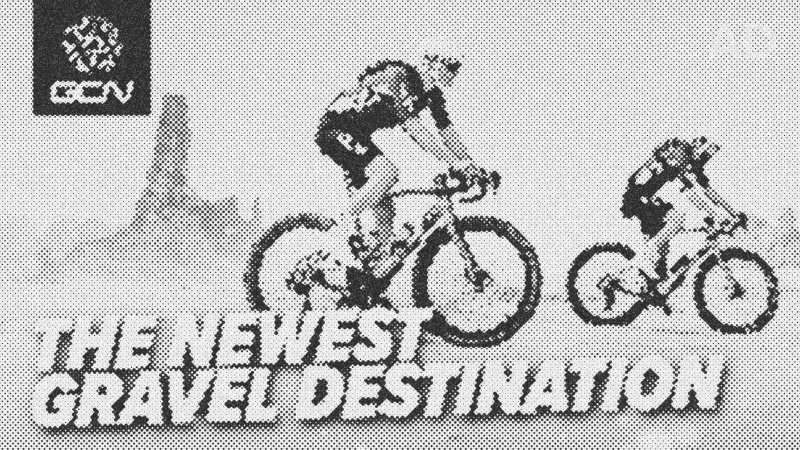
When the terrain turns to powder, your gear is the only thing keeping you upright. Alex Paton and Ollie Bridgewood tackled this loop on the Pinarello Grevil F, a machine designed for exactly this brand of chaos. In a place where the sand can swallow a thin tire whole, they opted for Pirelli Cinturato rubber measuring a beefy 52mm. That extra volume isn't a luxury—it’s a survival tool. Paired with Princeton 4540 Grit wheels, the setup allowed them to float over sections that would have stalled a lesser bike. Even then, the desert has its ways of humbling you. One wrong line into a soft pocket and you're unclipped, struggling to find traction in a world of orange dust.
The Gravity of Elephant Rock
As we pushed toward Elephant Rock, or Jabal AlFil, the physical toll of the heat began to set in. Standing 52 meters tall, this monolithic sandstone beast was carved by nothing but wind and time. We took a moment at a local orange farm to refuel, wary of the Arabian Cobra and Arabian Horned Viper that call these oases home. The contrast here is jarring: one minute you’re dodging venomous neurotoxins in a lush grove, and the next you’re staring at a geological giant that makes your 100-kilometer goal feel like a pittance.
Vertical Redemption on the Harrat Climb
The climax of this journey wasn't found in the flats, but in the vertical. The Harrat Viewpoint is a legendary piece of tarmac that serves as the finale for the AlUla Tour. We’re talking 25% gradients that make your lungs scream and your front wheel lift. It is a brutal, unforgiving wall of heat and gravity. Reaching the Harrat Viewpoint at sunset, looking down over the vast basalt plateau, the struggle finally makes sense. You don't come to AlUla for an easy ride. You come to see if you can handle the scale of a landscape that doesn't care if you finish. The lesson is simple: nature doesn't move for you; you move for it.
- AlUla
- 11%· places
- Harrat Viewpoint
- 11%· places
- Hegra
- 11%· places
- Alex Paton
- 6%· people
- AlUla Tour
- 6%· events
- Other topics
- 56%
Riding Gravel In Alula Blew Our Minds
WatchGlobal Cycling Network // 25:22

The Global Cycling Network puts you in the centre of the action: from the iconic climbs of Alpe D’Huez and Mont Ventoux to the cobbles of Flanders, everywhere there is road or pavé, world-class racing and pro riders, we will be there bringing you action, analysis and unparalleled access every week, every month, and every year. We show you how to be a better cyclist with our bike maintenance videos, tips for improving your cycling, cycling top tens, and not forgetting the weekly GCN Show. Join us on YouTube’s biggest and best cycling channel to get closer to the action and improve your riding! Welcome to the Global Cycling Network!