The Ashes of Cusco: Betrayal and Rebellion in the Land of the Sun
The year 1535 opened with an illusion of peace that masked a rot within the foundations of the newly established Spanish order in Peru. In the heart of Cusco, the young Manco Inca sat upon a throne that felt increasingly like a gilded cage. Installed by Francisco Pizarro as a puppet following the execution of Atahualpa, Manco initially played the role of the compliant collaborator. He performed the ancient religious rites, such as the plowing festival where lords in silver cloaks waited for the sun’s first rays to chant in harmony. For a brief moment, it appeared that the Inca Empire might persist as a vassal state, preserving its cultural soul under the shadow of the Spanish crown. Yet, the primary sources whisper a different story—one of escalating degradation and a fundamental misunderstanding of the people the Spaniards sought to rule.
The Anatomy of an Insult
The collapse of this fragile peace was not driven by grand strategy, but by the base impulses of the men left to govern the capital. While Francisco Pizarro focused on founding his new coastal capital at Lima, he left his younger brothers, Juan Pizarro and Gonzalo Pizarro, in charge of Cusco. These were not diplomats; they were hard men from the rough frontier of Extremadura who viewed the Inca nobility with utter contempt. They began a systematic campaign of humiliation against Manco, looting his palace and treating him like a common servant. Most devastatingly, the Pizarro brothers shattered the sacred social fabric of the Inca by targeting their women. Gonzalo became obsessed with Manco’s wife and sister, Cura Ocllo, demanding her for himself. When Manco attempted to offer gold and silver to protect her, Gonzalo allegedly retorted that while the metal was fine, the woman was what he truly required. This was not merely lust; it was a calculated stripping of Manco’s dignity before his own people.
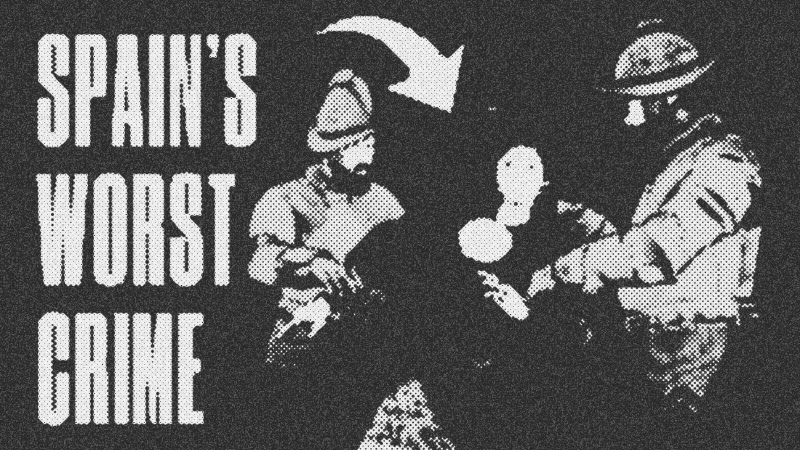
By the autumn of 1535, the mask of the submissive puppet finally cracked. In a secret gathering of his kinsmen, Manco delivered a speech that survives in chroniclers' accounts as a searing indictment of the "bearded ones." He spoke of their insatiable greed, noting that if all the snow turned to gold, it would not satisfy them. He realized that the Spaniards did not see the Inca as subjects to be governed, but as animals to be looted. This realization served as the catalyst for a grand conspiracy. Manco began coordinating with the high priest Villac Umu to stockpile weapons and food across the provinces. They used the Quipu—the intricate knotted strings of the Inca administration—to send silent, coded calls for revolution across the Andes. The plan was as simple as it was bold: wait for the rainy season to end, gather a massive host in the sacred valley, and strike while the Spanish forces were divided.
The Great Escape and the Gathering Storm
Manco’s first attempt at rebellion ended in disaster. Betrayed by a servant, he was captured and dragged back to Cusco in chains. The ensuing period of his captivity remains one of the darkest chapters of the conquest. Spanish accounts admit that guards urinated on the Sappa Inca, spat in his face, and even burned his eyelashes with candles to extort more gold. This level of depravity suggests a total breakdown of military discipline among the Pizarros' rank and file. However, the arrival of Hernando Pizarro from Spain brought a temporary shift. Seeking to restore order and extract wealth more efficiently, Hernando released Manco and treated him with superficial courtesy. Manco, proving himself a shrewd judge of Spanish character, played on Hernando's greed. He claimed that a massive golden statue of his father, Huayna Capac, lay hidden in the hills and requested permission to go and retrieve it. Lured by the prospect of such a prize, Hernando allowed the Inca to leave the city on the Wednesday before Easter in 1536.
Manco did not find a statue; he found an army. At the muster point of Calca, the mobilization was breathtaking. Contemporary estimates suggest upwards of 100,000 warriors had gathered, a testament to the Inca's enduring genius for organization. By Easter Saturday, the hills surrounding Cusco were blanketed by a "black carpet" of troops by day and thousands of campfires by night that mimicked a clear sky filled with stars. The 200 Spaniards trapped inside the city, along with their few hundred native allies, looked out upon a sea of enemies. On May 6, 1536, the assault began. The Inca utilized a terrifying new tactic: they heated stones in campfires, wrapped them in cotton, and used slings to launch them onto the thatched roofs of the city. Cusco became a furnace. The Spaniards were pushed back into the central square, blinded by smoke and deafened by the roar of the flames and the war cries of the attackers.
The Bloodied Ramparts of Sacsayhuamán
With the city in flames, the survival of the Spanish presence in Peru hinged on the fortress of Sacsayhuamán. This massive citadel, overlooking the city with its cyclopean stone walls, had been captured by the Inca and was now raining missiles down on the Spanish position in the square. Hernando Pizarro realized that if they did not retake the fortress, they would perish "like hogs." In a desperate, Helm's Deep-style charge, Juan Pizarro led 50 horsemen through the enemy lines and up the steep slopes. The fighting was savage. Juan, who had been hit by a slingshot the previous day and could not wear his helmet due to his swollen jaw, was struck in the head by a massive stone. The blow proved fatal, though he lived long enough to dictate a final will that, in a final act of spite, disowned the daughter of the Inca princess he had kept as a concubine.
The siege turned into a brutal war of attrition. Inside the citadel, the Inca commander Titu Cusi Gualpa fought with the ferocity of a lion, reportedly smashing the heads of his own men if they showed signs of faltering. When the Spanish finally scaled the walls using European-style ladders, the commander, rather than surrender, stuffed earth into his mouth in a gesture of defiance, covered his head with his cloak, and leaped to his death. The fall of the fortress saw the Spanish put 1,500 defenders to the sword, yet the siege of the city itself dragged on for months. This was an existential struggle that lacked the chivalric norms sometimes found in European warfare. Prisoners on both sides were routinely mutilated; the Spaniards frequently cut off the hands of Inca captives before releasing them to spread terror among Manco’s ranks.
A Triple Threat and the Jungle Retreat
As 1536 turned to 1537, the conflict expanded into a complex three-way struggle. The relief columns sent from Lima by Francisco Pizarro were systematically annihilated in the mountain passes by the brilliant Inca general Quizo Yupanqui, who used the terrain to drop boulders on the Spanish cavalry. Encouraged, Quizo marched on Lima itself. However, the flat coastal plain stripped the Inca of their tactical advantage. In a reckless charge, Quizo was killed, and the Inca forces, lacking their leader, dispersed. Meanwhile, a third player re-entered the stage: Diego de Almagro, Pizarro’s former business partner. Almagro returned from a disastrous expedition to Chile bitter and empty-handed. He saw the chaos in Cusco as his opportunity to seize power from the Pizarros.
Manco attempted to negotiate with Almagro, hoping to exploit the rift between the Spaniards. However, the deep-seated distrust between the two cultures proved insurmountable. After a bizarre episode where Manco’s men captured an Almagro messenger and pelted him with guava fruit from slingshots—a strange, almost ritualistic humiliation—the possibility of an alliance vanished. Manco realized that even if the Spaniards hated each other, they would always unite against the Inca. Choosing survival over a suicidal final stand, Manco withdrew his forces from the highlands. He retreated deep into the sacred valley, across the misty mountains and into the rainforest of Vilcabamba. There, in the shadow of the jungle, he established an Inca state-in-exile, a defiant remnant that would haunt the Spanish for decades.
The Weight of the Ruined Sun
The siege of Cusco ended not with a decisive victory, but with a transformation of the conflict. Diego de Almagro rode into the charred remains of the capital not as a liberator, but as a conqueror who immediately imprisoned Hernando and Gonzalo Pizarro. He crowned a new puppet, Paullu Inca, Manco’s half-brother, who was far more inclined to collaborate for the sake of survival. The sun-drenched city that had been the navel of the world was now a place of ruins, its golden temples stripped and its thatched roofs ash. The lesson for us today lies in the tragic inevitability of the escalation. When the Spanish chose to humiliate Manco rather than govern through him, they traded a stable vassalage for a generation of bloodshed. The ruins of Cusco whisper of the high cost of greed and the resilience of a culture that, even when driven into the mist of the jungle, refused to let its fire be entirely extinguished. The struggle for Peru was no longer just a conquest; it had become a bitter civil war between Spanish factions and a guerrilla resistance that would define the Andean world for a century to come.
- Atahualpa
- 4%· people
- Calca
- 4%· places
- Chile
- 4%· places
- Cura Ocllo
- 4%· people
- Cusco
- 4%· places
- Other topics
- 78%
The Most Unbelievable Siege You've Never Heard Of
WatchThe Rest Is History // 1:04:18

Take a deep dive into History’s biggest moments with Tom Holland & Dominic Sandbrook. Explore the stories of History’s most brutal rulers, deadly battles, and world-changing events. From the rise and fall of the Roman Empire, the Nazi conquest of Europe, and Hitler’s evil master plan for world domination, to the French Revolution, the sinking of the Titanic, or the Norman Conquest of England in 1066, Tom and Dominic bring the past to life with gripping storytelling and expert analysis, as they unpack the high-drama moments that shaped our world.