The Collision of Hollywood and High Politics: Insights from Cheryl Hines
The Tribal Instinct and the Architecture of Groupthink
When we look at the modern political landscape, we aren't just looking at a clash of ideologies; we are witnessing the raw mechanics of human tribalism. Joe Rogan and Cheryl Hines open their dialogue by dissecting the visceral terror that accompanies rejection from one's social circle. In Hollywood, this manifests as a rigid adherence to specific progressive norms. In Washington D.C., it manifests as partisan warfare. This tribal instinct is not merely a social preference; it is a biological survival mechanism. For most of human history, being cast out of the tribe meant certain death. Today, that death is social and professional, but the brain processes the anxiety with the same intensity.
This fear creates a vacuum where critical thinking used to reside, replaced by what we commonly call groupthink. When individuals are more concerned with maintaining their standing within a group than with the objective truth, they begin to agree to increasingly radical or illogical premises. Rogan argues that both the political right and left have segments that have transitioned from traditional political parties into something resembling a cult. These factions, though representing perhaps only 10% of the population on either side, exert a disproportionate influence because they are the loudest and the most punitive toward dissenters. For someone like Hines, transitioning from the relatively predictable—if competitive—world of entertainment into the crosshairs of a presidential campaign, the shift was jarring. She describes a "feeling of doom" that arises when the public and the media stop treating you as an individual and start treating you as a symbol to be demolished.
The Professionalization of Character Assassination
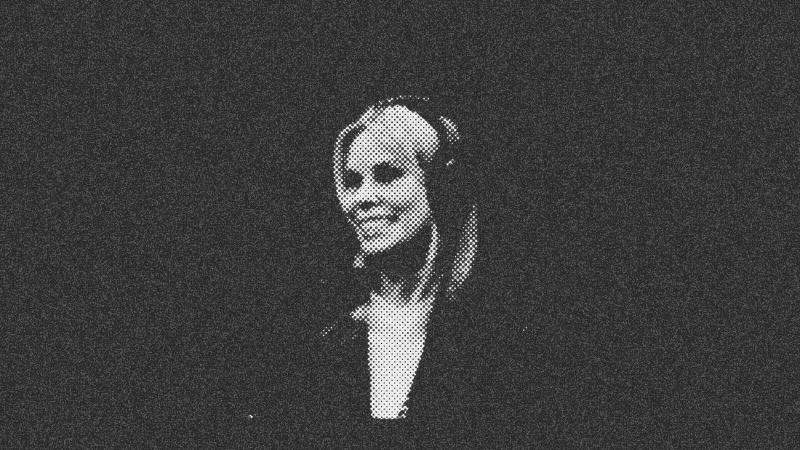
A recurring theme in this exploration is the sheer meanness of the political machine. In the entertainment industry, while competition for roles is fierce, there is rarely a concerted effort to systematically destroy a peer's entire life and reputation. Politics operates on a different set of rules. As soon as Robert F. Kennedy Jr. announced his candidacy, the machinery of opposition research and narrative control began to churn. Hines reflects on the shocking lack of charity in political discourse, where statements are stripped of context and lies are disseminated with professional precision.
Rogan points out that this viciousness isn't just directed at opponents; it's used as a tool of internal discipline. He cites the dynamic between Kamala Harris and Joe Biden during the 2020 primaries, where accusations made during a debate were later dismissed as mere tactical maneuvers. This creates a surreal environment for the uninitiated. To a civilian or even a seasoned actress, a public attack on one’s character is a deeply personal event. In the political bubble, it is often viewed as a chore—a necessary, if unpleasant, part of the job description. This disconnect highlights a fundamental flaw in the way leaders are chosen: the process selects for those with "rhino skin" who can withstand or even enjoy the combat, rather than those with the most thoughtful policies.
The Historical Contrast in Debate Culture
The conversation takes a nostalgic turn, looking back at the 2012 debates between Barack Obama and Mitt Romney. Rogan notes that while they disagreed on almost everything, the energy was civil. They debated policy rather than the inherent worth of their opponent. The shift toward the current "insult artist" style of debating—pioneered largely by Donald Trump—has changed the expectations of the electorate. Now, candidates are expected to have catchphrases and nicknames for their rivals. This performance art aspect of campaigning distracts from the core responsibility of the office: governance. When the campaign becomes a series of viral clips and "gotcha" moments, the nuanced discussion of economics, foreign policy, and health becomes impossible.
The Fragility of Scientific Consensus and Public Trust
One of the most significant portions of the discussion revolves around the erosion of trust in institutional science. Rogan admits to a personal evolution, moving from a position of blind faith in academic and university experts to one of deep skepticism following his experiences during the pandemic. He highlights a specific instance where media outlets like CNN actively misrepresented his use of medication, characterizing a human-grade prescription as "veterinary medicine." When individuals see the media lying about their personal experiences, it acts as a catalyst for a broader questioning of all official narratives.
This leads to a deep dive into the work of Robert F. Kennedy Jr., particularly his book The Real Anthony Fauci. Rogan describes the book as a meticulously footnoted indictment of a system that he believes prioritizes corporate profit over public health. The central argument is that the strategies used during the pandemic—suppressing alternative treatments, promoting high-profit pharmaceuticals, and gaslighting dissenters—were not new. They were a refinement of tactics used as far back as the AIDS crisis. The fact that these claims have not been met with successful lawsuits suggests to Rogan and Hines that the underlying data is difficult to refute.
The Taboo of Vaccine Injury Discourse
The conversation touches on the highly sensitive topic of vaccine safety. Hines and Rogan discuss the frustration felt by parents who believe they have witnessed a direct correlation between vaccination and the onset of conditions like autism. In the current climate, even asking for a rational examination of these experiences is often enough to have a person labeled a "cook" or an "anti-vaxxer." This visceral reaction prevents the kind of open, shared exploration that could lead to safer medical practices. We must be able to acknowledge that while medical advancements have saved millions of lives, the industry is not infallible. Historically, many drugs and procedures—from Thalidomide to routine X-rays for pregnant women—were once considered safe before their catastrophic side effects were understood.
The Unseen Dangers of Modern Living
Beyond politics and medicine, Rogan and Hines explore the pervasive, often invisible risks of the modern world. They discuss everything from the radiation exposure during commercial flights to the potential impacts of Wi-Fi and 5G. While many health agencies claim these technologies are safe at current levels, the history of human innovation is littered with examples of "safe" technologies that were later found to be hazardous. The image of early X-ray technicians who unknowingly "cooked" their hands to calibrate machines serves as a haunting reminder of our capacity for ignorance.
This skepticism extends to the rapidly evolving field of AI. Rogan expresses a concern that AI will not only disrupt the economy through the loss of jobs but will also be used to manipulate human thought more effectively than any previous technology. He envisions a future where AI might propose a transition to Universal High Income, freeing humans from labor but potentially stripping them of their sense of purpose. Humans are biologically wired to provide for themselves and to be valued for their skills. If a machine can do everything better, the psychological toll on the human spirit could be devastating.
Nature’s Ruthless Efficiency: A Reality Check
To break the tension of political and technological dread, the conversation shifts to the natural world—a place where the rules are simple, brutal, and refreshingly devoid of gaslighting. Rogan, an avid observer of nature, describes the terrifying efficiency of predators like the Praying Mantis and the Owl. These creatures operate on biological programs that are millions of years old, unaffected by ego or social pressure. An owl’s flight is engineered for absolute silence, allowing it to snatch a hawk directly from its nest before the prey even realizes it is in danger.
This detour into the animal kingdom serves as a metaphor for the human condition. We like to think of ourselves as sophisticated and separate from these primal drives, but as the discussion on tribalism showed, we are often just as programmed as the insects we study. Whether it is the Leaf Cutter Ants building massive subterranean cities or the ruthless hierarchy of a film set, we are constantly navigating power structures and biological imperatives. Recognizing these patterns is the first step toward regaining some semblance of control over our own lives.
The Financial Underbelly of Governance
A particularly cynical but necessary part of the conversation focuses on how people in power actually accumulate wealth. Rogan points to the phenomenon of Insider Trading within US Congress. He questions how career politicians like Nancy Pelosi, earning a standard government salary, can amass net worths in the hundreds of millions. The ability of lawmakers to trade stocks in industries they regulate is a massive ethical loophole that would be illegal in almost any other profession.
This financial incentive explains why many politicians never leave office. It is not just about the desire to "move the needle" for the country; it is about the immense profitability of the position. This creates a class of "career people" who remain in power for decades, far outlasting any individual president. This "deep state"—a term often mocked as a conspiracy theory—is, in Rogan's view, simply a logical description of the permanent bureaucracy and its ties to corporate interests. Any newcomer, no matter how well-intentioned, must contend with this existing infrastructure that is designed to resist change.
Conclusion: Seeking the Truth in a World of Noise
Ultimately, the conversation between Joe Rogan and Cheryl Hines is a call for a return to authenticity and independent thought. In a world saturated with AI-generated content, paid influencers, and partisan scripts, the only defense is a relentless curiosity and a refusal to be intimidated by the "tribe." The path forward requires a willingness to be called a fool for asking the wrong questions and a commitment to looking at the data ourselves rather than accepting the interpretations of the "experts."
As Hines notes, for the most part, reality eventually resurfaces. You can squash the truth, hide it behind layers of bureaucracy, or drown it out with insults, but it remains a fixed point. Whether we are discussing the safety of our food, the integrity of our elections, or the future of our species, the goal must be to find that one truth among the many lies. It is a difficult, often lonely journey, but as this three-hour exploration demonstrates, it is the only one worth taking.
- Barack%20Obama
- 5%· people
- BBC
- 5%· companies
- Bill%20Maher
- 5%· people
- Cheryl%20Hines
- 5%· people
- CNN
- 5%· companies
- Other topics
- 74%
Joe Rogan Experience #2451 - Cheryl Hines
WatchPowerfulJRE // 3:04:40
