Fat Tires on the Tarmac: Performance Revolution or Passing Trend?
The Wide-Rubber Revolution
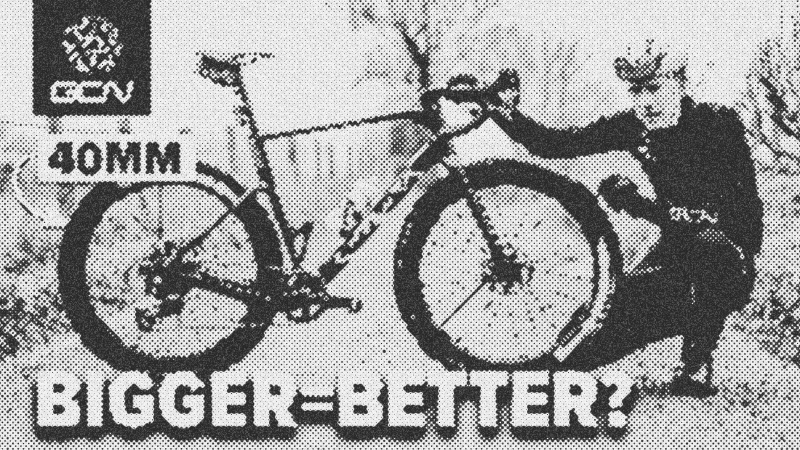
Road cycling has abandoned its obsession with needle-thin rubber. The industry shifted from 19mm "death strips" to 25mm, then 28mm, and now we face a new frontier: the Pirelli P Zero Race in a massive 40mm width. Testing these on an Orbea Terra gravel race frame reveals that the lines between surface-specific disciplines are blurring. This isn't just about fitting bigger tires; it is about rewriting the physics of speed on unpredictable terrain.
The Mechanical Advantage of Air Volume
The logic for going "fat" centers on pressure and resilience. Larger volume tires allow for significantly lower pressures, providing a cushioning effect that swallows road chatter. This volume creates a massive barrier against impact punctures and increases traction in both wet and dry corners. While purists fear the weight penalty—roughly 150g per wheel—the performance trade-off is often negligible for riders around 75kg compared to the sheer confidence gained on cracked asphalt.
Rolling Resistance and the Impedance Myth
Physics proves that at identical pressures, wider tires have lower rolling resistance due to a shorter, wider contact patch. However, real-world application changes the math. We run 40mm tires at much lower PSI than 28mm equivalents. On smooth lab drums, they might break even, but on the rugged, potholed reality of the wild, the wider tire wins. It reduces impedance losses by absorbing vibrations that would otherwise bounce the bike and rider upward, wasting forward momentum.
Geometry and the Psychological Edge
Frame design dictates the experience. A bike built for wide tires, like the Orbea Terra, utilizes a lower bottom bracket drop to compensate for the extra tire height. This keeps the center of gravity planted. Contrast this with a pure race machine like the Orbea Orca. The Orbea Orca features a 5cm shorter wheelbase and aggressive angles designed to trigger dopamine hits through twitchy, flighty responsiveness.
Final Verdict: Choosing Your Weapon
If you live for the rush of smooth, alpine tarmac, stick to narrow, high-pressure setups. They feel fast because they are flighty. But for the explorers facing cobbles, mud, or neglected backroads, the fat road bike is the clear victor. It offers a resilient, playful ride that turns brutal terrain into a playground. Nature is rarely smooth; your equipment should reflect that reality.
- Orbea Orca
- 25%· products
- Orbea Terra
- 25%· products
- Orbea
- 13%· companies
- Pirelli
- 13%· companies
- Pirelli P Zero Race
- 13%· products
- Swiss Side
- 13%· companies
I Love My Fat (Tyre) Road Bike - But Is It The Future?
WatchGlobal Cycling Network // 12:49

The Global Cycling Network puts you in the centre of the action: from the iconic climbs of Alpe D’Huez and Mont Ventoux to the cobbles of Flanders, everywhere there is road or pavé, world-class racing and pro riders, we will be there bringing you action, analysis and unparalleled access every week, every month, and every year. We show you how to be a better cyclist with our bike maintenance videos, tips for improving your cycling, cycling top tens, and not forgetting the weekly GCN Show. Join us on YouTube’s biggest and best cycling channel to get closer to the action and improve your riding! Welcome to the Global Cycling Network!