The 100-Watt World Tour: When Professional Racing Becomes Easier Than Training
The mountains don't ask for much, just everything you've got. It's in that struggle, pushing past what you thought was possible, that you truly find yourself. But occasionally, the professional cycling world serves up a reality check so jarring it makes you question the very nature of competition. This week, we saw data proving that World Tour pros can finish a race having worked less than a weekend warrior on a coffee run. From the desert flats of the Middle East to the brutal rock of the Atlas Mountains, the spectrum of suffering has never looked more lopsided.
The UAE Tour Power Paradox
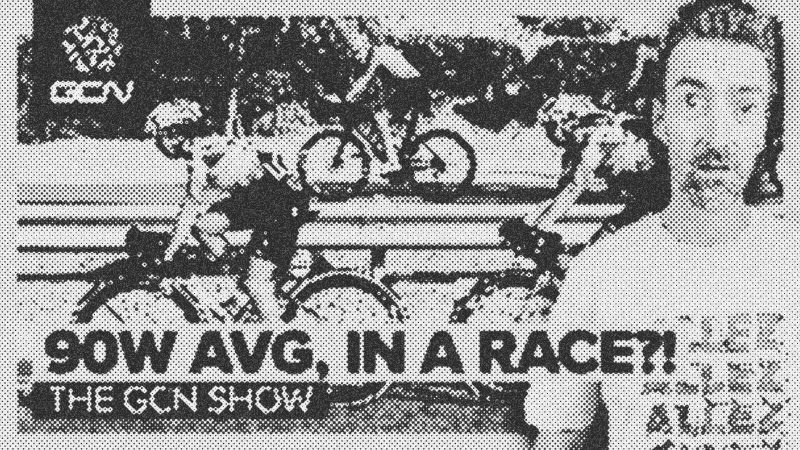
There is a common belief that every second spent in a professional peloton is a brush with physiological collapse. Marlen Reusser shattered that illusion last week. During stage two of the UAE Tour, the European champion reported an average power output of less than 100 watts. To put that in perspective, a fit amateur might burn more energy pacing themselves to the starting line than Reusser did during nearly four hours of racing.
This isn't a fluke of the power meter; it's the result of perfect conditions meeting extreme aerodynamics. When the wind is dead and the roads are as flat as a billiard table, sitting in the wheels of a large group requires almost zero effort. Pro riders are so efficient and the bunch provides such a massive slipstream that they essentially get sucked along for the ride. The danger here isn't fatigue, but the lack of it. Riders often finish these stages "drained" in a mental sense, having done less work than if they had stayed home for a recovery ride. When the pace finally ignites in the final five kilometers, the entire field has fresh legs, which inevitably leads to the high-speed chaos and crashes we saw at the finish line.
Survival in the High Atlas: Conor Dunne's Ordeal
While the road pros were coasting through the desert, Conor Dunne was finding the opposite end of the misery index at the Atlas Mountain Race. This is a 1,300 km self-supported monster through Morocco with 25,000 meters of climbing. There are no slipstreams here, no team buses, and certainly no 100-watt averages.
Dunne’s dispatch from the trail highlights the primal reality of ultra-endurance racing. It’s a contest of sleep deprivation and caloric management. While the leaders like Ole Bjorn Smith are stationary for only five hours over several days, Dunne is battling the simple physics of his own size. Pushing a massive frame over rocky Moroccan passes requires a level of fueling that defies logic. Dunne reported consuming ten eggs and two loaves of bread in a single sitting just to stay functional. In the wild, the challenge isn't the speed of the competition; it's the environment trying to break your will. Whether it's "chickens hatching" in your stomach from overeating or the sheer isolation of the desert, this is where mental toughness is forged.
The Science of Driver Misunderstanding
Away from the race results, a sobering new study published in the Journal of Accident Analysis and Prevention suggests that our primary method of communication on the road is fundamentally flawed. The research explored whether car drivers actually understand cyclist hand signals. The results were grim.
Drivers struggles to interpret anything other than a perfectly straight, horizontal arm. The traditional "bent arm" signals—often used to signal turns in tight traffic—are essentially white noise to the average motorist. More concerning is the impact of cognitive load. Drivers on a phone call, even hands-free, showed a significantly reduced ability to predict what a cyclist would do next. It reinforces a rugged truth for any outdoor athlete: you cannot assume you are seen, and you definitely cannot assume you are understood. Communication in the wild must be decisive and unmistakable.
The Gear of Champions: Canyon and Selle Italia
Equipment is the silent partner in every victory, and Canyon just made a bold claim about the Canyon Inflite. According to their data, the Inflite is the most successful race bike in history when measured by UCI wins. It has carried riders to 16 world titles, dominating the mud and sand of cyclocross. This isn't just about marketing; it’s about a machine that survives the highest levels of abuse without failing.
But even the best frame is worthless if you can't stay in the saddle. Selle Italia has pushed the boundaries of minimalism with their new SLR Racing Replica saddle. Weighing a scant 109 grams, it features a carbon shell only 1.5 mm thick. It is designed for "leathery-buttocked" pros who value stiffness and power transfer over plush padding. It’s a reminder that at the elite level, comfort is often sacrificed on the altar of performance. If you want to shave every possible gram for a race like the Spinnies 92 in Dubai, this is the uncompromising tech you reach for.
The Resilience of the Outdoor Community
Whether it’s a truck driver like Shaun Cranwell stashing three bikes in his cab to ensure he never misses a ride, or enthusiasts building "drain pipe fenders" to survive the winter commute, the spirit of the sport remains unchanged. We find ways to push back against the mundane. We find ways to challenge the wind, the mountains, and our own limitations. The pro peloton might have easy days, but for the rest of us, the struggle is exactly why we show up. Nature doesn't care about your average power; it only cares if you have the heart to finish.
- Atlas Mountain Race
- 6%· events
- Canyon
- 6%· organizations
- Canyon Inflite
- 6%· products
- Conor Dunne
- 6%· people
- Global Cycling Network
- 6%· organizations
- Other topics
- 69%
The WorldTour Race Where The Pros Averaged Under 100w! | GCN Show Ep. 683
WatchGlobal Cycling Network // 47:14

The Global Cycling Network puts you in the centre of the action: from the iconic climbs of Alpe D’Huez and Mont Ventoux to the cobbles of Flanders, everywhere there is road or pavé, world-class racing and pro riders, we will be there bringing you action, analysis and unparalleled access every week, every month, and every year. We show you how to be a better cyclist with our bike maintenance videos, tips for improving your cycling, cycling top tens, and not forgetting the weekly GCN Show. Join us on YouTube’s biggest and best cycling channel to get closer to the action and improve your riding! Welcome to the Global Cycling Network!