Labor Purgatory and the AI Inflection: Decoding the 2025 Economic Friction
The January jobs report presents a paradox that market participants must navigate with extreme caution. On the surface, the addition of 130,000 jobs and a dip in unemployment to 4.3% suggests resilience. However, a deeper data dive reveals a lopsided labor market kept afloat by non-cyclical sectors rather than genuine economic expansion. When we strip away the noise, we find an economy trapped in a unique "purgatory" where headline growth mask underlying fragility and a massive revision to 2025 data suggests we have been operating on flawed assumptions for months.
The Healthcare Anchor and the Bloat of Necessity
The most alarming aspect of recent hiring trends is the concentration of growth. Nearly all job gains originated in Healthcare and social assistance. While these numbers bolster the headline total, they do not reflect business investment or market optimism. Instead, they serve as a demographic ballast. Our aging population requires services regardless of interest rates or fiscal policy. This creates an economic anchor that prevents a total freefall but fails to drive productivity.
Kathryn Anne Edwards notes that this reliance on healthcare masks a deeper dysfunction. Americans pay exorbitant amounts for a sector that many find inaccessible and frustrating. When the primary engine of job growth is a sector defined by administrative bloat and demographic necessity, the broader economy loses its dynamic edge. This isn't a sign of a thriving market; it is a sign of a nation servicing its own decline.
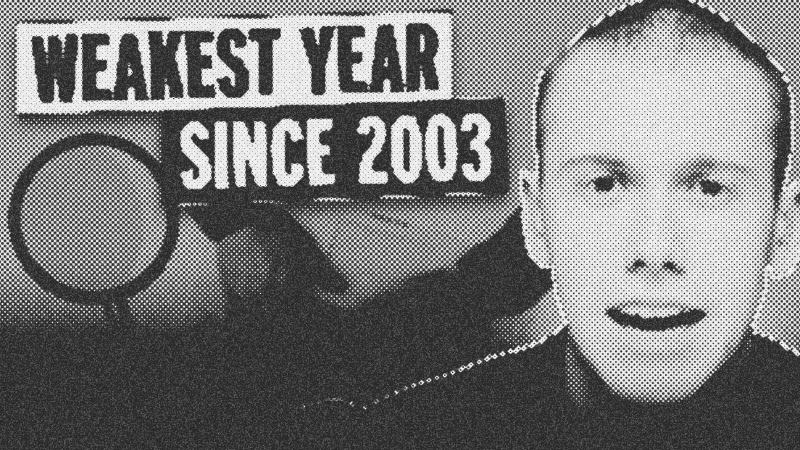
The Great Revision: 2025 as a Lost Year
The Bureau of Labor Statistics recently issued staggering revisions, slashing 2025 job totals from an initial 584,000 to just 181,000. This adjustment transforms 2025 into the worst non-recession year for hiring since 2003. The magnitude of this error highlights the difficulty of real-time data collection in a volatile environment. We must accept that we are operating in a "recession purgatory."
Official recession declarations carry a significant lag. The National Bureau of Economic Research often takes six to nine months to confirm a downturn. Given these massive downward revisions, it remains possible that 2025 will eventually be backdated as the start of a contraction. For investors, the takeaway is clear: do not over-index on monthly headline numbers. The direction of travel matters more than the specific digit, and currently, that direction is decidedly downward for traditional sectors.
Generative AI and the Market Vaporization
While the labor market stutters, the technology sector is undergoing a violent restructuring driven by Artificial Intelligence. The recent release of Opus 4.6 by Anthropic and Codex 5.3 by OpenAI sent shockwaves through the equity markets, vaporizing $2 trillion in software stock value. This isn't just about better chatbots; it's about the automation of high-level cognitive tasks.
Alex Heath observes that the industry is currently "ganging up" on OpenAI, the perceived market leader. While some market jitters are overblown, the impact on specific domains like software engineering and legal services is undeniable. Coding is deterministic—it is math—and Large Language Models excel at it. The speed at which AI is moving from a helpful tool to a replacement for human workers has reached an inflection point that is now reflected in massive sell-offs for financial and tech stocks.
The Policy Vacuum: A Strategy of Inaction
The most pressing macroeconomic risk isn't the technology itself, but the lack of a regulatory framework to manage its externalities. Historically, the U.S. mitigated labor disruptions with significant policy shifts: the Fair Labor Standards Act during the industrial era and the GI Bill after World War II. Today, the approach is markedly different. The current administration has signaled a moratorium on state-level AI legislation, operating under the belief that any regulation stifles innovation.
This "no policy" stance is a gamble. While China has implemented clear AI legislation—leading to a 90% public excitement rate—only 40% of Americans feel positive about the tech. The U.S. is allowing the private sector to dictate the terms of a massive labor shift without any safety net for the displaced. AI accounted for 5% of all layoffs last year, a number that will only grow as the technology generalizes across office jobs.
Navigating the Future Outlook
The confluence of a weak labor market and rapid AI acceleration creates a challenging environment for the next fiscal year. Young people (ages 16-24) are feeling the brunt of this, with starting salaries for college graduates down 8% year-over-year. They are the leading indicator of a frozen market. Without a pivot in either monetary policy to stimulate non-healthcare hiring or a federal framework to address AI displacement, we risk a prolonged period of stagnant growth. Success in this market requires looking past the monthly revisions and preparing for a landscape where technical skill sets are devalued as quickly as they are acquired.
- OpenAI
- 18%· organizations
- Alex Heath
- 9%· people
- Anthropic
- 9%· organizations
- Bureau of Labor Statistics
- 9%· organizations
- ChatGPT
- 9%· products
- Other topics
- 45%
The Jobs Report Is Worse Than It Looks | Prof G Markets
WatchThe Prof G Pod – Scott Galloway // 31:22

NYU Professor, best-selling author, business leader and serial entrepreneur Scott Galloway cuts through the biggest stories in tech, business, and investing with unfiltered insights, bold predictions and thoughtful advice. Podcasts include Prof G Markets with co-host Ed Elson, Prof G Conversations and Office Hours with Prof G.