Tariff Diplomacy and Statistical Erosion: Navigating the New Economic Fragility
The Weaponization of Global Trade
President Donald Trump recently announced a 25% tariff on any nation conducting business with Iran, a move that marks a sharp escalation in the use of protectionist tools to achieve geopolitical ends. This "all-purpose" policy response aims to punish the Iranian regime for its violent crackdown on internal protesters, yet it introduces profound friction into international relations. By targeting any trade partner of the Islamic Republic, the administration effectively issues an ultimatum to major global players, including China, Turkey, and the United Arab Emirates.
The secondary effects of such a sweeping mandate cannot be overstated. These are not just adversaries; they are NATO allies and strategic regional partners. Imposing a 25% tax on imports from these nations because of their proximity to Iranian commerce risks undermining months of trade negotiations and fraying the diplomatic fabric that holds regional security together. While the administration frames this as a moral necessity, the economic reality is one of self-inflicted wounds and supply chain disruption.
Iran's Internal Economic Collapse
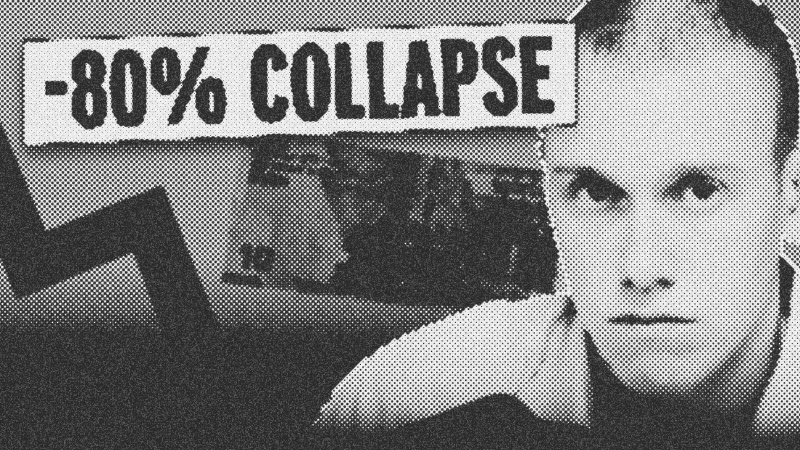
Inside Iran, the situation has reached a historic breaking point. The Iranian Rial is in a state of freefall, losing 80% of its value over the last year, with a staggering 16% drop in December alone. When a currency evaporates at this speed, the social contract dissolves. Maurice Obstfeld of the Peterson Institute for International Economics notes that the current unrest is the most severe threat to the regime since the 1979 revolution.
Hyperinflation, currently estimated above 50%, has turned basic goods into luxuries. This economic misery is compounded by infrastructure failures, specifically a critical water availability crisis. Historically, water shortages in the Middle East act as a catalyst for social dislocation. What began as a protest against the cost of living has metastasized into a nationwide demand for regime change, fueled by decades of corruption and the evisceration of Iranian proxies abroad by Israel and the United States.
The Ghost in the Machine: Flawed Inflation Data
While international tensions grab headlines, a more insidious problem is brewing within the American statistical apparatus. The Bureau of Labor Statistics (BLS) recently reported a headline inflation rate of 2.7%. However, Mark Zandi of Moody's Analytics warns that this figure is fundamentally flawed due to the October government shutdown.
Because the Bureau of Labor Statistics could not conduct surveys during the shutdown, they recorded a "zero change" for most goods and services. This creates a downward bias that will haunt year-over-year data until October of next year. When adjusted for this missing data, the true inflation rate sits at approximately 3%. For the Federal Reserve, which targets a 2% baseline, this discrepancy is the difference between a cooling economy and one that remains stubbornly overheated. The markets may be taking the 2.7% at face value, but the underlying reality is far more aggressive.
AI, Energy, and the Independence of the Fed
Structural shifts in the economy are further complicating the inflation narrative. While gasoline prices have dipped, electricity costs surged nearly 7% in December. This isn't just a seasonal fluke; it is the physical footprint of the Artificial Intelligence revolution. Data centers require immense power, placing unprecedented strain on the national grid. We are in the early innings of this phenomenon, suggesting that energy-driven inflation will be a persistent headwind.
Simultaneously, the independence of the Federal Reserve is under assault. A criminal investigation into a Federal Reserve building and the potential removal of board members like Lisa Cook signal a desire by the executive branch to exert control over monetary policy. History teaches that when central banks lose independence to political whims—as seen in the Richard Nixon era or modern-day Argentina—hyperinflation is the inevitable result. If the Federal Reserve begins setting rates based on the election cycle rather than data, the long-term credibility of the United States financial system will erode.
A Fragile Global Outlook
The convergence of aggressive trade tariffs and compromised domestic data creates a volatile environment for investors. Tariffs act as a tax on the American consumer, pushing the 3% real inflation rate even higher. The risk is no longer just a localized recession but a broader systemic instability where geopolitical posturing dictates market behavior. As the administration continues to use the U.S. Dollar and trade access as weapons, the global economy must brace for the unintended consequences of a world where the rules of commerce are rewritten overnight.
- Federal Reserve
- 16%· organizations
- Bureau of Labor Statistics
- 8%· organizations
- Iran
- 8%· places
- United States
- 8%· places
- Argentina
- 4%· places
- Other topics
- 56%
Trump’s 25% Iran Tariffs Explained | Prof G Markets
WatchThe Prof G Pod – Scott Galloway // 30:02

NYU Professor, best-selling author, business leader and serial entrepreneur Scott Galloway cuts through the biggest stories in tech, business, and investing with unfiltered insights, bold predictions and thoughtful advice. Podcasts include Prof G Markets with co-host Ed Elson, Prof G Conversations and Office Hours with Prof G.