The Great Realignment: Deciphering the West’s New Strategic Flirtation with Beijing
The Pendulum of Power: Diplomacy in the Fire Horse Year
The global economic order is undergoing a visceral recalibration as the "Year of the Fire Horse" approaches. We are witnessing a divergence between rhetoric and reality that should give every market analyst pause. While Donald Trump issues scorched-earth warnings to historic allies about the "dangers" of Chinese engagement, the actual behavior of G7 members tells a different story. The UK, Canada, and Germany are not just tentatively stepping toward Beijing; they are engaging in what can only be described as high-stakes diplomatic flirting. This isn't merely about trade—it is about a fundamental reassessment of whether the United States remains the sole reliable engine of global growth or if China has become an inescapable gravity well for the next generation of industrial R&D.
The Flirting Game: Why US Allies are Breaking Ranks
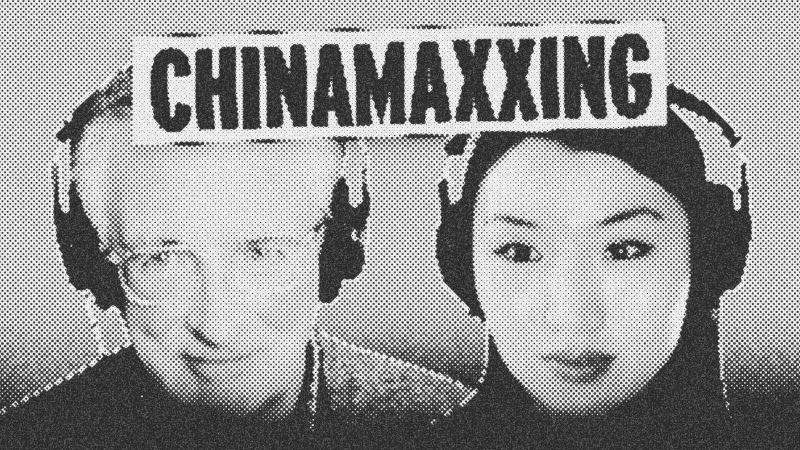
In a single month, we saw a parade of Western leaders making the pilgrimage to Beijing. Keir Starmer of the UK, Mark Carney of Canada, and the South Korean leadership all sought a reset. This cluster of visits represents more than just a scheduling coincidence; it is a coordinated hedge against American unilateralism. These "middle powers" are caught in a zero-sum squeeze. They rely on the United States for security guarantees, yet they see their economic futures increasingly tied to Chinese innovation.
When Keir Starmer speaks of a "comprehensive strategic partnership," he is using language that rings alarm bells in Washington. The UK's security is guaranteed by NATO, not the CCP. Yet, the economic reality is that China is the UK’s third-largest trading partner. For these nations, "sticking their head in the sand" regarding the world's second-largest economy is no longer a viable fiscal strategy. They are attempting to decouple their security needs from their commercial requirements—a feat that is becoming increasingly difficult as trade and geopolitics merge into a single, volatile entity.
Beyond Commodities: China as an R&D Powerhouse
The nature of the Western interest in China has shifted from consumption to human capital. We are no longer in the era where Western firms simply want to sell commodities to the Chinese middle class. Instead, they are desperate to tap into Chinese brainpower. The AstraZeneca deal, a multi-billion dollar investment in Chinese pharmaceutical supply chains and R&D, is the canary in the coal mine. AstraZeneca isn't just selling pills; they are investing in Chinese oncology and cell therapy research because that is where the cutting edge now resides.
China is pivoting from being a source of cheap labor to a provider of tertiary-educated human capital. This transition makes the "de-risking" argument difficult for sectors like biotech and automotive. When Volkswagen moves its primary research centers to China, it signals that the West can no longer maintain technological superiority by isolation. This creates a paradox for Western policymakers: how do you restrict a rival that you must collaborate with to remain scientifically relevant?
The Battle for the Canal: Choke Points and Latin American Sovereignty
While the diplomatic front looks "dovish," the infrastructure front is turning hostile. The Panama Canal has emerged as the latest theater of the US-China standoff. A Panamanian court recently voided a contract held by CK Hutchison Holdings, a Hong Kong-based firm, to operate key ports. This move, framed as a reclamation of US influence, represents a direct challenge to China's "Belt and Road" aspirations in the Western Hemisphere.
Washington’s pivot to Latin America is driven by a realization that China has spent the last decade quietly securing the continent's critical minerals and maritime gateways. From the Chancay Port in Peru to railway projects in Brazil, China's footprint is extensive. The United States sees this as a security threat—specifically the potential for "dual-use" facilities that could host military assets. However, for China, these are essential nodes for securing their own trade routes. The rhetoric from Beijing is clear: they will protect these interests "at all costs." We are entering a period where port risks and maritime choke points like the Strait of Hormuz and the Panama Canal will dictate market volatility more than traditional fiscal policy.
China-Maxxing: The Soft Power Paradox
Perhaps the most surprising trend is the cultural "China-maxxing" phenomenon taking hold of Gen Z. While governments bicker over tariffs, a segment of the Western population is adopting Chinese lifestyle habits—from drinking hot water to wearing traditional "Tang" jackets. This is a significant shift in soft power. For decades, the West exported culture; now, we see a disillusioned youth looking to China as a symbol of efficiency and stability, even if only through a filtered, meme-driven lens.
This cultural upsurge is partly fueled by China’s savvy 30-day visa-free travel policies for UK and Canadian citizens. By opening the doors, Beijing is bypassing state-controlled narratives and allowing Westerners to see a version of China that is high-tech, safe, and culturally vibrant. It’s a form of "Kung Fu Panda diplomacy" that aims to soften the blow of its more aggressive "Wolf Warrior" geopolitical stances. However, this trend isn't without friction. Critics and members of the Chinese diaspora warn of cultural appropriation and point out the irony of celebrating the culture while the political system remains under heavy scrutiny.
Looking Ahead: The Resurgence of the Hub
As we look toward the remainder of 2026, Hong Kong is reclaiming its status as a vital financial artery. After a period of stagnation, the IPO market in Hong Kong is seeing a record resurgence. This tells us that despite the noise of decoupling, global asset managers remain desperate for Chinese exposure. They are seeking to diversify away from an overweight United States portfolio, and China remains the only market with the scale to absorb that capital. The "China-maxxing" of investment portfolios may be the next logical step for those looking to survive the turbulence of the Fire Horse year.
- China
- 41%· places
- United States
- 13%· places
- AstraZeneca
- 6%· organizations
- Hong Kong
- 6%· places
- Keir Starmer
- 6%· people
- Other topics
- 28%
Why Everyone Is Living a ‘Very Chinese Time’ | China Decode
WatchThe Prof G Pod – Scott Galloway // 49:24

NYU Professor, best-selling author, business leader and serial entrepreneur Scott Galloway cuts through the biggest stories in tech, business, and investing with unfiltered insights, bold predictions and thoughtful advice. Podcasts include Prof G Markets with co-host Ed Elson, Prof G Conversations and Office Hours with Prof G.