The Ghost GDP Fallacy and the New Global Capital Realignment
The Volatility of Narrative: The Citrini AI Crisis
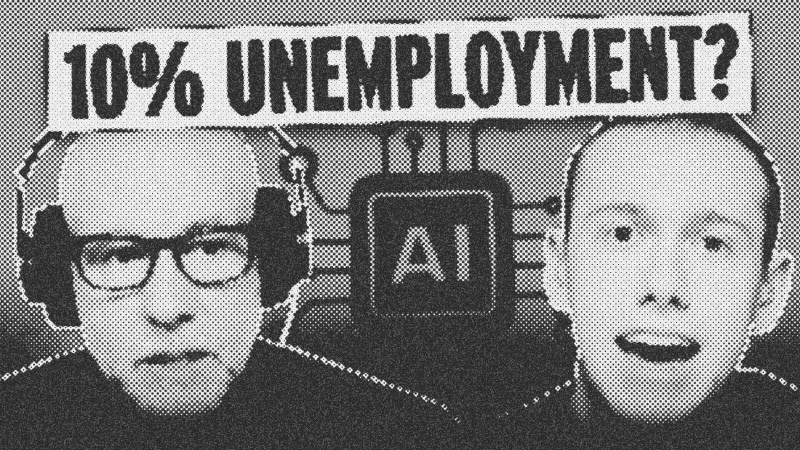
Market stability relies on the fragile equilibrium between data and perception. Last week, that equilibrium shattered not because of a sudden interest rate hike or a geopolitical conflict, but due to a work of speculative fiction. The Citrini Research blog post, titled "The 2028 Global Intelligence Crisis," served as a catalyst for a significant market drawdown, proving that in the current high-stakes environment, narrative often outpaces fundamentals. The Dow fell 2%, and software stocks plummeted 5% as investors reacted to a hypothetical scenario of 10.2% unemployment and a 38% collapse in the S&P 500.
Speculative doomerism has become a potent market force. The Citrini piece posits that AI will create "Ghost GDP"—output that appears in national accounts but fails to circulate in the real economy because human labor has been eviscerated. This theory assumes a downward spiral where white-collar layoffs lead to collapsed consumer spending, forcing companies to adopt more AI to preserve margins, further deepening the unemployment crisis. While the logic is internally consistent, it ignores the historical precedent of technological displacement. From agriculture to industrialization, the destruction of old roles has consistently birthed new, more complex high-value industries. The panic selling seen in companies like DoorDash, Visa, and Mastercard after they were mentioned by name in a fictional blog post reveals a market untethered from reality and desperate for direction.
The Real State of the Union: Data vs. Rhetoric
The recent State of the Union address presented by Donald Trump serves as a case study in macroeconomic cherry-picking. The administration paints a picture of a "turnaround for the ages," yet the underlying metrics suggest a more precarious reality. Claims of $18 trillion in foreign investment are mathematically impossible, representing over half of the total US GDP and far exceeding the administration's own website figures. The assertion that foreign nations are footing the bill for tariffs is equally detached from the data; multiple studies confirm that 90% to 96% of the tariff burden is absorbed by American firms and consumers.
We are witnessing a divergence between the "stock market economy" and the "grocery store economy." While the President touts low unemployment and positive GDP growth, consumer sentiment is tanking. This disconnect is fueled by the fact that current growth is heavily concentrated in a handful of AI-driven tech giants and massive deficit spending. The United States is currently running a $2 trillion deficit—a level historically reserved for the depths of a pandemic or a global recession. This fiscal irresponsibility, combined with an unpredictable industrial policy, is starting to erode the "rule of law" premium that has long attracted global capital to American shores.
The Erosion of the American Premium
For decades, the US served as the operating system for the global economy. Investors accepted lower yields elsewhere for the safety, consistency, and legal protections of the American market. That faith is fracturing. In the last 12 months, despite the dominance of American AI companies, the US market has underperformed nearly every major international index. The MSCI World ex-USA Index rose nearly double the rate of the S&P 500 when adjusted for capital flows. This indicates a massive rotation out of US stocks. Global pension funds and institutional investors are diversifying away from a market they now perceive as sclerotic and prone to irrational, one-off regulatory interventions. When the President uses the State of the Union as an unregulated earnings call, the citizenry—and the global market—lose a critical anchor of truth.
Media Consolidation: The Netflix Disconnect and the Ellison Gambit
The collapse of the bidding war for Warner Bros. Discovery marks a pivotal moment in the streaming wars. By walking away from a $111 billion offer, Netflix and CEO Ted Sarandos demonstrated rare corporate discipline. The market rewarded this restraint with a 10% pop in stock price, effectively granting Netflix billions in market cap for not doing a deal. This leaves Paramount Global, backed by the David Ellison, as the primary consolidator.
The implications for the creative community are dire. David Ellison, son of Oracle founder Larry Ellison, represents a tech-first approach to media that prioritizes AI-driven cost-cutting over traditional production values. The Ellison strategy likely involves a massive reduction in human capital, replacing high-budget creative teams with AI-assisted workflows to justify the irrational premium paid for the acquisition. This is a "disturbance in the force" for Hollywood. While Sarandos is viewed as a member of the creative guild who understands the value of gaffers, editors, and actors, the new Paramount regime is seen as a data-centric entity focused on margin expansion at any cost.
The Future of Distributed Media
As legacy institutions like CNN face further consolidation and potential management shifts under the Ellison regime, we are entering an era of "distributed media." High-profile journalists and creators are no longer tethered to a single broadcast tower. The means of production have collapsed in cost, allowing individual voices to reach audiences that rival major cable networks. Analysis shows that niche financial podcasts and independent newsletters now capture a larger share of the core demographic than flagship shows on CNBC. This migration is an existential threat to the legacy model, especially as top-tier talent realizes they are often overpaid relative to the shrinking reach of linear television. The "clown show" of political rhetoric may dominate the headlines, but the real shift is happening in how capital and content are decentralized away from traditional power centers.
Conclusion: Strategic Optimism in a Volatile Age
Navigating the current landscape requires a distinction between the government's role and the investor's role. It is the regulator's job to ask what could go wrong, preparing for job displacement and the social consequences of AI. However, for the investor, the only path to wealth is asking what could go right. The American ethos of risk-taking remains our most potent asset. While the "Ghost GDP" narrative and political misinformation create noise, the underlying opportunity lies in the realignment of capital.
Opportunities are emerging in sectors where the market has over-indexed on fear. Private credit and business development firms like Apollo Global Management, TPG, and Blue Owl Capital are trading at compressed multiples despite strong fundraising and recurring fee growth. The market is pricing in a liquidity crisis that the data does not yet support. By looking past the doomerism of fictional blog posts and the hollow optimism of political speeches, disciplined analysts can identify the growth-valuation mismatches that define the next economic cycle. The future belongs not to those who fear the AI apocalypse, but to those who understand how to reallocate capital as the old world consolidates and the new world distributes.
- Abigail Spanberger
- 4%· people
- Apollo Global Management
- 4%· companies
- Barry Weiss
- 4%· people
- Blue Owl Capital
- 4%· companies
- Citrini Research
- 4%· companies
- Other topics
- 78%
What the AI Scare Gets Wrong | Prof G Markets
WatchThe Prof G Pod – Scott Galloway // 1:19:42

NYU Professor, best-selling author, business leader and serial entrepreneur Scott Galloway cuts through the biggest stories in tech, business, and investing with unfiltered insights, bold predictions and thoughtful advice. Podcasts include Prof G Markets with co-host Ed Elson, Prof G Conversations and Office Hours with Prof G.