Engineering the Near-Future: The Technical Artistry of the Project Hail Mary EVA Suit
Designing for Agility and Visibility
When David Crossman and Glyn Dillon set out to design the primary Extravehicular Activity (EVA) suit for Project Hail Mary, they faced a classic engineering trade-off: the conflict between the perceived bulk of real-world space hardware and the performance requirements of a cinematic protagonist. Traditional NASA EVA suits are essentially one-person spacecraft—massive, pressurized, and inherently clumsy. For this production, the team pivoted toward a high-mobility, slimmed-down silhouette that emphasizes agility.
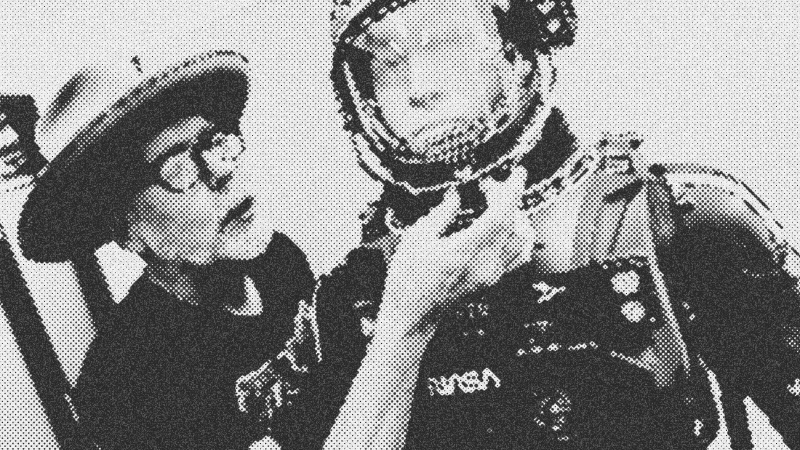
The color choice marks a significant departure from the standard white used for thermal regulation in space. After experimenting with amber and white variants, the team settled on a bold red. This choice serves a dual purpose: it provides maximum visibility against the starkness of deep space and the ship's interior, and it pays a cheeky homage to iconic predecessors like 2001: A Space Odyssey. The result is a suit that feels grounded in near-future physics while providing the visual pop necessary for modern high-definition cinematography.
Structure Without the Weight
One of the most impressive technical feats in the suit's construction is the illusion of internal structure. To avoid the "man in a tracksuit" look, the designers utilized a complex layering system. Specialist fabrication house FBFX handled the "hard" components, while the costume department's cutters integrated compression lacing and detailed paneling to simulate a pressurized garment.
The designers even looked at the SpaceX and Boeing suit silhouettes for inspiration, noting how modern aerospace companies are leaning toward a more form-fitting aesthetic. By injecting the fabric with raised rubber prints and strategically placed hard points, the team achieved a look that suggests a multi-layered protection system capable of withstanding micrometeoroids, all while keeping the actual weight low enough for Ryan Gosling to perform complex wire work.
The Iterative Evolution of the Helmet
The helmet underwent the most radical transformation during production. Initially designed with a larger volume similar to NASA era gear, it shrank progressively over several weeks of testing. Gosling pushed for a design with minimal negative space, wanting the gear to feel like a second skin rather than a fishbowl. This created a massive engineering hurdle: how to move air and prevent fogging in such a tight enclosure.
The solution involved a constant evolution of internal fan systems and external air hoses. Early versions relied on internal pumps through the neck bearing, but as the volume decreased, prop makers had to pivot to high-flow external feeds for certain shots. To ensure visual clarity, the team used removable visors that Visual Effects could later replace with digital versions, though the production preferred using the physical visor whenever possible to capture authentic, 70s-style lens reflections.
Narrative Through Detail: The Mission Patch and Cooling Suit
Realism in Project Hail Mary isn't just about the external shell; it's about the subsystems. The production developed a detailed cooling suit to be worn underneath the EVA gear, inspired by a vintage garment originally attributed to Kate Bush. This under-layer features a complex network of "tubing" created via raised rubber printing, simulating the liquid cooling and ventilation garments used by real astronauts.
Even the mission patch represents a Herculean effort in international relations and fabrication. Because the film depicts a joint global effort, the designers had to clear the use of dozens of national flags, a process that took years. The final badge is a sophisticated metallized molded piece produced through a specialized process in Germany and Taiwan. These details, combined with the use of Fidlock closures and Russian parachute hardware, create a dense, believable world where every strap and buckle has a mechanical reason for existing.
- Project Hail Mary
- 11%· movies
- 2001: A Space Odyssey
- 6%· movies
- Adam Savage
- 6%· people
- Alien
- 6%· movies
- Boeing
- 6%· companies
- Other topics
- 67%
Adam Savage Reviews Project Hail Mary's Spacesuit!
WatchAdam Savage’s Tested // 22:07

Adam Savage’s Tested is a content platform and community playground for makers and curious minds. On Tested.com, the highly- engaged Tested YouTube channel, and at conventions and events, dynamic makers share ideas and inspire each other to build their obsessions. Led by Adam Savage, the Tested team explores the intersection of science, popular culture, and emerging technology, showing how we are all makers. Adam also takes viewers behind the scenes of films, TV shows, theater, and museums, shining a spotlight on the craftspeople and artists who make the magic we all enjoy. Tested is also: Norman Chan, Joey Fameli, Josh Self, Kristen Lomasney and Thomas Crenshaw.