Uber’s High-Stakes Roulette and the New Era of Strategic Disruption
The Recruitment Arms Race: From Coding to Combat
Innovation thrives on talent, and the competition for the world’s best engineers has moved beyond foosball tables into the realm of high-stakes spectacles. Anduril Industries, the defense tech powerhouse led by Palmer Luckey, recently demonstrated this by hosting an autonomous drone race as a primary recruitment vehicle. This isn't just a fun weekend hobby; it’s a rigorous filter. Participants must write autonomous software to compete, effectively proving their technical mettle before they ever sit for an interview.
This "vibe-coding" recruitment strategy mirrors the brash, high-octane branding seen at Elon Musk. By leaning into a "don’t work here" marketing persona, Anduril filters for the obsessed and the daring. It attracts young, hungry talent—sometimes even bypassing traditional collegiate pipelines—who are ready to build the future of defense. When a startup clears a thousand applications in 24 hours via a drone race, it signals a shift: the most disruptive companies no longer wait for resumes; they build arenas.
Phia and the Pivot Toward Conscious Commerce
The e-commerce sector is facing a reckoning, moving away from the "slop" of fast fashion toward more buttoned-up, sustainable models. Phia, co-founded by Phoebe Gates and Sophia Kianni, represents this new guard. Having recently raised $35 million, the startup utilizes a browser extension to nudge consumers toward affordable, sustainable, and used alternatives to mainstream products.
However, the path to disruption is fraught with technical hurdles. Phia has already navigated early scrutiny regarding data collection practices—a common pitfall for browser-based tools like the now-incumbent Honey. For Phia to succeed, it must balance its sustainability mission with airtight privacy protocols while fending off the existential threat of "Agentic AI" from giants like Google who could easily bake these features into the browser core. The success of Phia will serve as a litmus test for whether a mission-driven shopping tool can scale into a legitimate market force.
The Commercialization of the High Ground
Space is no longer just a scientific frontier; it is a critical infrastructure play. Northwood Space, led by CEO Bridgit Mendler, is tackling the massive communication bottleneck created by the explosion of orbital activity. By closing a $100 million Series B and securing a $50 million contract with the U.S. Space Force, Northwood is positioning itself as the vital link between ground operations and the growing Satellite Control Network.
This rapid growth highlights the resurgence of "dual-use" technology—systems that serve both commercial and defense interests. Investors are pouring capital into firms like Observable Space because the government is a reliable, high-volume customer. When space startups align their roadmaps with national security needs, they find a fast track to scalability that pure-play scientific ventures often lack.
Uber’s Autonomous Grand Strategy
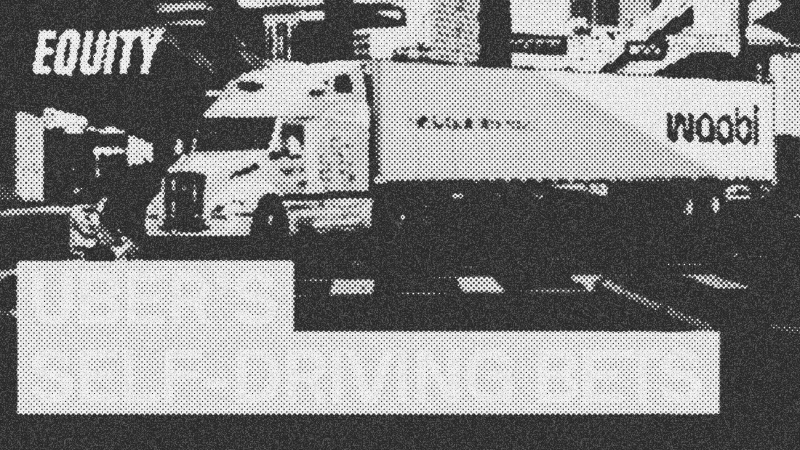
Uber has executed a masterclass in risk diversification. After shuttering its internal autonomous vehicle (AV) program years ago, the company has returned as the ultimate "casino whale," placing chips on every promising player in the industry. Its recent partnership with Waabi, an AI-first trucking startup founded by Raquel Urtasun, is the latest example. The deal, potentially worth $1 billion, leverages Waabi’s "simulation-first" approach to expand beyond trucking into the broader robo-taxi ecosystem.
By partnering with over 20 different AV firms, Uber ensures it remains the dominant platform regardless of which specific technology wins. Whether it is the hardware-heavy approach of Waymo or the nimble, software-centric "brain" being built by Wayve, Uber’s infrastructure is ready to ingest them all. This strategy effectively hollows out competitors like Lyft, which lack the scale and capital to maintain such a diverse portfolio of bets.
The IPO Horizon and the Musk Factor
After a long drought, the IPO window is finally creaking open. While smaller players like Ethos and Fervo are making tactical moves toward the public markets, all eyes are on SpaceX. The potential for a SpaceX listing represents more than just a liquidity event; it is a cultural moment for Wall Street. Despite Elon Musk’s historical volatility regarding public markets, the sheer gravity of banker fees and investor appetite may finally pull the rocket company into the public sphere. If SpaceX successfully navigates an S-1 filing, it will provide the ultimate signal that the market is ready for high-growth, high-risk tech once again.
- Elon Musk
- 6%· people
- Anduril Industries
- 3%· companies
- Anthony Ha
- 3%· people
- Blue Sky
- 3%· products
- Bridgit Mendler
- 3%· people
- Other topics
- 81%
Uber is literally in the driver’s seat when it comes to AV bets | Equity Podcast
WatchTechCrunch // 29:10

TechCrunch is a leading technology media property, dedicated to obsessively profiling startups, reviewing new Internet products, and breaking tech news.