The Davos Disruption: Why AI Giants are Rewriting the Global Playbook
The New World Order at Davos
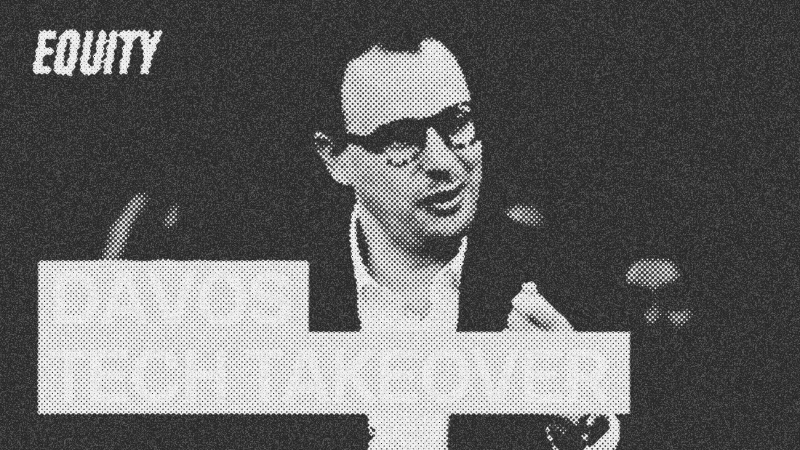
The World Economic Forum in Davos usually conjures images of diplomats debating climate policy and poverty. This year, the script flipped. Tech giants didn't just attend; they staged a total takeover. From Meta to Salesforce, the promenade was a gauntlet of silicon power. When Microsoft and McKenzie sponsor the 'USA House,' you know the center of gravity has shifted. This isn't just about presence; it is about the aggressive integration of Artificial Intelligence into the very fabric of global trade and geopolitics.
The $480 Million Seed Bet on Humans&
If you want to understand the current fever pitch of the market, look at Humans&. This startup recently pulled in a staggering $480 million seed round. In most eras, that is a late-stage valuation, but today, it is the entry fee for high-stakes AI. The mission? Moving beyond the one-on-one exchange of ChatGPT toward 'social intelligence.'
We are talking about AI as a collaborative teammate that works in concert with groups. The pedigree here is undeniable, featuring veterans from OpenAI, Google, and Anthropic. When Nvidia and Jeff Bezos back a project, they aren't just betting on a product; they are betting on the pioneers who built the foundations of Claude and Grok. The product remains vague, but the capital flight is real. This is an era where a vision and a high-tier team can mint a multi-billion dollar valuation before a single line of public code is written.
The Revolving Door and the Talent War
The AI sector is currently behaving like a particle accelerator. Companies split, collide, and reform with dizzying speed. We see researchers breaking away from OpenAI only to return months later. Even Demis Hassabis of Google DeepMind admits the pace is so frantic that even the architects struggle to keep up with their models' capabilities. The risk here is a 'lagging product' syndrome. While valuations skyrocket, the actual utility for the end-user is still catching up. We are in a cycle of constant breakaway pieces, each claiming to be the next sovereign genius.
Serve Robotics and the Hospital Pivot
While the giants fight for digital supremacy, Serve Robotics is busy winning the ground game. Known for their googly-eyed sidewalk delivery bots, they recently acquired Diligent. This moves them from the chaotic streets into the controlled environments of hospitals. It is a brilliant move for scalability. In a hospital, you don't have to worry about a robot getting t-boned by a Ford F-150.
This acquisition signals a broader trend: diversification. Sidewalk delivery is a noble fight, but healthcare logistics is a goldmine. Using humanoid-ish robots to transport vials and supplies isn't just about efficiency; it's about building a robust, multi-vertical business model. Serve Robotics is proving that autonomous vehicles aren't just for highways; they are for every hallway and nursing home on the planet.
The Death and Rebirth of the Metaverse
Is the Metaverse dead? Meta recently cut 10% of its Reality Labs staff, sparking a wave of 'I told you so' from critics. But don't count Mark Zuckerberg out yet. Even Palmer Luckey, the Oculus founder who has had a rocky relationship with Facebook, defended the move. A 10% cut is a realignment, not a surrender.
Meta is shifting away from first-party game development and focusing on the infrastructure. The dream of a digital world hasn't vanished; it's just maturing. The hype has moved to AI, which gives the Metaverse teams room to breathe and build without the crushing weight of immediate, mass-market expectations. They are moving from being an entertainment company to a background infrastructure provider for Augmented Reality.
The Bubble Warning from the Top
At Davos, the tension was palpable. Satya Nadella issued a subtle but firm warning: use it or lose it. He more or less stated that if companies don't adopt AI broadly, we are looking at a popped bubble. Meanwhile, Dario Amodei of Anthropic took shots at trade policies that allow high-end chips to reach China.
The industry is no longer just about 'moving fast and breaking things.' It's about geopolitics, sovereign wealth funds, and massive infrastructure build-outs. Jensen Huang of Nvidia is calling for even more investment, framing AI as the ultimate engine for job creation. The message from Davos is clear: the era of the 'lean startup' is over for AI. This is a game of titans, and the stakes are the future of the global economy.
How did Davos turn into a tech conference? | Equity Podcast
WatchTechCrunch // 28:46

TechCrunch is a leading technology media property, dedicated to obsessively profiling startups, reviewing new Internet products, and breaking tech news.