The Single-Frame Challenge: Chasing the Perfect Eclipse on Film
The journey into the shadow began years before the 2024 total solar eclipse. My fascination with these celestial events sparked after meeting Dr. Gordon Telepun, a man whose infectious enthusiasm for the cosmos changed my trajectory. In 2017, I stood in Wyoming, successfully capturing the International Space Station transiting the eclipsed sun. By 2019, I was in Argentina, crafting digital composites of the sun setting over the Andes Mountains. These were technical triumphs, but they relied on the safety net of digital post-processing. For the 2024 event, Dr. Gordon Telepun proposed a far more dangerous ambition: capturing a complete eclipse sequence on a single piece of color positive slide film.
The Mechanical Hurdle of Analog Totality
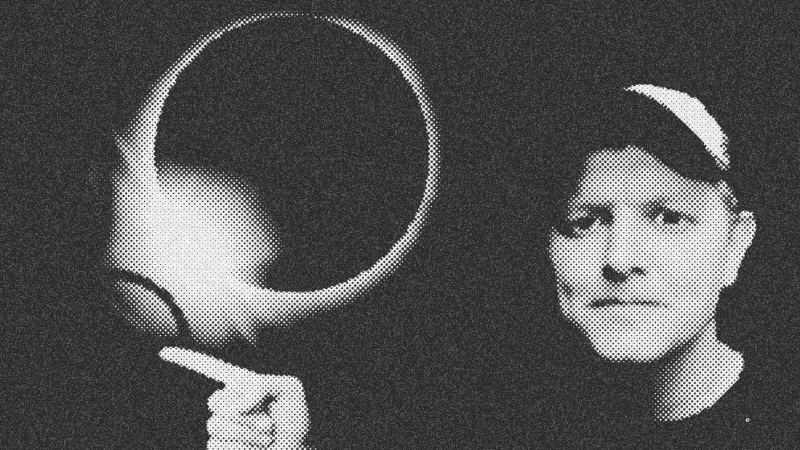
Unlike digital photography, where images are cheap and infinitely adjustable, film is a physical commitment. The plan involved taking a photo every ten minutes on the same frame, keeping the shutter closed and the film stationary while the earth and moon performed their dance. Most modern cameras automatically advance film after a shot, which would ruin the sequence. I turned to Niko and Youhoe from Kamera Store in Finland. They recommended the Mamiya RZ67 Pro, a beast of a medium-format camera that allowed for the specific multi-shot manual override I needed. This wasn't just about pressing a button; it was about managing light exposure over hours without bumping the tripod by a fraction of a millimeter.
A Mysterious Visitor in the 4K Frame
While the film project was the primary goal, a secondary 4K video camera was running nearby. Upon reviewing the footage a month later, a strange streak appeared across the solar disk just seconds after the sun reappeared. The object moved with incredible speed. Initial skepticism suggested a bug or a bird, but the trajectory felt different. I consulted Jonathan McDowell of planet4589.org, an expert in satellite tracking. His calculations revealed that the object's angular velocity—crossing the half-degree sun in roughly half a second—matched the orbital speed of a low-earth orbit satellite perfectly. To confirm this, I cross-referenced footage with Jeff Geerling, a fellow creator stationed 130 meters away. The object appeared in both frames with a slight parallax shift, proving it was high in the atmosphere, not a local insect.
The Terrifying Reveal at Indie Film Lab
The tension of the entire project culminated at Indie Film Lab in Montgomery, Alabama. I had spent weeks in the dark, literally and figuratively, not knowing if I had botched the exposure or missed the focus. Watching Garret and Josh feed that single strip of Ektachrome into the scanner was nerve-wracking. If I had bumped the camera during one of the eleven exposures, the entire image would be a blur. When the scan finally hit the monitor, the result was breathtaking. Ten perfect partial crescents framed a central, shimmering corona. It was a flawless analog record of a four-minute celestial event.
The Legacy of Interested People
Presenting the final print to Dr. Gordon Telepun felt like closing a circle. He noted that such a feat—nailing ten partials and totality on one frame—hadn't been done successfully in decades. This experiment taught me that curiosity is best served with a side of technical rigor. Whether it is identifying a silent satellite or mastering a mechanical camera from the 1980s, the reward is in the pursuit of the unknown. We often think of science as a set of answers, but truly, it is a story of people who care enough to look closer.
- Dr. Gordon Telepun
- 19%· people
- Andes Mountains
- 6%· places
- Ektachrome
- 6%· products
- Garret
- 6%· people
- Indie Film Lab
- 6%· companies
- Other topics
- 56%
I Accidentally Photographed Something Unknown During the Eclipse - Smarter Every Day 298
WatchSmarterEveryDay // 23:41

I explore the world using science. That's pretty much all there is to it. Watch 2 videos. If you learn something AWESOME, please subscribe if you feel like I earned it. Contact: http://www.smartereveryday.com/contact. I currently get lots of correspondence so please forgive me if I'm unable to reply. I mean well, but want to focus on being a better Dad.