Jack Durling scales Lockdown Liquor with £15m valuation and on-trade focus
The pivot from pandemic initiative to premium powerhouse
When Jack Durling and his wife Natasha Durling launched Lockdown Liquor & Co in early 2020, it wasn't intended to be a global contender. It was a fundraising effort born from the stillness of the COVID-19 lockdowns, designed to bring high-quality cocktails to friends and family while supporting charities. However, the market’s response was immediate and overwhelming. What started as 300 to 400 orders a week produced in a home kitchen quickly signaled a massive gap in the Ready-To-Drink (RTD) market.
At the time, the RTD category was saturated with low-ABV, sugary entries that favored convenience over quality. Durling identified an opportunity to disrupt this "entry-level" perception by focusing on premium spirits, pressed juices, and natural Botanicals without preservatives. This commitment to liquid quality transformed a temporary project into a legitimate business venture. By moving beyond the "kitchen table" phase early and securing angel investment, the founders positioned the brand to capture a consumer base that was increasingly willing to spend on luxury home experiences.
Owning the supply chain to enable rapid scaling
A defining characteristic of Lockdown Liquor & Co is the decision to keep production in-house. In an industry where many "brands" are simply marketing shells that outsource liquid formulation and bottling to third-party contractors, Durling took the harder, more capital-intensive route of building a production facility in Bow, London. This vertical integration provided three critical advantages: agility, cost control, and quality assurance.
Agility is perhaps the most vital for a challenger brand. When a national restaurant group or a luxury retailer like Liberty requests a bespoke blend or a rapid restock, brands relying on third-party schedules are often left waiting months for a production slot. By owning their facility, Durling’s team can pivot in real-time, fulfilling large-scale orders that would break smaller competitors. This infrastructure was the catalyst that allowed them to land a National Restaurant Group with 80 sites, proving that they could handle the volume required for institutional success.
Conquering the on-trade through operational education
The most significant strategic shift for the company was the transition from a 95% Direct-to-Consumer (DTC) model to a focus on the on-trade—bars, hotels, and restaurants. Today, the on-trade accounts for roughly 85% of their revenue. This transition wasn't simple; it required overcoming a deep-seated stigma among hospitality professionals who viewed pre-batched cocktails as inferior products.
Durling’s strategy focused on "liquid on lips" and operational efficiency. By providing a high-quality pre-batched solution, Lockdown Liquor & Co solved the acute labor and recruitment crisis facing the industry post-Brexit. Instead of requiring five ingredients from three different suppliers to make an Espresso Martini, a venue could serve a consistent, premium drink from a single bottle. This lowered operational expenditure (Opex) while maintaining high margins and increasing the rate of sale. Once the solution was embedded into a venue’s operations, it became "sticky" revenue, providing a stable foundation for growth that DTC alone could never match.
Strategic brand positioning through elite collaborations
Brand building for Lockdown Liquor & Co has been an exercise in top-down prestige. By selectively collaborating with high-end brands like Ralph Lauren and Netflix, the company established itself at the apex of the luxury pyramid. This "trickle-down" effect ensures that when the product eventually hits the off-trade (supermarkets), the brand equity is already solidified.
Durling warns against the common mistake of building a brand in supermarkets first. If a consumer sees a product for a low price in Sainsbury's, they are psychologically resistant to paying a premium for that same brand in a high-end restaurant. By prioritizing the on-trade and luxury gifting sectors, the brand maintains its premium price point and exclusivity, making it a more attractive target for future acquisition by global spirits conglomerates.
The athlete’s mindset in the boardroom
Durling’s background as a professional rugby player in France heavily influences his leadership style. The resilience required to navigate career-ending injuries and the discipline of professional training translate directly to the "un-glamorous" side of entrepreneurship—the mundane logistics, supply chain failures, and regulatory hurdles. He emphasizes that the "Disney-esque" version of startup life often seen on social media is a myth; real success is found in the ability to trudge through the mundane to reach a long-term goal.
This competitive drive is coupled with a clear exit strategy. Unlike family businesses meant to be passed down through generations, Lockdown Liquor & Co is being built for a specific window of opportunity. With a current valuation of £15 million and a target of £20 million in revenue by 2026, the goal is to scale rapidly and integrate into a global player’s portfolio, proving that in the spirits world, timing the market is just as important as building the product.
- Lockdown Liquor & Co
- 29%· companies
- Bow, London
- 6%· places
- CNC Group
- 6%· companies
- France
- 6%· places
- Hector Mason
- 6%· people
- Other topics
- 47%
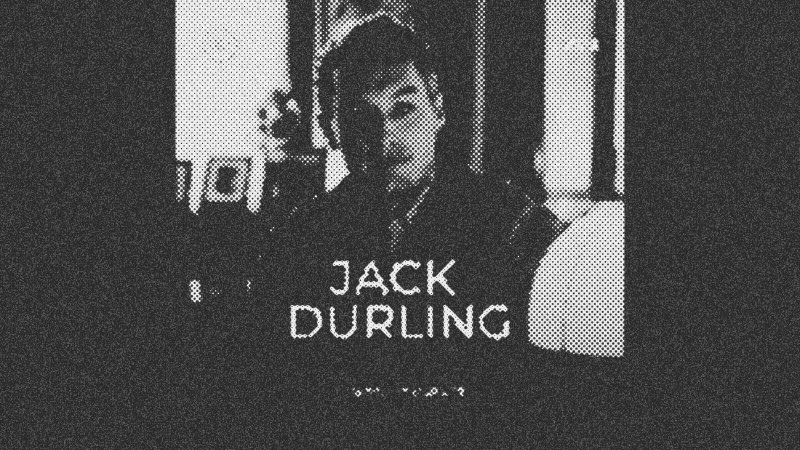
Jack Durling, Co-Founder @ Lockdown Liquor
WatchThe Riding Unicorns Podcast // 36:38

A podcast featuring the world's best minds from venture and startups. Hosted by James Pringle & Hector Mason.