Fault Lines of the High North and the Middle East: A Geopolitical Briefing
The Fragility of the Iranian Theocracy
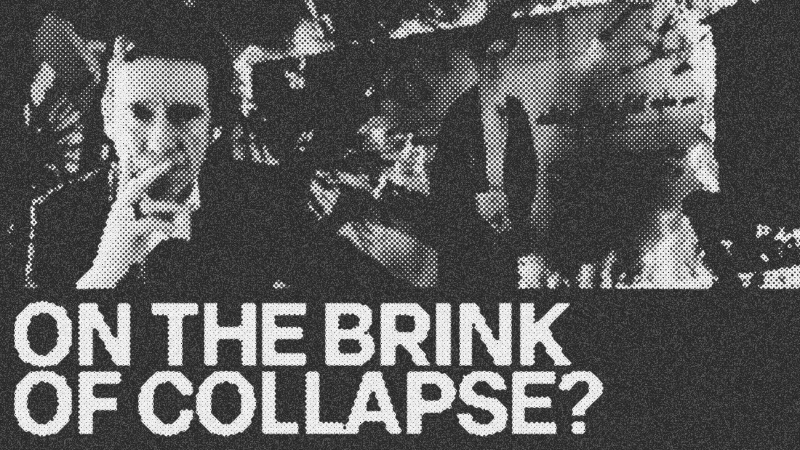
To understand today's headlines, you must examine the historical fault lines beneath them. Change isn't instantaneous; it's the culmination of persistent movements. Iran currently faces a wave of protests that differ fundamentally from the 2009 Green Revolution or the 2022 Mahsa Amini demonstrations. While those movements often centered on specific segments of the population—liberal intellectuals or women’s rights activists—the current unrest spans nearly 200 separate protests across almost all provinces. The catalyst was economic: a sharp spike in gas prices and a collapsing currency. This has brought the traditional merchant class of the Tehran Bazaar into the streets alongside a younger, more confrontational generation.
Regimes of this nature appear completely secure until, in an instant, they aren't. We saw this with Bashar al-Assad in Syria, whose government seemed immovable until the 2011 uprising. In Iran, the Ayatollah Khamenei maintains a hardcore base of true believers, including the Islamic Revolutionary Guard Corps and the Basij militia. However, the regime's reliance on brutal repression, including internet blackouts and lethal force, suggests a thinning of political legitimacy. The possibility of collapse exists on a knife-edge; they could fall within the hour or endure for another year.
The Resurgence of the Pahlavi Factor
An unexpected development in this current crisis is the rising visibility of Reza Pahlavi, the exiled Crown Prince. Once dismissed as a marginal figure of a discredited past, his image now appears on protest signs held by young Iranians who have no living memory of the Shah's era. This isn't necessarily a call for a return to monarchy, but rather a search for a symbolic bridge to a post-clerical democracy. Reza Pahlavi has launched sophisticated social media campaigns and defectors' strategies, encouraging members of the regime to abandon ship before it sinks. While the effectiveness of these digital invitations remains unverified due to the media blackout, the mere fact that the Reza Pahlavi is a focal point indicates a massive shift in the Iranian opposition’s tactical landscape.
The Fracturing Alliance in Yemen
While the world watches Tehran, a secondary crisis is brewing in Yemen that threatens to upend regional stability. For years, Saudi Arabia and the United Arab Emirates acted in lockstep against the Houthi rebels. That alliance has shattered. The United Arab Emirates-backed factions recently launched attacks against Saudi Arabia-backed government forces, targeting oil fields in the center of the country. This isn't just a local skirmish; it's a proxy war between two Gulf powerhouses for regional dominance.
Mohammed bin Salman (MBS) and Mohammed bin Zayed (MBZ) are no longer mentor and protégé. They are economic and military rivals. Saudi Arabia recently retaliated by bombing an United Arab Emirates vessel carrying arms, a move of stunning aggression between supposed allies. This split mirrors their competition in Sudan, where the Saudi Arabia back the Sudanese Armed Forces while the United Arab Emirates support the Rapid Support Forces. The United Arab Emirates is pursuing a reckless, high-stakes strategy to project power across the Red Sea, while Mohammed bin Salman attempts to reposition himself as the region’s primary arbiter of stability.
The Arctic: The Next Frontier of Conflict
Far from the heat of the Middle East, a cold war is intensifying in the Arctic. Climate change has transformed the geography, opening shipping routes and making rare-earth minerals accessible. Russia has moved decisively, building a fleet of icebreakers and military bases that dwarf the combined assets of NATO. They possess a depth of cold-weather operational experience that the United States and its allies have allowed to atrophy over the last fifteen years.
China has also declared itself a "Near-Arctic State," investing heavily in long-term infrastructure. Meanwhile, the United States response has been erratic. Talk of purchasing Greenland is often dismissed as a performative ego trip for Donald Trump, but it masks a genuine strategic failure. The United States has been withdrawing troops from the region even as Russia and China entrench themselves. The high suicide rates among United States troops stationed in Alaska underscore the neglect and lack of preparedness for the brutal realities of the High North. If the next great conflict doesn't start in the desert, it will almost certainly begin in the ice.
Implications for Global Security
These shifting fault lines demand a recalibration of Western foreign policy. The Iran regime’s potential collapse creates a power vacuum that could lead to either a democratic transition or a more chaotic military junta. In Yemen, the Saudi Arabia-United Arab Emirates rift risks prolonging a humanitarian catastrophe for millions of people. In the Arctic, the lack of Western icebreaking capacity and infrastructure leaves the door wide open for Sino-Russian Alliance dominance. These are not isolated incidents; they are symptoms of a world where traditional alliances are fraying and new, more aggressive actors are filling the void. We must stop reacting to headlines and start anticipating the movements that create them.
Is This The End of Iran's Regime?
WatchThe Rest Is Politics // 39:16

Two men who’ve been at the heart of the political world - former Downing Street Director of Communications and Strategy Alastair Campbell and cabinet minister Rory Stewart - join forces from across the political divide. The Rest Is Politics lifts the lid on the secrets of Westminster, offering an insider’s view on politics at home and abroad, while bringing back the lost art of disagreeing agreeably. Powered by Fuse Energy ⚡