The World Cup Boycott and the Shifting Sands of Global Order
The Weaponization of Sport in an Autocratic Era
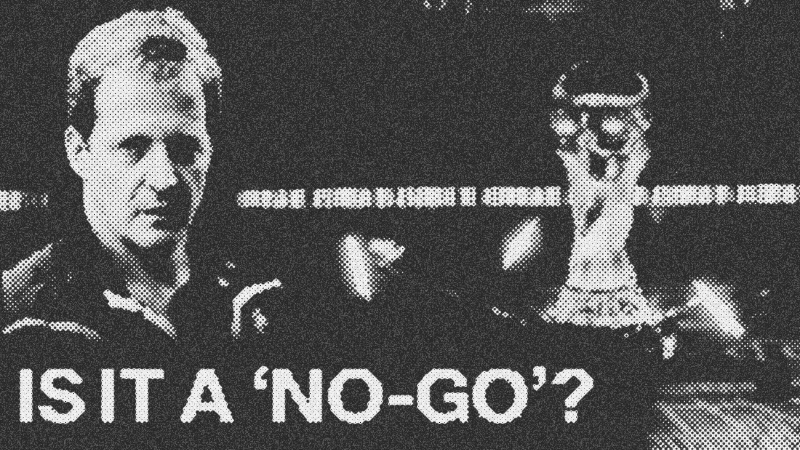
The intersection of high-stakes sports and geopolitics has reached a fever pitch. As the World Cup approaches, the international community faces a moral quandary: whether to participate in a global spectacle hosted by a nation undergoing what many describe as a slide into autocracy. Under Donald Trump, the United States has transitioned from being the primary organizer of global rules to a disruptor of them. His recent aggressive maneuvers regarding Greenland have acted as a tipping point, forcing allies to consider the ultimate soft-power sanction: the boycott.
Historically, boycotts were tools used by the West against peripheral or rival powers—the Soviet Union in 1980 or apartheid-era South Africa. However, the United States is the global hegemon and the central node of the world's financial and sponsorship networks. A boycott of a U.S.-hosted World Cup is fundamentally different because it targets the very heart of the international system. While a mass movement could signal a rejection of creeping authoritarianism and the politicization of the judiciary and press, it also risks playing into the hands of a populist leader who thrives on domestic grievance and the narrative of national victimization.
The Davos Mirage and the Crisis of Globalization
At the World Economic Forum in Davos, the disconnect between the global elite and the reality of international conflict is palpable. The forum was built on the pillars of free trade and a rules-based international order, yet these foundations are eroding. While attendees engage in "kooky self-help" rhetoric and status-conscious networking, the actual mechanisms of global cooperation are failing. The presence of billionaires and philanthropic organizations highlights a systemic failure: private capital is being asked to fill the voids left by governments that have pulled the plug on international development.
This "sapping of the spirit" within Davos reflects a broader decline. When the world’s most powerful country begins to act with a "vindictive, sadistic, and public" disregard for established borders—as seen in the threats to Danish sovereignty over Greenland—the traditional Davos crowd has no coherent response. Instead, we see a rise in libertarian experiments, where figures like Elon Musk and Peter Thiel view geopolitical instability as an opportunity for private ventures, further undermining the democratic collective.
Syria and the Illusion of Reconstruction
The humanitarian reality in Syria offers a grim preview of what happens when the international community fails to coordinate. In cities like Aleppo, the scale of destruction is nearly total, with reconstruction costs estimated in the tens of billions. Unlike the post-war Balkans, where donor conferences provided a path to stability, no one is stepping up to rebuild Syria. Businessmen find the cost of clearing rubble—laden with unexploded ordnance—higher than any potential return on investment.
Politically, the country remains a fractured mosaic. The recent advance of the Syrian Arab Army across the Euphrates and the retreat of the SDF (Syrian Democratic Forces) signal a brutal attempt at reunification by force. This shift, apparently supported by a Donald Trump-led administration in alignment with Turkey, represents a betrayal of the Kurds, who were once the primary allies in the fight against ISIS. The result is a messy, violent consolidation that ignores human rights in favor of a surface-level peace that lacks the economic foundation to survive.
The Unraveling of Post-1945 Borders
Perhaps the most dangerous shift in contemporary geopolitics is the erosion of the sanctity of international borders. The post-1945 settlement established that colonial or historical borders, however artificial, were fixed to prevent endless conflict. Today, that consensus is collapsing. From Greenland to Gaza, and from Somaliand to the Balkans, the idea that borders are fluid is gaining traction.
In the Middle East, a shadow war between Saudi Arabia and the UAE is manifesting in Yemen and Sudan, with both powers vying for influence through proxies and military bases in the Horn of Africa. When a global power like the U.S. signals that it no longer respects the sovereignty of a nation like Denmark regarding its territories, it gives license to every other revisionist power to reclaim historical lands. This is not just a regional issue; it is the beginning of a global unraveling that could redefine the map of Central Asia and Eastern Europe.
The Death of Oratory and the Rise of the Populist Soundbite
In domestic politics, particularly in the UK, the decline of the "big picture" philosophical argument is evident. The tradition of parliamentary oratory—represented by figures like Neil Kinnock—has been replaced by technical management and defensive rhetoric. Kemi Badenoch has shown flashes of effective combativeness, particularly in her handling of the Robert Jenrick defection to Reform UK, but the broader political class struggles to connect emotionally with the electorate.
Nigel Farage remains one of the few politicians capable of traditional public speaking, but his movement remains a "one-man band" built on grievance rather than a coherent vision for the future. For the mainstream parties to succeed, they must move beyond the "we have invested an extra 2 million pounds" style of communication and return to making grand arguments about values, strategic autonomy, and the country's place in a changing world. Without this, the vacuum will continue to be filled by those who use simplified narratives to dismantle complex institutions.
Conclusion: Navigating a Fractured Reality
The challenges of the current era—from the ethics of sport to the reconstruction of war-torn nations—require a level of international solidarity that is currently absent. As we move toward a world where borders are fluid and autocracy is normalized, the need for a coordinated, values-based response has never been greater. Whether through boycotts, revitalized international aid, or a return to principled oratory, the goal remains the same: to protect the historical fault lines that keep the global order from total collapse. Change is the culmination of persistent movement; it is time for that movement to find its voice.
- Donald Trump
- 6%· people
- Greenland
- 6%· places
- Alastair Campbell
- 3%· people
- Aleppo
- 3%· places
- Balkans
- 3%· places
- Other topics
- 79%
Should Europe Boycott The World Cup?
WatchThe Rest Is Politics // 44:21

Two men who’ve been at the heart of the political world - former Downing Street Director of Communications and Strategy Alastair Campbell and cabinet minister Rory Stewart - join forces from across the political divide. The Rest Is Politics lifts the lid on the secrets of Westminster, offering an insider’s view on politics at home and abroad, while bringing back the lost art of disagreeing agreeably. Powered by Fuse Energy ⚡