Heavy-Duty Suspension: Engineering Custom Nitrogen Shocks for Monstermax
The Architecture of Massive Suspension Systems
Upgrading a vehicle of extreme scale requires more than just swapping parts; it demands a total redesign of the interface between the frame and the terrain. When working on a massive vehicle like Monstermax, the standard aftermarket solutions fail to meet the structural requirements. The goal here is to replace failing shocks with massive 4.5-inch nitrogen units. This process begins in the digital space. Using CAD models allows for precise clearance checks, ensuring that as the axle cycles through its range of motion, the components don't bind or collide.
Before committing to heavy steel, creating test brackets verifies that the digital measurements translate perfectly to the physical chassis. This phase is non-negotiable for custom fabrication, as it prevents the waste of expensive 3/4-inch steel plate and hours of machine time.
Fabrication and Structural Welding Techniques
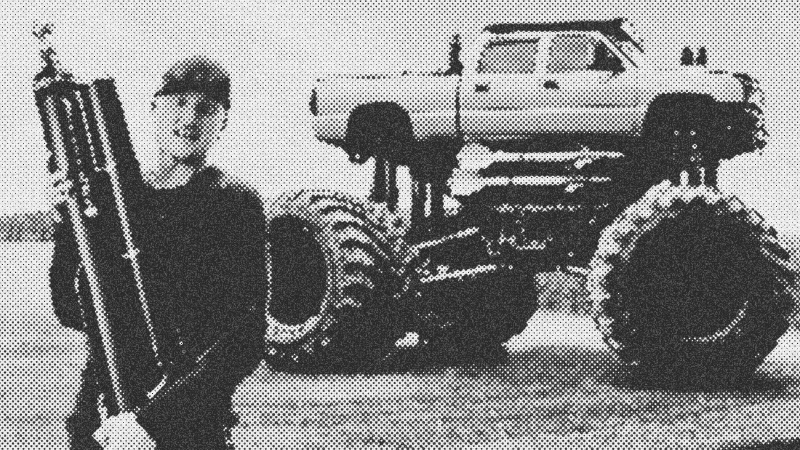
Building mounts for a 40,000-pound truck necessitates heavy-duty materials and rigorous welding standards. While laser cutting through services like SendCutSend offers unmatched precision, manual fabrication remains a viable path for those with the right equipment. Using a 65-amp plasma cutter to pierce 3/4-inch plate pushes the limits of standard shop gear.
To ensure the mounts don't warp during the intense heat of welding, a threaded rod serves as a stabilizer, keeping the brackets perfectly aligned. This "threaded rod trick" is vital because metal pulls and shifts as it cools. For the actual welds, a multi-pass approach is necessary. A root pass fills the chamfered edges, followed by an uphill weave pass to deeply penetrate the thick steel. Finally, cover passes cap the weld, providing the structural integrity needed to handle the immense leverage of high-pressure shocks.
Tools and Materials Needed
- Shocks: 4.5-inch diameter nitrogen-charged shocks.
- Steel: 3/4-inch steel plate for custom brackets.
- Hardware: Properly shanked bolts (ensuring the smooth shank, not the threads, carries the load across the plates).
- Machinery: CAD software, plasma cutter or annular cutter, and a high-amperage welder.
- Gas: Pure nitrogen and a high-pressure regulator for charging.
- Support: Spreader bars and heavy-duty blocks to safely suspend the vehicle.
Installation and Nitrogen Charging Procedures
Once the brackets are welded and painted, the physical installation of the shocks begins. On a vehicle this large, balancing the components is a two-person job. The shocks must be mounted with enough play to allow for axle rotation but enough constraint to avoid lateral contact.
Charging the system with nitrogen is a gradual process. Because a single hose is often used, you must add pressure incrementally to each shock to raise the vehicle evenly. Pumping the shocks to approximately 550 PSI typically brings the truck to ride height. This high-pressure environment requires extreme safety; never handle nitrogen tanks without protective valve covers, as a sheared valve can turn a heavy cylinder into a dangerous projectile.
Testing and Future Active Leveling
Real-world testing reveals if the engineering holds up. During a test drive, the truck should handle inclines with improved stability, even if a high center of gravity still causes some sway. The new, larger-diameter shocks allow for lower operating pressures, which reduces wear on seals and internal components.
The final frontier for this build involves an active anti-roll system. By integrating sensors and a gyroscope, the truck can potentially stay level even while traversing side-hills or uneven off-road terrain. This mechanization of the sway bar represents the next step in extreme vehicle dynamics, moving from passive dampening to active terrain management.
- Cody
- 25%· people
- Monstermax
- 25%· products
- SendCutSend
- 25%· companies
- WhistlinDiesel
- 25%· people
Upgrading the Suspension on Monstermax (100% custom made)
WatchProp Department // 21:13

Hi I'm Tyler Fever, aspiring mad scientist learning engineering with no degree. I'm building extreme vehicles, robots, props, and more. With every project I push myself to learn something new and build my skills so I can make an impact on the world. Join me! Instagram @propdepartment Facebook: https://www.facebook.com/share/1DSVKpMNhw/?mibextid=wwXIfr