Hassabis treats biology like chess to solve all human disease
The Ten-Hour Stalemate That Broke a Prodigy
Imagine a cold church on a European mountain. Inside, three hundred of the sharpest young minds in Europe sit hunched over one hundred and fifty chess tables. Among them sits Demis Hassabis, an eight-year-old boy with a baby face and a giant mind. He is locked in a grueling, ten-hour battle against the Danish national champion, a thirty-year-old man who refuses to concede a stalemate. There are only five pieces left on the board. It is a dead draw, yet the grown man uses raw endurance to grind down the child. One tiny slip at the end, a subtle trick, and Hassabis loses. The man laughs, stands up, and rubs the defeat in the boy's face.
That humiliating moment changed everything. Most kids would cry or double down on their chess tactics. Hassabis looked around the room and had a sudden realization. He saw all that concentrated brain power spending ten hours moving wooden pieces on a grid. He thought about the waste. If those three hundred brilliant minds directed their energy toward something real, they could cure cancer. Chess became too small. He walked away from competitive chess to pursue something infinitely larger: computing. He bought his first computer with chess prize money and set a new, absurdly ambitious goal. He would build computers that could think for themselves.
This is not a story about academic curiosity. It is about a founder who identified his life's mission before his voice cracked. Many founders pivot constantly, chasing the latest trend. Hassabis has run the exact same play for forty years. He knew early on that building artificial general intelligence was the ultimate prize. He called it humanity's last invention. Once you build a machine that thinks, it does the rest of the inventing for you.
Turning Down Millions to Chase a Ghost at Cambridge
Before Hassabis could enter Cambridge University, he faced a ridiculous obstacle. He was too young. The university made him wait a year until he turned seventeen. Instead of taking a typical gap year, he won a programming contest and joined Bullfrog Productions, a legendary British game studio. This was the late 1980s. The video game industry was a wild frontier. There were no recruiters or specialized university pipelines. You just had to build things.
At sixteen, Hassabis co-designed Theme Park, a simulation game that became a massive global hit. But he did not just design rides. He wrote the logic for the virtual guests. Back then, games relied on predictable, scripted paths. Hassabis wanted something dynamic. He programmed complex feedback loops. If players placed a burger joint right next to a chaotic roller coaster, the virtual guests got sick and puked. The other developers did not understand why a teenager cared so much about these minor details. For Hassabis, it was a testing ground. Games were the perfect environment to teach machines how to make decisions.
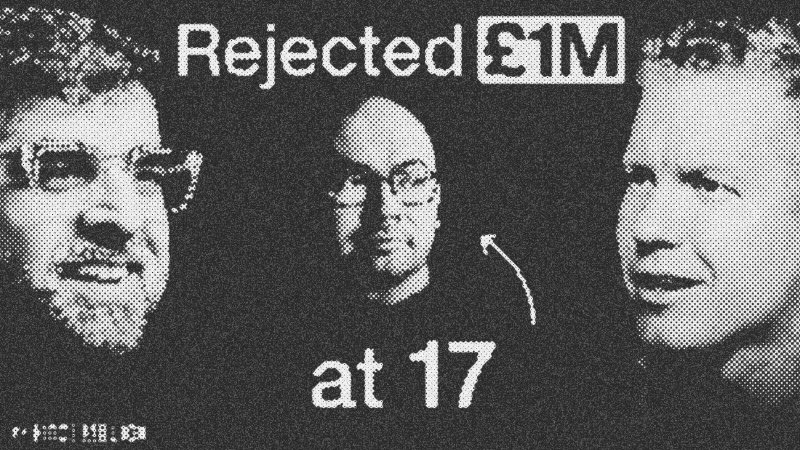
When he turned seventeen, the head of Bullfrog offered him a contract worth a million pounds to stay. For a middle-class teenager in the early nineties, that was an astronomical fortune. It was the equivalent of several million dollars today. He walked away from it. He chose to remain broke and go to college because he wanted to study neuroscience and artificial intelligence. He knew that to make computers think, he had to understand how the human brain actually works. He spent his college years drinking beer, playing foosball, and debating computational theory with anyone who would listen. He was a fierce nerd with absolute conviction.
The Contrarian Checkbook of Peter Thiel
In the early 2010s, artificial intelligence was a dirty word in both scientific and venture capital circles. Academics dismissed it because it lacked testable, structured hypotheses. VCs ignored it because no one had ever built a profitable business around it. It was viewed as expensive science fiction. But true innovators look for those exact moments of absolute skepticism.
Peter Thiel stepped in to back DeepMind when nobody else would. He recognized the sheer scale of the vision. Shortly after, Elon Musk joined as an early investor. Musk met Hassabis and talked about his plans to colonize Mars and build rockets to save humanity. Hassabis gave him a reality check. He told Musk that AGI would be the most important invention in human history. He made it clear that whoever built thinking machines first would control the future. Musk wrote a check.
This early backing allowed Hassabis and his team to lock themselves in a room and solve foundational problems. They did not build simple, rule-based systems. They combined deep learning with reinforcement learning. They tested their algorithms on simple Atari games like Pong and Brickbreaker. They gave the system one single instruction: make the score go up. At first, the computer was terrible. It missed the ball entirely. But after two hundred games, it was competitive. After five hundred games, it was completely unbeatable, inventing novel strategies that humans had never even considered.
Move Thirty-Seven and the Broadcast Blackout
Games served as the staging ground for the real test: Go. Go is widely considered the most complex board game in existence, with more potential board configurations than there are atoms in the observable universe. You cannot win Go through brute-force computing power. It requires intuition, style, and fluid decision-making. Analysts assumed a machine could never beat a human master.
In 2016, Hassabis took his team to Seoul to play Lee Sedol, a legendary grandmaster. Hundreds of photographers crowded the room, framing it as the ultimate battle between man and machine. During game two, the computer, running a program called AlphaGo, made an unusual play: Move 37. The live commentators gasped. They thought it was a glitch. No human player would ever place a stone there. It looked like an obvious mistake.
But Sedol froze. He began to sweat, staring at the board for fifteen minutes. The machine had not just calculated a path; it had created a completely original strategy. It was a moment of genuine machine creativity. AlphaGo went on to dominate the match, defeating Sedol. Shortly after, the team went to China to challenge the top-ranked player in the world. As AlphaGo began to dismantle the Chinese champion, the state authorities suddenly cut the live broadcast feed. They refused to let their champion lose face on national television. That broadcast blackout was a silent alarm. It triggered a massive, state-sponsored artificial intelligence arms race in Asia.
Solving the Fifty-Year Protein Puzzle
While the tech world obsessed over chess and board games, Hassabis had his sights set on physical science. He knew that games were just a training run. The ultimate goal was computational biology. Specifically, he wanted to solve the mystery of protein folding. Proteins are the workhorses of biology, and their three-dimensional shape determines how they function. For fifty years, scientists struggled to predict how a sequence of amino acids would fold into a unique structure. Doing it manually in a wet lab was slow, agonizing work that could take years for a single protein.
DeepMind entered a competitive global platform called CASP, the Olympics of protein folding. For decades, the best systems achieved only thirty percent accuracy. Hassabis redirected his team's focus to the problem. They built AlphaFold. In their first attempt, they won the competition, but Hassabis was deeply disappointed. The accuracy was not high enough to actually design medicines. He sent his team back to the drawing board.
He managed the team with unique creative patience. He knew you cannot force a major breakthrough by putting researchers into a state of panic. He gave them tight constraints but allowed them room to fail. They threw out their old models and rebuilt the architecture. In their next run, AlphaFold achieved an astonishing ninety percent accuracy. They solved the protein folding problem in a fraction of the time scientists had spent working on it for half a century. Instead of keeping the discovery behind a paywall, Hassabis made a bold move. He decided to fold all two hundred million known proteins in existence and give the data away for free to the global scientific community. Today, millions of researchers worldwide use that open library to design new drugs.
The Massive Wealth Hidden in Computational Biology
This success led to the creation of Isomorphic Labs, a company spun out of Google to redefine medicine from first principles. If you can simulate how a protein folds, you can run hundreds of thousands of digital drug trials before ever stepping foot in a physical lab. The business model is obvious. It is about shifting medicine from an expensive, slow guessing game to an efficient engineering process.
For entrepreneurs looking to build massive value, the lesson here is simple. Stop building simple wrappers around existing language models. The real frontier is computational biology. The demand for physical protein synthesis and real-world testing is about to grow exponentially. If you can build the tools, wet labs, or support services that help scientists test these new machine-generated hypotheses, you will capture an enormous market. The future does not belong to those who make incremental improvements on chat applications. It belongs to the fierce nerds who use computation to solve the hard, physical limitations of our world.
- AlphaFold
- 8%· products
- AlphaGo
- 8%· products
- Bullfrog Productions
- 8%· companies
- Cambridge University
- 8%· locations
- DeepMind
- 8%· companies
- Other topics
- 62%
The Most Important Founder You've Never Heard Of
WatchMy First Million // 57:53

two guys, talking about business. we've done it (sold our companies), and now we talk about new ideas, opportunities, and investments. hosted by Shaan Puri & Sam Parr -- produced by Hubspot. sometimes we bring on guests ranging from billionaires to stay at home moms who've got side hustles that are bringing in $10k a month. we like to have fun, and talk about business stuff.