Davos Schisms and the Silicon Surge: Navigating the New Macroeconomic Order
The global economic machinery is currently operating in a state of high-intensity friction, where old-world institutions like the World Economic Forum collide with the disruptive velocity of Artificial Intelligence. As the elite gathered in Davos, Switzerland, the narrative was no longer just about fiscal austerity or trade pacts; it was about the fundamental decoupling of productivity from human labor. The ripples from these discussions are not confined to the Swiss Alps; they are manifesting in unprecedented ways, from the valuation of Japanese toilet manufacturers to a record-breaking shift in Hollywood’s power dynamics.
The Davos Dichotomy: Musk, AI, and the Inequality Gap
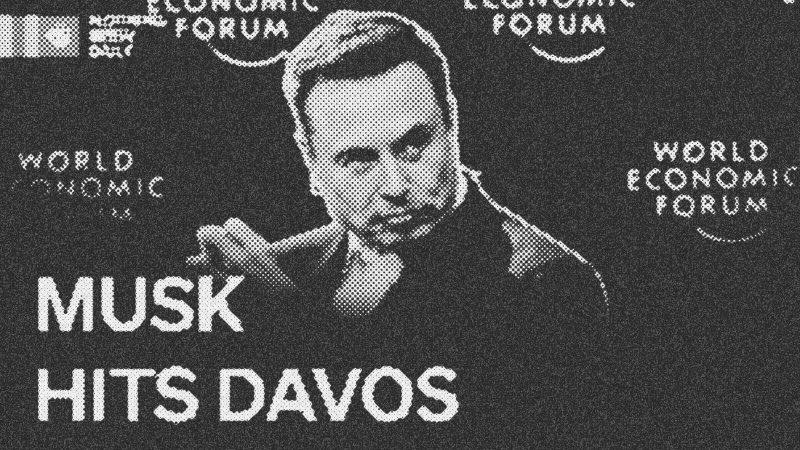
Elon Musk long criticized the Davos crowd, yet his presence this year underscored a shift in the global hierarchy. Musk’s projections—including the notion that Tesla’s Optimus Robot robots will eventually outnumber humans—highlight a future where automation is the primary driver of capital. However, the more sobering perspective came from Dario Amodei of Anthropic. Amodei warned of a profound socioeconomic schism where a small cohort of tech elites could experience 50% GDP growth while the broader global population faces chronic unemployment. This is the macro-risk of the decade: a productivity boom that fails to translate into broad-based prosperity. The "AI bubble" debate, sparked by OpenAI chairman Bret Taylor, adds a layer of financial instability to this technological upheaval, suggesting that even as we build this new infrastructure, the capital markets may be overextending themselves.
Hollywood’s New Guard: The Sinners Phenomenon
While Silicon Valley redefines labor, Hollywood is witnessing a structural shift in intellectual property ownership. Ryan Coogler’s Sinners didn't just break the Academy of Motion Picture Arts and Sciences record with 16 nominations; it broke the traditional studio model. Coogler secured a deal where he will own the film’s rights outright by 2050—a massive departure from the usual catalog ownership by giants like Warner Bros. Discovery. This move, coupled with the dominance of highly original, Americana-focused films over tired franchises, suggests that creative capital is gaining significant leverage over institutional distributors. As Netflix continues to circles Warner Bros. Discovery for a potential merger, the value of such high-performing, creator-owned assets will only skyrocket.
The Unlikely AI Play: Ceramic Supply Chains and Toto
Perhaps the most fascinating macroeconomic ripple is the surge of Toto, the Japanese high-end toilet manufacturer. While the market sees a bathroom fixture company, savvy analysts see a critical node in the semiconductor supply chain. Toto leverages its ceramic expertise to produce electrostatic chucks—essential components for chipmaking. This highlights a broader trend in Japan, where specialized industrial firms are pivoting toward the AI infrastructure build-out. With Nvidia CEO Jensen Huang declaring this the largest infrastructure build-out in human history, the demand for these obscure industrial components is outstripping traditional sectors. When a toilet company derives over 40% of its operating income from the chip sector, it signals that the AI revolution has reached its physical manufacturing inflection point.
Cultural Catalysts: From Hockey Rinks to Live Skyscraper Ascents
Macroeconomics is often driven by unpredictable cultural shifts. The "Halo Effect" of the HBO series Heated Rivalry has done for the NHL what Taylor Swift did for the NFL. Ticket sales and merchandise for the Ottawa Senators are booming because fictional narratives are driving real-world consumer behavior. Simultaneously, Netflix is doubling down on high-stakes live events, such as Alex Honnold’s rope-less climb of Taipei 101. These events are not just entertainment; they are tests of the new digital distribution infrastructure that will eventually host the Academy of Motion Picture Arts and Sciences on YouTube by 2029. We are watching the consolidation of attention and capital into a few high-octane platforms.
Conclusion
The global economy is currently a series of interconnected feedback loops. Innovation in Silicon Valley drives the stock of a Japanese ceramic firm, which in turn powers the hardware designed by former Apple executives. As we move further into this year, the primary challenge for leaders will be managing the friction between this rapid technological expansion and the resulting social inequalities. The old playbooks are being rewritten in real-time.
- Academy of Motion Picture Arts and Sciences
- 6%· companies
- Netflix
- 6%· companies
- Toto
- 6%· companies
- Warner Bros. Discovery
- 6%· companies
- Alex Honnold
- 3%· people
- Other topics
- 72%
Davos-hater Elon Musk makes his World Economic Forum Debut
WatchMorning Brew Daily // 25:29

Morning Brew Daily, a daily talk show that covers the latest news on business, the economy, and everything else, with Neal Freyman and Toby Howell. Witty, informative and everything you need to start your day. Available on all podcasting platforms and Youtube. Listen to the podcast here: https://link.chtbl.com/MBD Follow us on Twitter: https://twitter.com/mbdailyshow Follow us on Instagram: https://www.instagram.com/mbdailyshow/ Follow us on TikTok: http://www.tiktok.com/@mbdailyshow Sign up for the Morning Brew Newsletter: https://www.morningbrew.com/daily/subscribe?utm_campaign=mbd_yt&utm_medium=multimedia&utm_source=youtube