The Musk Monolith and the Shifting Gears of Global Commerce
The $1.25 Trillion Convergence: SpaceX and xAI
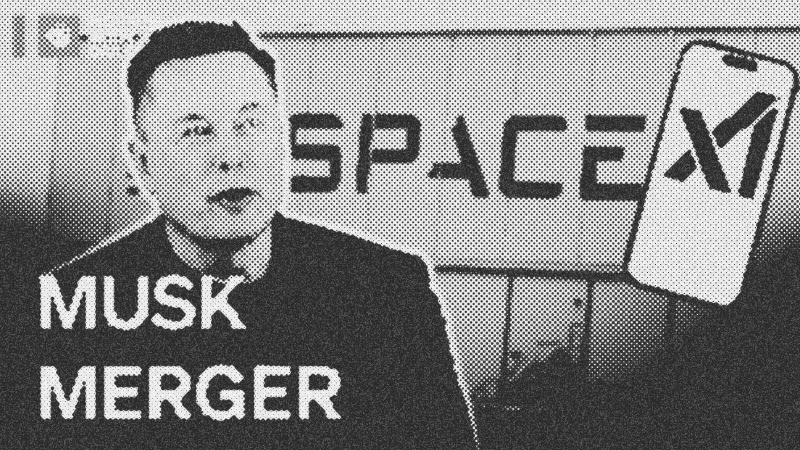
Elon Musk recently orchestrated what stands as one of the most audacious structural realignments in modern corporate history. By merging SpaceX, his dominant aerospace powerhouse, with his nascent artificial intelligence startup xAI, Musk has created a private entity valued at an staggering $1.25 trillion. This is not merely a administrative consolidation; it represents a fundamental bet on vertical integration at a cosmic scale.
The logic behind this "Musk Corporate Universe" (MCU) maneuver is twofold: capital efficiency and engineering synergy. Infrastructure for both orbital launches and high-level AI compute is prohibitively expensive. By folding these entities together, Musk acknowledges that independent financial viability is secondary to the long-term goal of building an "innovation engine" that spans both terrestrial and extra-planetary environments. This merger effectively signals the beginning of the end for siloed innovation in his portfolio.
Data Centers in the Final Frontier
The strategic through-line of the SpaceX and xAI merger rests on a radical premise: the future of artificial intelligence does not live on Earth. Terrestrial data centers increasingly face diminishing returns due to land-use regulations, power grid limitations, and cooling costs. Musk’s solution involves leveraging SpaceX's launch capabilities to deploy orbital data centers powered directly by solar energy.
While critics view this as a logistical nightmare, the integration allows for a closed-loop system where xAI provides the compute brains, Tesla potentially provides the energy storage expertise, and SpaceX provides the delivery mechanism. If successful, this would bypass the bottlenecks of global energy infrastructure, creating a decentralized, space-based compute network that is immune to local regulation.
Disney’s Succession Tightrope
While Musk consolidates, The Walt Disney Company is focused on the delicate art of the handoff. CEO Bob Iger is currently attempting to rectify the most significant failure of his tenure: finding a permanent successor. The previous transition to Bob Chapek ended in a public reversal, forcing Iger back into the fold to stabilize the ship.
The financial backdrop for this search is surprisingly robust. Disney reported a massive 72% growth in streaming income, finally turning Disney+ into a profit center after years of heavy losses. Concurrently, the theme parks division continues to act as the company's primary engine of cash flow, outperforming expectations despite price hikes. The next leader—likely either Josh D'Amaro or Dana Walden—will inherit a company that has successfully navigated the pivot to digital, yet remains culturally and operationally dependent on the legacy of its "Mouse-in-Chief."
The Resurgence of the Minivan and Creator Economies
Macro trends are manifesting in unexpected places, from suburban driveways to the local cinema. The minivan, long dismissed as a relic of the 1990s, is experiencing a 21% surge in sales. This is driven by a combination of favorable unit economics—costing significantly less than comparable SUVs—and a shift in marketing toward "adventure-ready" utility. Brands like Kia with its Kia Carnival have successfully rebranded the vehicle as a high-tech "maxi-van," attracting a younger, more male-dominated demographic.
Simultaneously, the entertainment industry is witnessing a democratization of the box office. YouTuber Markiplier recently self-funded and released Iron Lung, grossing $22 million in its opening weekend by bypassing traditional studio distribution. This mirrors the direct-to-consumer model pioneered by Taylor Swift. It proves that in the modern economy, a loyal, concentrated audience is more valuable than legacy institutional backing. Whether it is a trillion-dollar space merger or an indie horror film, the trend remains clear: the traditional gatekeepers are being bypassed by those who control the platforms of the future.
- SpaceX
- 18%· companies
- xAI
- 14%· companies
- Bob Chapek
- 5%· people
- Bob Iger
- 5%· people
- Dana Walden
- 5%· people
- Other topics
- 55%
Elon’s SpaceX buys Musk’s xAI
WatchMorning Brew Daily // 25:03

Morning Brew Daily, a daily talk show that covers the latest news on business, the economy, and everything else, with Neal Freyman and Toby Howell. Witty, informative and everything you need to start your day. Available on all podcasting platforms and Youtube. Listen to the podcast here: https://link.chtbl.com/MBD Follow us on Twitter: https://twitter.com/mbdailyshow Follow us on Instagram: https://www.instagram.com/mbdailyshow/ Follow us on TikTok: http://www.tiktok.com/@mbdailyshow Sign up for the Morning Brew Newsletter: https://www.morningbrew.com/daily/subscribe?utm_campaign=mbd_yt&utm_medium=multimedia&utm_source=youtube