Beyond the Breaking Point: Facing the Atlas Mountain Race
The air in Beni Mellal carries a weight that has nothing to do with the humidity. It is the heavy, silent pressure of the unknown. Standing at the starting line of the Atlas Mountain Race, Conor Dunne admits to a feeling he hasn't encountered in years: pure, unadulterated fear. This isn't just another cycling event; it is a 1,440-kilometer self-supported odyssey through the Atlas Mountains of Morocco. With over 24,000 meters of elevation gain and a completion rate that rarely hovers above 50%, the race is a monster designed to chew through physical preparation and spit out anything less than total mental fortitude.
Conor Dunne came into this challenge with a strategy that many would call insufficient. Juggling the demands of family life, his training was capped at a mere six hours a week. He utilized the ROUVY platform to simulate Alpine climbs after his children were asleep, banking on high-intensity intervals to compensate for a lack of volume. His machine for the journey was a Canyon Exceed, a hardtail mountain bike converted with drop bars and Tailfin cargo packs. Every piece of kit, from the CeramicSpeed bearings to the RideWrap frame protection, was selected to withstand a brutal assault from rock and grit. Yet, as the clock ticked down, the realization hit: no amount of tech can shield a rider from the raw isolation of the High Atlas.
The Frozen Wall and the First Descent
The race erupted into a chaotic surge of riders, but the camaraderie of the start line evaporated quickly as the trail tilted toward the sky. The first night served as a savage introduction to the Moroccan climate. As Conor Dunne crested a 1,600-meter summit, the heavens opened. Rain turned to hail, then to a biting frost as temperatures plummeted below zero. The descent was a harrowing exercise in survival. Sheet ice coated the tarmac, forcing riders to hunt for traction in the gravelly gutters.
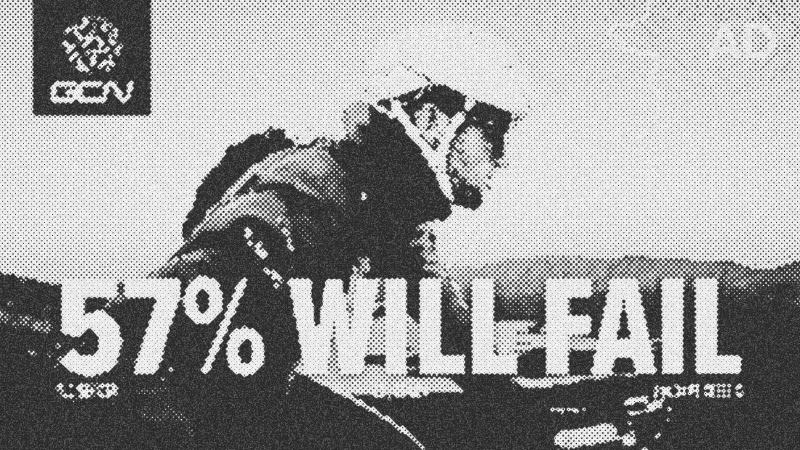
This was where the mental game truly began. Conor Dunne found himself riding through a landscape he couldn't see, guided only by the narrow beam of his light and the roar of cascading rivers. He eventually crossed paths with Maxim Pirard, a seasoned ultra-endurance athlete. They shared a brief, frozen moment before the reality of the distance set in. By the time Conor Dunne found a local inn to bed down for five hours, he was already battered. The Albion technical gear he wore had kept his core warm, but the psychological toll of the freezing dark was a debt that would eventually come due.
Desert Hallucinations and the Hiker-Bike Nightmare
Day two brought a jarring shift in scenery. The ice of the high passes gave way to the sun-scorched expanse of the desert. The landscape was vast, humbling, and deceptive. Conor Dunne faced a 100-kilometer stretch with zero resupply points. He stocked up on bread and omelettes, stuffing his bags to the limit. The heat was a different kind of adversary, sapping moisture and willpower in equal measure.
Then came the 'hiker-bike' sections—the parts of the Atlas Mountain Race that organizers include specifically to break the rhythm of the cyclist. Conor Dunne found himself pushing his Canyon Exceed up vertical scree slopes, his cycling shoes never intended for this level of mountaineering. His left knee began to flare, a sharp, stabbing reminder of the imbalance between his training and the reality of the terrain. He broke a chain in the middle of the desert, a mechanical failure that felt like a personal insult from the trail. Even as he fixed it, the 'devil on his shoulder' began to whisper about the impossibility of the task. He was 80th in the standings, moving up, but the physical cost was mounting. He pushed into the third night, eventually collapsing into a bivvy bag on a mountainside for a two-hour sleep that felt like seconds.
The Body Rebels: The Decision to Scratch
By the time Conor Dunne reached Checkpoint 2, the damage was no longer manageable. He had covered over 500 kilometers of the most punishing terrain on the planet, but his right ankle had become a liability. It wasn't the dull ache of a hard workout; it was the inflammatory heat of a developing injury. When he attempted to roll out at 4:00 a.m. for the next leg, he found he literally could not pedal. The mechanical efficiency that had carried him through a professional career was gone.
In a moment of profound vulnerability, Conor Dunne called Phil Burt, a renowned sports physiotherapist. The conversation was the climax of his internal struggle. Phil Burt gave him the hard truth: pushing through could lead to chronic, permanent damage. It wasn't the Olympics; it was a race, and the mountains would still be there next year. Making the decision to 'scratch'—to withdraw from the race—is often harder than continuing. It requires a different kind of strength to acknowledge a limit when every fiber of your being wants to prove you have none. Conor Dunne watched as Maxim Pirard eventually crossed the finish line in an incredible 20th place, while Victor Bousson took the overall win in just over four days.
The Lesson of the High Atlas
True strength isn't just about the number of miles you finish; it's about the courage to step into the arena in the first place. Conor Dunne failed to finish the Atlas Mountain Race, but he didn't fail the test of character. He proved that a father of two, training on six hours a week, could still compete at a high level against the world's most elite ultra-endurance athletes. He identified his weakness—not his cardiovascular engine, but the physical resilience required for the brutal hiking sections.
He returned home with his Canyon Exceed intact, thanks to the RideWrap protection, and his spirit undiminished. Resilience is built in the moments where you are forced to look at your own limits and decide how to prepare for the next encounter. The Atlas Mountains took a pound of flesh, but they gave back a level of self-knowledge that no indoor trainer could ever provide. The path to functional strength is rarely a straight line; it is a series of peaks, valleys, and the occasional strategic retreat that prepares you for a greater victory.
- Conor Dunne
- 33%· people
- Atlas Mountain Race
- 9%· events
- Canyon Exceed
- 9%· products
- Atlas Mountains
- 6%· places
- Maxim Pirard
- 6%· people
- Other topics
- 36%
I Tried The Most Extreme Bike Race On The Planet
WatchGlobal Cycling Network // 1:00:46

The Global Cycling Network puts you in the centre of the action: from the iconic climbs of Alpe D’Huez and Mont Ventoux to the cobbles of Flanders, everywhere there is road or pavé, world-class racing and pro riders, we will be there bringing you action, analysis and unparalleled access every week, every month, and every year. We show you how to be a better cyclist with our bike maintenance videos, tips for improving your cycling, cycling top tens, and not forgetting the weekly GCN Show. Join us on YouTube’s biggest and best cycling channel to get closer to the action and improve your riding! Welcome to the Global Cycling Network!