The Ghost of Innovation: Why France’s Electronic Revolution Stalled
The 1990s: France as the Tech Epicenter
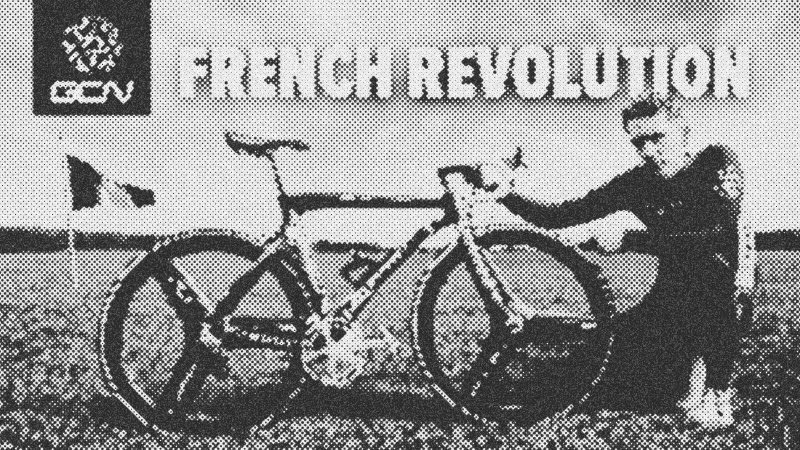
In 1993, the cycling world didn't look toward Japan or the United States for the next big breakthrough. They looked to France. At the time, French engineering dictated the pace of the pro peloton. The Peugeot ZX-1 represents the absolute zenith of this era. It wasn’t just a bicycle; it was a rolling laboratory. Featuring a carbon monocoque frame and the world’s first commercially available electronic groupset, it preceded the modern electronic shifting craze by sixteen years. During this period, brands like Mavic, Look, and Vitus were pushing boundaries that many modern riders assume were established only a decade ago.
Overengineered Origins: The Vitus Monocoque
While the Peugeot ZX-1 carried the legendary lion branding, its soul belonged to Vitus. They moved away from traditional aluminum lugs to create a true carbon monocoque frame, molded in a single piece. The design features dropped seat stays and a curved seat tube that hugs the rear wheel—visual cues we now associate with the most expensive superbikes of 2024. However, the engineers of the early 90s didn't fully trust carbon’s integrity. They overbuilt the tubes, resulting in thick walls that produced a bike weighing nearly 10 kilograms. It was stiff and futuristic, but it lacked the featherweight agility required for the high peaks of the Tour de France.
Mavic Zap: Shifting Before the Digital Age
Before Shimano Di2 became the gold standard, there was Mavic Zap. This electronic groupset used a low-energy system that was frankly brilliant in its simplicity. Instead of heavy motors, it utilized a small electromagnet to trigger shifts, using the energy of the rotating jockey wheel to move the derailleur. Despite its age, the system remains remarkably responsive. You can shift from the hoods or use "climbing buttons" on the flats—features we take for granted today. Unfortunately, reliability issues haunted the pro ranks. When Tony Rominger got stuck in a 54x12 gear during a critical time trial, the reputation of electronic shifting took a hit that would take over a decade to repair.
The Great Market Disruption
If the tech was so advanced, why did it vanish? The answer lies in the dirt. The sudden explosion of mountain biking in the mid-90s caught the French industry off guard. While legacy brands focused on road racing traditions, American giants like Specialized and Trek leveraged mountain bike profits to buy their way into the European road market. Simultaneously, the Union Cycliste Internationale introduced the Lugano Charter in 1997, a restrictive set of rules that effectively banned aerodynamic innovations like the Peugeot ZX-1's recessed wheels and unconventional geometry. Innovation didn't fail because it was bad; it failed because the rules and the market shifted under its feet.
Conclusion: A Globalized Legacy
Today, the Peugeot ZX-1 serves as a reminder that progress isn't a straight line. France may no longer hold a monopoly on cycling technology, but the DNA of the Mavic wind tunnel tests and the Vitus carbon experiments lives in every modern aero bike. The sport is more global and accessible now, yet there is something undeniably rugged about these early pioneers who dared to build the future before the world was ready to ride it.
- Peugeot ZX-1
- 17%· products
- Vitus
- 13%· companies
- Mavic
- 9%· companies
- Chris Boardman
- 4%· people
- Greg LeMond
- 4%· people
- Other topics
- 52%
This Bike Was The Pinnacle Of Cycling - Where Did It Go Wrong?
WatchGlobal Cycling Network // 21:43

The Global Cycling Network puts you in the centre of the action: from the iconic climbs of Alpe D’Huez and Mont Ventoux to the cobbles of Flanders, everywhere there is road or pavé, world-class racing and pro riders, we will be there bringing you action, analysis and unparalleled access every week, every month, and every year. We show you how to be a better cyclist with our bike maintenance videos, tips for improving your cycling, cycling top tens, and not forgetting the weekly GCN Show. Join us on YouTube’s biggest and best cycling channel to get closer to the action and improve your riding! Welcome to the Global Cycling Network!