Mud, Grit, and the Quest for the White Horse FKT
The Call of the Wild
Winter has a way of burying your spirit under layers of gray skies and damp gear. While my contemporaries were off chasing sun-drenched gravel in Morocco or desert heat in Saudi Arabia, I was left grinding out miles on the same local loops. But the change of season brings a specific kind of hunger. You don't need a boarding pass to find a suffer-fest; you just need a brutal enough objective in your own backyard. For me, that meant the White Horse Round, a 190km loop through the southwest of England. It’s a route that promises a lot of mud, a bit of road, and a significant test of mental fortitude.
Into the Quagmire
Setting off at dawn, the temperature hovered near freezing. The first leg followed canal paths that should have been a warm-up, but instead, they were a lesson in high-stakes balance. One wrong move on the slick, waterlogged banks and you’re taking an early bath in the canal. I was rolling on a Pinarello Gravel F, a machine built for speed but currently being asked to act as a tractor. Despite the flat terrain, progress was agonizingly slow. I hit the tarmac after an hour only to realize I’d covered a measly 23km. The dream of a Fastest Known Time (FKT) felt like it was slipping away into the muck before the real climbing even began.
The Bleakness of Salisbury Plain
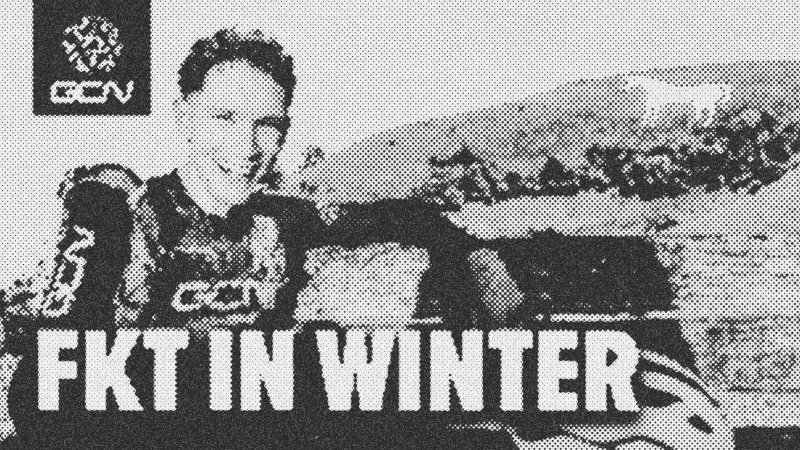
As I moved onto the edge of Salisbury Plain, the landscape turned into a stark, military-grade wilderness. This place is an exposed plateau, a firing range where the wind has nothing to stop it from slamming into your chest. I was pushing 270 watts just to keep moving, a pace I knew wasn't sustainable for an eight-hour day. The isolation here is total. I’d asked my GCN teammates to join, but they all had excuses—too tired, too muddy, or too busy at the gym. In the end, the silence of the plain was exactly what I needed. It forced a conversation with myself, a check on my own resilience when the adrenaline starts to fade and the cold seeps through your Shimano RX910 shoes.
Pushing the Roman Limit
By the time I hit the Foss Way, Britain’s oldest "motorway," the sun finally made a guest appearance. This 2,000-year-old Roman road is a dead-straight gravel track that allows you to finally open up the engine. I was deep into my nutrition strategy by then, having downed nearly 500g of carbs through a mix of solid food and Precision Fuel & Hydration gels. The legs felt surprisingly alive, even as the clock ticked toward my arbitrary eight-hour deadline. I had to empty the tank on the final ridge, battling a fierce headwind that threatened to stall my momentum just kilometers from the finish.
The Verdict of the Calendar
I rolled back to the start with a total elapsed time of 7 hours and 55 minutes. I’d done it—snuck under the eight-hour mark and beat the existing winter FKT. But the mountains and the record books have their own rules. The FKT adjudicators ultimately ruled that because the ride took place in March, it fell under the meteorological spring, making it ineligible for the winter record. It’s a bitter pill, but in this game, the result is secondary to the effort. I found the adventure I was looking for, pushed my boundaries in the mud, and made it back in time for the school gymnastics run. That’s a win in my book.
- Fastest Known Time
- 11%· sports and fitness
- Foss Way
- 11%· places
- HJC Bellis 2
- 11%· products
- Pinarello Gravel F
- 11%· products
- Precision Fuel & Hydration
- 11%· companies
- Other topics
- 44%
Can I Shake Off The Winter Blues With An Epic 190km Gravel Ride?
WatchGlobal Cycling Network // 22:24

The Global Cycling Network puts you in the centre of the action: from the iconic climbs of Alpe D’Huez and Mont Ventoux to the cobbles of Flanders, everywhere there is road or pavé, world-class racing and pro riders, we will be there bringing you action, analysis and unparalleled access every week, every month, and every year. We show you how to be a better cyclist with our bike maintenance videos, tips for improving your cycling, cycling top tens, and not forgetting the weekly GCN Show. Join us on YouTube’s biggest and best cycling channel to get closer to the action and improve your riding! Welcome to the Global Cycling Network!