Sinek warns your job cannot replace your missing community
The structural collapse of our modern default spaces
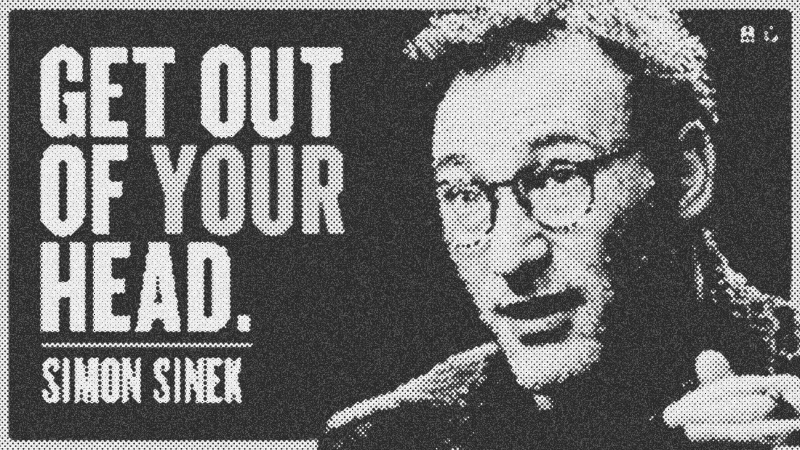
We are living through a massive structural reorganization of human belonging. Historically, individuals gathered their sense of identity, validation, and purpose from distributed sources. They turned to local churches, neighborhood associations, bowling leagues, and local community projects. Work was simply the space where one earned a living. It was not meant to answer existential questions or provide a complete moral and social universe. But as these old civil institutions collapsed over the past half-century, a massive vacuum formed.
Instead of finding new avenues for communal connection, we funneled all our psychological expectations into just two institutions: the workplace and our romantic partners. We demand that our jobs provide not just a paycheck, but a calling, an active social life, absolute political alignment, and a clear moral orientation. We demand that our romantic partners act as our best friends, spiritual guides, financial safety nets, and constant lovers.
This is a highly concentrated, unhedged psychological investment. We have put all of our emotional capital into two volatile stocks. When a single setback hits our career or our domestic life, our entire identity collapses. We are setting both our workplaces and our relationships up to fail. By demanding that they become our everything, we guarantee they will eventually feel like nothing but a burden.
This crisis is not a personal failure of willpower. It is an architecture problem. The infrastructure of daily life has shifted to favor frictionless, screen-mediated isolation. We no longer have to leave our homes for entertainment, food, or even companionship. But convenience has a steep price. When we eliminate the natural friction of physical communities, we also eliminate the accidental encounters and slow-growing bonds that keep us grounded.
The fallacy of self-actualization and the performance of meaning
To understand why we feel so isolated despite being constantly connected, we must look at how our theories of human development have gone astray. The celebrated psychologist Abraham Maslow proposed a famous hierarchy of needs. He argued that human beings must secure physiological safety and food first, followed by relationships, and ultimately, self-actualization at the absolute peak. But this model contains a profound error. It views the human being as an isolated island, climbing a mountain of individual achievement alone.
If you are abandoned on a desert island, food and shelter do come first. But in the actual history of our species, we are social animals. We do not survive a single day without a group. People rarely die by suicide simply because they are hungry; they die by suicide because they are profoundly lonely. This biological reality completely flips the hierarchy. Our relationships and our group integration are actually more foundational than our individual survival metrics.
When we isolate ourselves in the pursuit of individual self-actualization, we end up empty. We see this clearly in our obsession with optimization. The modern high achiever has turned self-improvement into a solitary, checklist-driven religion. They wake up at dawn, cold plunge, consume complex stacks of supplements, track their sleep phases with absolute precision, and attend solo wellness retreats. They are trying to optimize their way out of a deep existential void.
This behavior is a manifestation of an inverse law first hinted at by the psychiatrist Viktor Frankl. He famously observed that when people cannot find meaning, they distract themselves with hedonistic pleasure. But the reverse is also true. When people struggle to experience simple, day-to-day pleasure and joy, they distract themselves with the pursuit of "meaning" and hard achievements.
If ease, play, and lighthearted connection do not come naturally to you, it is tempting to bypass them entirely. You choose to pursue only difficult, pain-laden achievements. You become an expert at delaying gratification in perpetuity, running endlessly toward a horizon of future happiness that never actually arrives. You treat your life as an instrument for future success, forgetting how to actually live in the present.
We see this tragic pattern play out in elite performers. Athletes like Michael Phelps and Andre Agassi spend their entire youth focusing on a singular goal: winning. They confuse their goal with their life's purpose. They sacrifice relationships, play, and rest to achieve this peak. Yet, the moment they secure the gold medal or retire from the sport, they drop into a profound, terrifying depression. They realized too late that a goal is simply a temporary waypoint. It is not an identity.
Actionable steps for sitting in the mud and building real bonds
Reversing this hyper-individualistic isolation requires us to learn basic human skills that our screen-addicted culture has allowed to atrophy. First, we must change how we show up for our friends when they are suffering. The default modern response to a friend's crisis is to offer transactional advice. We tell them to update their resume, leave their partner, start a new routine, or focus on their goals.
This advice-driven response is well-meaning, but it is deeply counterproductive. When someone is in an emotional state, bringing analytical facts to the table only makes them feel more alienated. It sends a subconscious message that their negative emotions are a problem to be quickly resolved because their pain is making you uncomfortable.
Instead, we must practice the difficult art of "sitting in the mud." When a friend is hurting, abandon your urge to fix the problem. Sit with them in their discomfort. Validate their pain with simple, non-analytical presence. Say: "This hurts, and I am here with you." Only when the emotional storm has passed and they are back in a rational state should you ask for permission to offer practical thoughts.
Second, we must learn the art of safe confrontation. Most of us avoid conflict because we do not know how to disagree without attacking. When we feel hurt, we attack the other person’s character. We say: "You are a liar" or "You are a bad friend." This instantly triggers their defense mechanisms.
Instead, practice behavioral accountability. Separate the person's character from their actions. Focus on the story you are telling yourself. Walk up to your colleague or friend and say: "Here is the story I am telling myself right now. I feel like you are frustrated with me, and these are the three specific actions that made me feel this way. I don't want us to fail, so I want to put this on the table."
This shift from character attack to shared vulnerability is incredibly difficult, but it is the only way to build trust. It requires you to go first, exposing your own insecurity to create a safe harbor for the other person to let down their guard.
Reconciling our internal paradoxes and the value of failure
To live a resilient life, we must also make peace with the fundamental messiness of our emotional biology. We have a highly rational neocortex, but we also have a primitive limbic brain that governs our feelings and behaviors without any capacity for language. Because these two systems coexist, we are constant paradoxes. We can experience two completely conflicting emotions at the exact same time. We can mourn a tragedy while simultaneously finding immense creative joy in a new project. We can love our partner while feeling deeply frustrated by them in the moment.
Our modern self-help culture tries to make our emotions neat and binary. It demands that we choose: are we happy or are we sad? Are we successful or are we failing? But this binary logic is a trap. If we only allow ourselves to feel happy when everything is perfectly optimized, we will spend our lives in a state of constant anxiety.
We must learn to accept failure as an integral part of the game. If your ambitions and your vision for the world do not exceed your current capabilities, you are playing a very small game. True growth requires you to set goals that you do not yet know how to achieve. This means you must become comfortable with falling short.
If you lower your goals simply to guarantee that you always feel like a success, you are trading your long-term growth for short-term comfort. It is far better to dream big, take massive creative risks, and confidently own your failures when things go wrong.
This shift in mindset is what separates the top performers from the rest. In professional sports, the absolute best athletes do not have better diets or better workouts than their peers. What they have is a profound joy in the play itself. When they score, they celebrate the fun of the game. When they miss, they don't beat themselves up; they get excited about the next opportunity. This playful relationship with success and failure lowers their heart rate, preserves their physical energy, and keeps them relaxed when the pressure is highest.
Choosing to go first in an infinite game
Ultimately, finding our way out of our current crisis of isolation requires us to abandon our culture of rugged individualism. We have spent decades building corporate and social systems designed to reward individual achievement. But this is a fundamentally unstable way to live.
We must realize that the ultimate biological hack is not a cold plunge or a supplement stack. The ultimate biohack is deep, consistent friendship. A true friend is not just someone you play video games with or meet for brunch. A true friend is someone who has agreed to grow with you. It is a reciprocal pact where both people commit to holding each other accountable, offering support, and showing up in times of crisis.
If you are feeling lost, stuck, or paralyzed by the challenges of modern life, stop looking inward. Stop reading more self-help books and attending more solitary retreats. Instead, turn your focus outward. Go find someone else who is struggling with the exact same challenges you are facing, and dedicate your energy to helping them.
By committing yourself to a life of service, you build the very foundations of trust and belonging that you have been missing. Do not wait for the world to offer you safety, purpose, or community. Have the courage to go first. Be the leader who steps into the mud, speaks the truth, and invites others to walk alongside you.
- Abraham Maslow
- 10%· people
- Adam Smith
- 10%· people
- Andre Agassi
- 10%· people
- Chris Williamson
- 10%· people
- Deeyah Khan
- 10%· people
- Other topics
- 50%
The Modern World is Wrong About Happiness - Simon Sinek (4K)
WatchChris Williamson // 1:43:45
