Robert Greene warns stupid people are more dangerous than evil ones
The Death of Soul in Academic thought
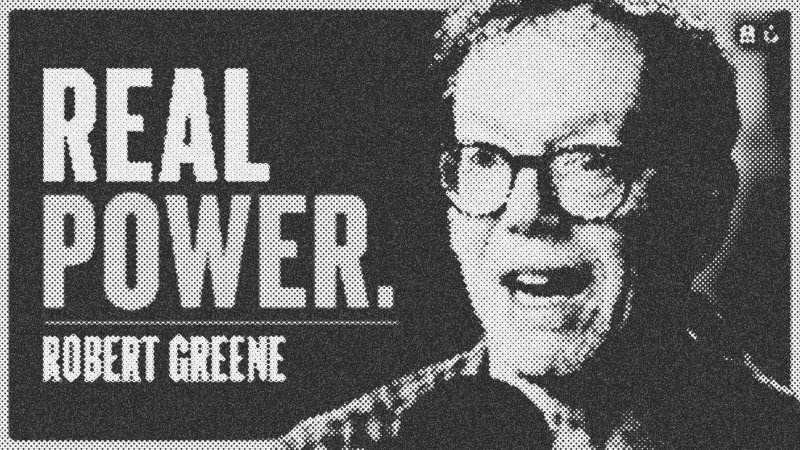
Something went wrong with how we think. Today, if Socrates walked down the street proposing his dialogic examinations of the soul, modern academics would dismiss him as a mere speculator. They would demand a peer-reviewed journal entry, a dataset, and an fMRI scan to prove his theories on virtue. This hyper-rational, data-driven fixation has stripped the life out of modern philosophy, turning what was once a guide for living into an abstract mathematical exercise.
True philosophy must maintain an active connection to our day-to-day affairs. It should guide us when we wake up, helping us breathe, think, and navigate our existences. Zen Buddhism, for example, functions as an incredibly realistic philosophy because it strips away spiritual pretension to ground you in what is concrete. In contrast, academic institutions foster a culture of reactionary stances. Intellectuals construct career-defining positions simply to oppose someone else’s perspective, winning space in literary reviews while completely losing touch with truth.
We must reintroduce play into our intellectual pursuits. Without a spirit of play, critical inquiry turns cold. When we lose our capacity to wonder, we shut ourselves off from the mysterious universe we inhabit. We think we have categorized the world with our datasets, yet our understanding remains remarkably shallow.
The Silent Preparation of the Wilderness Years
When you leave school, nobody hands you a map. You are cast into the wilderness to find your own path, often spending years drifting through professions that feel like terrible fits. This period of apparent directionless wandering, however, is often where the foundations of your future are quietly built. Developing high-level skills changes the literal matter of your brain, rewiring your neural connections through persistent effort.
Consider Robert Greene’s own career before he published The 48 Laws of Power. He spent nearly two decades working over eighty different jobs, trying journalism, wandering through Europe to write an unsuccessful novel, and working in Hollywood. Each step felt agonizingly out of place. Hollywood was a terrible match for a self-described control freak who hated artistic compromise. Journalism felt shallow because its weekly deadlines produced articles that were forgotten within days.
Yet, this wilderness was not empty space. Writing under tight journalistic deadlines taught him to capture attention instantly. Trying to write novels developed his narrative structure. Hollywood taught him deep historical research. When he met Dutch designer Joost Elfers in Italy and pitched the idea that would become his breakthrough book, the soil was ready. The skills had been acquired, Brick by brick, creating an intellectual base from which his life’s work could sprout.
Why Certainty is the Ultimate Form of Stupidity
Ancient Greek thinkers recognized a terrifying reality: far more harm is caused in this world by stupid, incompetent people than by evil ones. The Greeks valued phronesis, a form of practical wisdom that allowed individuals to navigate complex social situations and get things done. The opposite of this wisdom is not a lack of raw IQ, but rather the presence of absolute certainty.
What makes people truly stupid is the belief that they possess the right answer to everything. This certainty narrows their focus to a tiny, single-track rail, making them blind to the vast world around them. This is not original thought; it is merely social media noise absorbed and regurgitated. When individuals with this mindset gain power, they become exceptionally dangerous.
Historically, this dynamic played out during the Peloponnesian War, chronicled by Thucydides. The Athenian leaders, blinded by their own certainty, assumed conquering Sicily would be an easy path to glory. They failed to think through the strategic parameters, bringing about the end of Athenian democracy. When leaders act without negative capability—the capacity to hold two opposing ideas in their minds without immediately grasping for certainty—they doom themselves and their societies.
Your Reputation is the Only Currency You Cannot Buy Back
Reputation is the ultimate cornerstone of power. In the social arena, people do not interact with your authentic self; they interact with your appearance. They judge you on what they see, meaning your reputation acts as a psychological vanguard, shaping interactions before you even enter a room.
Once a reputation slips, you become highly vulnerable, open to attacks from every direction. If you establish a reputation for consistency, your presence carries weight. But if you are seen as inconsistent—shifting your values to match every passing political or cultural wind—you appear weak and untrustworthy. You lose your core.
In our digital age, this reality has become increasingly brutal. Young people post reckless, short-sighted content online, completely unaware that they are permanently damaging their future reputations. Credibility has no return policy. If you trade your credibility for a short-term payout or a moment of digital validation, you will find it impossible to purchase back.
The Power of the Genetic Mutation
In nature, habitats remain vital and sustainable because of diversity. Genetic mutations introduce variety, ensuring the survival of the ecosystem. Human culture operates under the exact same law. Your uniqueness is a necessary mutation designed to enrich the cultural gene pool.
Yet, the pressure to conform is overwhelming. As social animals, we are pushed to dress, speak, and think like our peers. During adolescence, this behavior is natural, but carrying this conformity into your twenties and thirties is a recipe for psychological decay. When you drown out your inner voice to fit in, you become replaceable. And in a brutal world, if you are replaceable, you will be replaced.
True power lies in mining your oddness. Consider historical anomalies like Salvador Dali or Leonardo da Vinci, or even modern figures like Temple Grandin, who turned severe autism into a unique lens for understanding animal behavior. They did not try to smooth over their strange corners. When publishers asked for changes to make his first book look like everything else on the shelf, his refusal to compromise preserved its strangeness, which was precisely why it stood out and succeeded. You must find the courage to lean into your eccentricities.
The Psychology of Absence and the Trap of Early Success
Humans are deeply responsive to scarcity. The more you are seen and heard from, the more common you appear. If you are already established within a group, a temporary withdrawal makes you more talked about and more admired. It is a delicate dance between absence and presence.
This dynamic is rooted in our neurology. We are driven by intermittent reinforcement; we crave what we cannot easily have. If you inundate someone with texts in a dating scenario, or overexpose yourself on social media, you leave no space for fantasy. You must give people room to miss you. However, you cannot use absence before you have established presence. Being absent before you have built momentum is not alluring; it is simply failing to start.
This relates to the curse of immediate success. Achieving a massive hit on your first attempt can be a psychological disaster. When you succeed without discipline or struggle, you assume you have the Midas touch. You surround yourself with yes-men, stop taking creative risks, and inevitably crash. Experiencing years of struggle and failure before succeeding provides the necessary perspective to survive the pressures of public life.
- Homo Ludens
- 6%· books
- John Keats
- 6%· people
- Joost Elfers
- 6%· people
- Leonardo da Vinci
- 6%· people
- Machiavelli's Virtue
- 6%· books
- Other topics
- 71%
How Saying Less Makes People Respect You More - Robert Greene (4K)
WatchChris Williamson // 2:06:01
