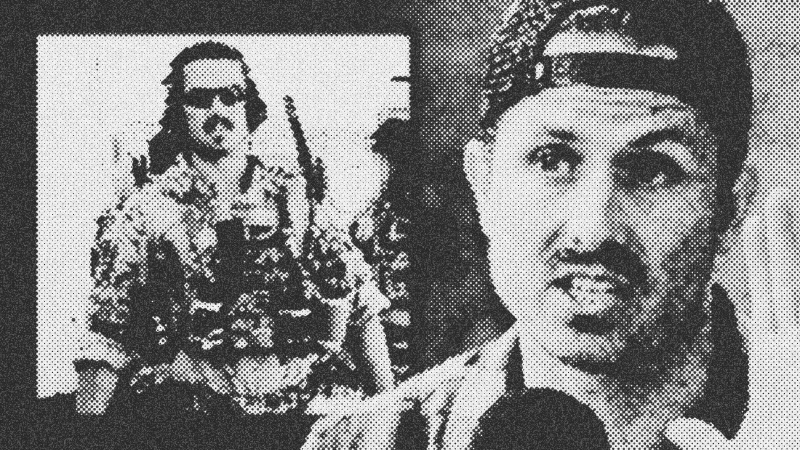
MrBallen describes the moment a grenade hit his shoulder in Afghanistan
The path of a Navy SEALs begins with a contract signed in blood and sweat, a seven-year commitment that trades the safety of civilian life for the intense, choreographed chaos of special operations. MrBallen, then a young operator on his first combat tour, found himself descending into the thin, cold air of Logar Province. The transition from the comfort of a military transport to the red-lit interior of a plane diving into a combat zone serves as the first psychological threshold. For these men, the beauty of the Afghan mountains stood in jarring contrast to the reality of Forward Operating Base Shank, a landscape defined by Hesco barriers, the constant thrum of engines, and the looming threat of the unknown.
Professionalism in the middle of chaos
There is a specific, expensive beauty in seeing millions of dollars of specialized training manifest in real-time. When the rounds start flying, the veneer of the "superhero" strips away, revealing something far more grounded: intentionality. In the village of Zargar, a dense urban maze of mud huts and hidden tunnels, this training becomes the only tether to reality. The Navy SEALs operated as a single organism, moving in tandem through an environment where Taliban fighters openly patrolled the streets. This high-stakes environment breeds a dangerous sense of invincibility in young men, a psychological armor that is both necessary for the mission and a potential precursor to complacency.
The intersection where time stopped
On April 19, 2014, the mission to intercept suicide bombers took a harrowing turn in a narrow alleyway. Expecting a routine check on military-age males, the fire team instead found themselves less than a foot away from combatants who had already pulled the pins on their grenades. In the fraction of a second that followed, MrBallen experienced the brain's remarkable ability to process trauma through a lens of cold, detached logic. As a grenade arched over the wall, illuminated by the rhythmic strobe of an overhead drone's infrared spotlight, fear was replaced by a pragmatic hope: that the explosion would happen low enough to leave his face recognizable for his family.
Resilience and the physical aftermath
The grenade struck his shoulder, tumbled down his body, and detonated at his feet. The sensation wasn't the cinematic explosion one might expect, but rather the feeling of a handful of rocks being thrown against his legs. In reality, over 100 pieces of shrapnel had shredded his tissue. In the frantic moments that followed, a Hellfire missile strike was called in on their own position—a "danger close" maneuver born of pure desperation. It was here that the calm of a teammate became a literal lifeline. While the threat was neutralized, the physical damage was done, beginning a journey from the battlefield to a medical tent at Forward Operating Base Shank, and eventually back to the mundane aisles of a Home Depot.
The silence that followed the storm
Survival is only the beginning of the story. The true weight of near-death experiences often settles in the quiet spaces of the aftermath. For four years, MrBallen and the medic who saved his life walked the same halls, exchanged waves, and maintained a pact of silence. This avoidance isn't a lack of courage, but a manifestation of the trauma's depth. It was only through a final debrief years later that the distorted memories of the alleyway could be reconciled with the truth. We often think of growth as a linear path, but in the wake of such violence, it is an intentional, often delayed, process of reassembling one's own narrative.
- MrBallen
- 18%· people
- Forward Operating Base Shank
- 12%· places
- Navy SEALs
- 12%· organizations
- Afghanistan
- 6%· places
- AK-47
- 6%· products
- Other topics
- 47%
“I Couldn’t Tell This War Story for 4 Years” - MrBallen
WatchChris Williamson // 23:09
