The AI Supercycle: Why Localized Intelligence and Open Standards Will Topple the Silicon Valley Monoculture
The Coming Structural Shift: Beyond the Printing Press
Artificial Intelligence is not a marginal improvement; it is a foundational reset. We are looking at a technology bigger than the printing press. It is a train moving at a speed that traditional institutions cannot track. This realization prompted the signing of the letter calling for a six-month pause on training massive models. This wasn't about stopping progress but about forcing a public discussion. We have been pre-training models on the toxic debris of the internet for too long. If we do not stop to standardize data and security protocols now, the following year will be absolute chaos.
The industry is currently a high-octane pitch, but it lacks the guardrails necessary for institutional trust. We are transitioning from research into engineering, and the stakes could not be higher. When you can push a button and deploy a thousand GPT-4 equivalents to solve a problem, you aren't just changing a workflow; you are changing the nature of human output. This is a structural transformation of how humanity organizes its collective intelligence.
The Fallacy of Global Monocultures and the Rise of National Data Sets
Silicon Valley lives in a monoculture. The assumption that the only real foundation models must come from Palo Alto is a dangerous bottleneck. If you type "salaryman" into a western-centric model like Stable Diffusion, you get a happy man. In Japan, a salaryman is a deeply different cultural concept. Context is everything. We are outsourcing our thinking to these machines; if they don't understand local culture, we are effectively colonizing our own minds.
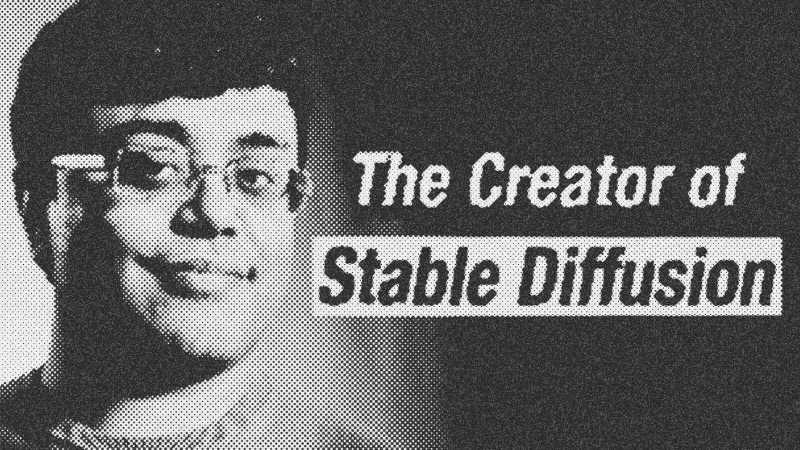
Every nation needs its own data sets derived from national broadcasters and local archives. This is a public good, more vital than 5G. These models function like talented graduates who occasionally forget their medication. You want models educated at Oxford, Imperial College London, and Edinburgh, not just Stanford University. By building national, verified data sets that are open and public domain, we allow private companies and universities to build tools that actually reflect the people they serve.
Why the AI Bubble Will Dwarf the Dot-Com Era
The financial mismatch in the AI sector is staggering. We are entering the biggest bubble in history. Hundreds of billions flowed into web3, but the opportunity there was largely speculative. In AI, the capacity for growth is unmatched by any other theme in a market characterized by rising rates and crashing real estate. We are seeing GitHub stars lead to $100 million funding rounds for companies with zero business models.
This wall of money will fund exploratory projects, but it also attracts the "raccoons and shysters." We will see a race dynamic where every company tries to build its own model, resulting in massive economic waste. The real winners will not be the ones burning cash on web-scraped data. The winners will be those who move toward "free-range organic models"—AI trained on high-quality, licensed, and national data sets. The current chaos will eventually settle into a period where the only growth theme is intelligence, but the transition will be a "shitshow" of epic proportions.
Solving Healthcare Through Information Density
The medical field is plagued by an information flow problem. We go from specialist to specialist, losing data at every handoff. We treat every patient as an average, but ten percent of people have a cytochrome p450 mutation that changes how they metabolize drugs. Standard medical systems give everyone 500mg because they cannot scale personalized care.
AI changes the economics of treatment. In many cases, like certain types of Autism, the solution might be a $6-a-year drug. A pharmaceutical company has no interest in a six-dollar treatment. But an AI that has deconstructed every clinical trial and literature piece in the world can identify these drug repurposing opportunities. We don't need one doctor for a thousand people; we need a thousand GPT-4s for one patient, organizing all the world's knowledge on Alzheimer's, Multiple Sclerosis, and longevity into an integrated system. This isn't just about efficiency; it's about shifting the nature of the doctor from a gatekeeper to a highly informed navigator of a private, personalized data set.
The New World Order: 5 Companies and the Death of Traditional Media
In three to five years, the market will consolidate. Most foundation model companies existing today will be gone. The survivors will likely be NVIDIA, Google, Microsoft, Meta, Apple, and Stability AI. These companies have the scale, the compute, and the talent. Google is a particularly powerful winner; they have the TPU architecture and a shared narrative that has finally broken down the walls between DeepMind and Google Brain.
Traditional media owners are right to be terrified. Search entities are intermediating clicks, providing synthesized answers that remove the need to ever visit a publisher's site. We are moving toward "AI-first publishers." Instead of an existing newsroom integrating AI to write faster, an AI-first publisher builds the system around an army of agents that draft stories, review factual anchors, and localize content instantly for every specific context. Authenticity and authority become the only premiums. If your business model relies on ad clicks from web traffic, you are already dead.
Democratization and the Future of Work
The marginal cost of creation is heading toward zero. Coding is no longer about writing low-level assembly; it is about building with Lego. When AI can recreate complex architectures in 200 lines of code, the human coder's role shifts. We are entering an era where anyone can build anything. This means distribution, data moats, and customer relationships become more important than ever.
In emerging markets like India and Africa, this technology will be embraced with a speed that shocks the West. These nations will leapfrog to intelligence augmentation just as they leapfrogged to mobile. While jobs in France might be protected by labor laws, outsourced BPO and programming jobs will be replaced by AI almost overnight. The only solution is entrepreneurship. We must give the tools of creation to everyone. One AI per child isn't just a slogan; it's a requirement for a world where every individual needs to be a founder to survive. We are building the foundation to activate humanity's potential, moving from a world of black-box proprietary models to an open, auditable future where intelligence is as accessible as air.
Emad Mostaque: These 5 Companies Will Win the AI War & Why We Need National Data Sets
Watch20VC with Harry Stebbings // 1:11:11

20VC, hosted by Harry Stebbings, takes you inside the world of Venture Capital, Startup Funding and The Pitch. Join Harry and discover how you can attain funding for your business by listening to what the most prominent investors are directly looking for in startups, providing easily actionable tips and tricks that can be put in place to increase your chances of getting funded. The Twenty Minute VC also provides an instructional guide as to what it takes to get employed in the Venture Capital industry, with VCs giving specific advice on how to get noticed from the crowd and increasing your chances of employment. Our amazing Venture Capitalists also provide their analysis of the current technology market, providing advice and suggestions on the latest investing trends and predictions. Join us so you can see how you can get big, powerful improvements, fast.