The Jungle Boy of Pagan: Finding Peace on an Active Volcano
The journey to the edge of the world doesn't happen on a schedule. It begins when you decide that the paved road has nothing left to tell you. To find Jordan, the man they call the "Jungle Boy," the crew from Yes Theory had to navigate the most remote corner of the Northern Mariana Islands. Their destination was Pagan, a volcanic island that serves as a visceral reminder of nature's power. This isn't just a dot on a map; it is a landscape forged by fire, where residents were forced to flee decades ago following massive eruptions. Reaching it required a two-day odyssey, including a fuel-starved stranding and a 22-hour rescue mission by a secondary ship. When the black volcanic sands finally appeared on the horizon, the air felt heavy with the silence of a place where modern society has no footprint.
Meeting the Guardians of the Ash
Stepping onto Pagan is like entering a time capsule where the clock stopped in 1981. The crew met two men who have claimed this isolation as their own: Jordan, a descendant of the indigenous Chamorro people, and Joe, an employee of the mayor's office. At the time of arrival, neither had seen another human being in nearly eight months. While Joe has been there since March, Jordan has spent the better part of a decade living in a way that most Americans would deem impossible. He doesn't just survive on the island; he is an extension of it. The awkwardness of the initial meeting quickly melted away into a masterclass in primal living.
Jordan spends his days taming wild cattle and collecting "Pagan treasures"—glass fishing bobbles, colorful shells, and relics from a forgotten era. He lives without a bank account, cell phone, or internet, relying on a bartering system where he trades cattle for supplies. For Jordan, the concept of money is secondary to the freedom of the forest. He carries a hundred-dollar bill for two years without ever finding a reason to spend it, eventually giving it away to family members back on the mainland. This resourcefulness isn't a hobby; it's a profound rejection of the digital noise that defines our century.
Echoes of World War II in the Jungle
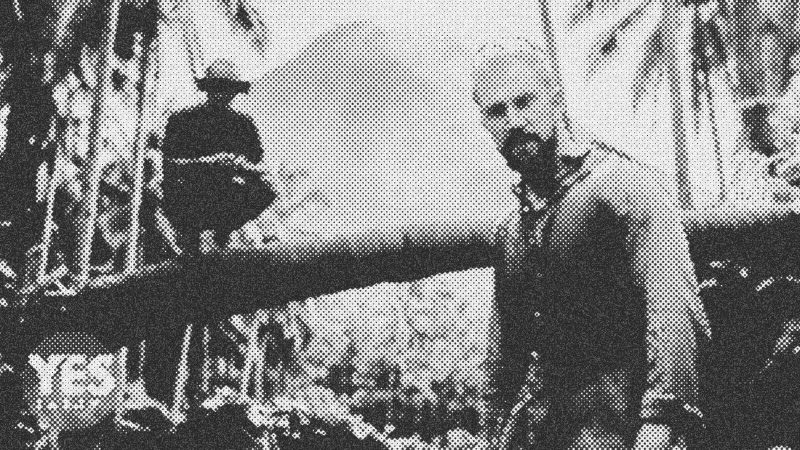
Beneath the lush canopy of Pagan lies a darker, more complex history. The island served as a strategic military base during World War II, and the remnants are everywhere. Jordan led the group past crashed American planes riddled with bullet holes and Japanese bunkers swallowed by the vines. Perhaps most haunting are the concrete structures once used as prisons for the Chamorro people, who were forced into slave labor by the Japanese military.
Walking through these ruins, Jordan moves with a quiet reverence. He is a custodian of his ancestors' stories, many of which he learned from his grandfather at the age of two. While the rest of the world moves toward an ever-increasing disconnection from the past, Jordan is actively keeping the Chamorro flame alive. He views the volcano itself as a sentient being, praying to it and believing that the mountain grows angry when visitors leave trash behind. This spiritual connection to the land transforms the island from a dangerous wasteland into a protective sanctuary.
The Lethal Beauty of Feral Nature
Life on Pagan is a constant exercise in high-alert awareness. Since the 1981 evacuation, the cattle and boars left behind have evolved into feral, hostile creatures. Encountering a gigantic bull in the woods is a life-or-death situation where the only escape is a quick climb up a tree. Jordan handles these dangers with a terrifyingly calm expertise. He catches wild bulls by luring them with ripe mangoes for days, eventually making them chase him for miles until he can secure them near the beach.
While the Yes Theory crew struggled with the physical demands of the terrain, Jordan moved through the jagged volcanic rock and thick brush completely barefoot. His feet have become as tough as the earth he walks on. This physical adaptation is a mirror of his mental state; he is unbothered by the lack of comforts. Even the night provides little rest for the uninitiated, as the sounds of screaming cows—which the travelers described as sounding like dinosaurs—and the constant barking of protective dogs create a cacophony that makes sleep nearly impossible for anyone not used to the rhythm of the wild.
Reclaiming the Human Spirit Through Silence
During a sunset conversation over fresh barracuda, the discussion turned to the epidemic of loneliness currently sweeping through modern society. The US Surgeon General has declared loneliness a public health crisis, yet here was a man living in total physical isolation who claimed he never felt lonely. Jordan believes the animals and the spirits of his ancestors provide all the company he needs. He views modern life as the "hard" version of existence because of its endless distractions and the mental weight of digital connectivity.
His dream is not for more technology, but for the reestablishment of Pagan as a home for future generations of Chamorro people. He wants them to experience a year without the internet, to find their own "Pagan treasures," and to learn the ancient wisdom of hunting and fishing. As the crew prepared to depart, leaving behind a gift of a Seek Discomfort hoodie and a promise of future supplies, the contrast was stark. They were heading back to a world of notifications and schedules, while Jordan vanished back into the trees. He is the guardian of a silence that most of us spend our entire lives trying to avoid, yet his story suggests that this very silence might be the only cure for the modern soul.
- Jordan
- 35%· people
- Pagan
- 15%· places
- Chamorro
- 12%· people
- Joe
- 6%· people
- Yes Theory
- 6%· companies
- Other topics
- 26%
"He's not human" - The Most Isolated Man in the World
WatchYes Theory // 34:49

We believe that life's greatest moments and deepest connections exist outside your comfort zone. Brand Partnerships: [email protected] Fan Emails: [email protected] Seek Discomfort: https://www.seekdiscomfort.com