Structural Failure and Kinetic Energy: A Tactical Analysis of Heavy Equipment Demolition
Overview: The Controlled Chaos of High-Mass Impact
This analysis dissects a series of high-intensity durability evaluations focused on the structural thresholds of a Squarebody truck and heavy agricultural machinery. The environment serves as a testing ground for extreme stress loads, material fatigue, and the physics of kinetic energy. Unlike standard automotive testing that prioritizes component longevity, this operation isolates the breaking points of chassis integrity, cooling systems, and frame geometry. The primary objective involves documenting the reaction of vintage steel and heavy-duty drivetrains when subjected to catastrophic failure scenarios, ranging from high-speed gravity descent to extreme thermal shock.
Strategic Decisions: Calculated Risk and Material Stress
The most critical strategic move involved the gravity-fed acceleration of a 30,000lb Combine. By leveraging steep terrain to reach unprecedented speeds, the team bypassed traditional engine-driven limitations to evaluate high-mass impact dynamics. A second tactical choice centered on the "thermal cooling" experiment for the Chevrolet 454 engine. By running the power plant at full throttle without headers and introducing cold water directly onto the block and into the intake, the test measured the threshold of thermal expansion and hydraulic locking. These moves aren't just for spectacle; they provide raw data on how cast-iron components react to immediate, violent environmental changes that would destroy any modern, light-alloy counterpart.
Performance Breakdown: Mechanical Thresholds
The Squarebody truck showed remarkable frame resilience despite repeated vertical impact tests and the introduction of a massive Gold Chain anchor. However, the performance of the Combine highlighted the limitations of heavy machinery when removed from its functional plane. The steering rack and rear axle failed almost immediately upon encountering irregular terrain at high velocity, proving that agricultural equipment is engineered for high torque and low speed, lacking the suspension damping required for kinetic energy dispersal. On the power plant side, the Chevrolet 454 engine demonstrated the legendary durability of the big-block platform, continuing to cycle even as internal temperatures surged and water contaminated the lubrication system.
Critical Moments: The Shipping Container Incident
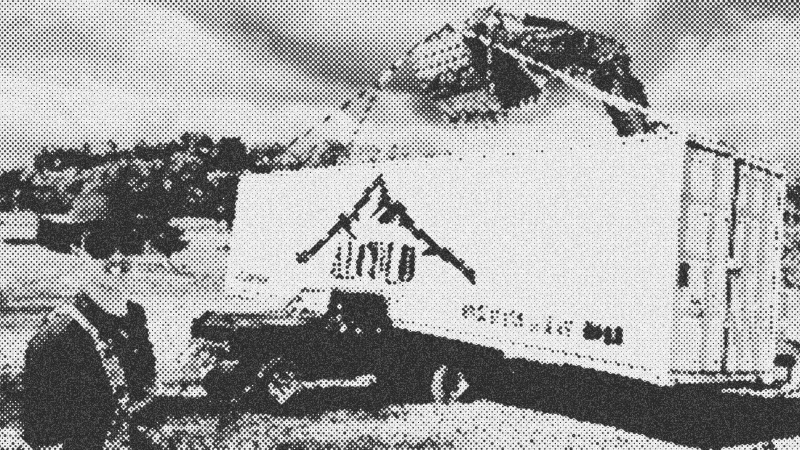
The attempt to load a full-sized shipping container onto the bed rails of a pickup truck represents a textbook study in center-of-gravity mismanagement. As the weight surpassed the load-bearing capacity of the bed rails, the lateral force overcame the friction of the straps, leading to a complete structural collapse. This moment illustrated the reality of static vs. dynamic loading; the frame might hold the weight momentarily, but any shift in equilibrium results in total system failure. The subsequent "shipping test," involving the truck being rolled inside a container, highlighted how interior cab components—glass, dashboard, and seating—fare when subjected to multi-axis tumbling. The result was a total loss of secondary structural integrity while the primary drivetrain remained remarkably functional.
Future Implications: The Limits of Vintage Iron
The technical takeaway from these tests is clear: vintage American steel possesses a high tolerance for abuse, but its lack of modular safety features means that once a failure starts, it is rarely localized. Moving forward, the proposed cross-country transit of the decimated Squarebody truck will test the long-term viability of a compromised frame. When you twist a chassis or overheat a block to the point of warping, you change the mechanical DNA of the vehicle. For any performance enthusiast, the lesson is that precision engineering only works when the foundation remains true. Once you compromise the geometry, you’re no longer driving a truck—you’re managing a series of failing systems.
- Squarebody truck
- 21%· products
- Chevrolet 454 engine
- 14%· products
- Combine
- 14%· products
- Cody
- 7%· people
- Custom Offsets
- 7%· companies
- Other topics
- 36%
Squarebody Durability Test #2
WatchWhistlinDiesel // 24:10

Are you tired of clicking on a deceivingly clickbaited video only for it to be someone doing the same boring crap you saw last week? Yeah me too. Thats why i never waste time uploading a stupid boring video. OK maybe they are stupid lol. Enjoy There's a lot more on Instagram www.instagram.com/whistlindiesel SERIOUS BUSINESS INQUIRIES ONLY: [email protected]