Trump warns China of 50% tariffs over Iran military aid
Beijing navigates the fallout of a collapsing Middle East ceasefire
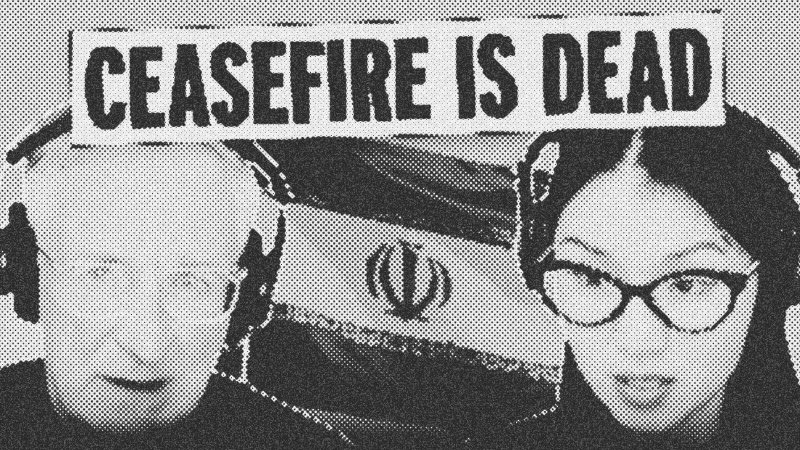
The fragile peace in the Middle East has fractured, shifting the spotlight from regional skirmishes to a high-stakes global power play. As the Strait of Hormuz enters a state of blockade, China finds itself in a precarious position, attempting to harvest the diplomatic prestige of a mediator while dodging the heavy lifting of regional security. This balancing act is rapidly failing as United States intelligence suggests Beijing is preparing to bolster Iran with advanced air defense systems, a move that has reignited the trade war fuse in Washington.
Donald Trump has responded with characteristic aggression, threatening a flat 50% tariff on all Chinese imports if military aid to Tehran is confirmed. This isn't just about regional stability; it is a direct linkage of Middle Eastern volatility to the core of the United States-China economic relationship. For entrepreneurs and investors, this signal suggests that the brief period of relative calm in trade relations is over, replaced by a new era where geopolitical alignment is the primary currency of market access.
The intelligence gap and the dual-use technology trap
The debate over China's involvement centers on the definition of military aid. While Beijing claims a "prudent and responsible" approach to arms exports, reports indicate that Iranian forces are utilizing AI-enhanced satellite imagery provided by the Chinese firm Mizar Vision. This capability allows the Islamic Revolutionary Guard Corps to track United States operations with surgical precision. This is the hallmark of modern disruption: technology that is technically commercial but strategically lethal.
James King and Alice Han point out that the ambiguity of "dual-use" technology—missile fuel precursors, drone components, and high-end sensors—provides Beijing with plausible deniability while fundamentally altering the balance of power. If the reported delivery of new air defense systems occurs, the friction will transcend typical trade disputes and enter the realm of direct military confrontation. For the global supply chain, this means the threat of a 50% tariff is no longer a negotiating tactic; it is a structural reality that could decouple the world's two largest economies overnight.
Global markets reel as oil and shipping costs explode
The economic consequences of the Strait of Hormuz blockade are already manifesting in staggering numbers. Brent crude futures have surged 41%, and ship traffic through the strait has plummeted by over 90 vessels daily. China is the most exposed, receiving 37.7% of all oil exports transiting the region. While this only represents 6% of its total energy usage, the knock-on effects on the petrochemical and fertilizer sectors are severe.
Alice Han highlights that Beijing has already restricted exports of diesel, jet fuel, and certain fertilizers to protect domestic stability. As the blockade persists, expect this list to expand to include plastics, sulfuric acid, and helium. This protectionist shift creates a supply chain vacuum, driving up costs for global manufacturers and signaling a move toward a more insular Chinese economy. Investors should prepare for "cost-push" inflation, where rising input prices erode corporate profitability even as consumer demand remains stagnant.
The Taiwan factor and the threat of a semiconductor blackout
While the Middle East burns, the shadow of a Taiwan conflict looms as the ultimate market disruptor. Eyck Freymann, author of Defending Taiwan, argues that Xi Jinping views Taiwan as the "unfinished business" of the Chinese Civil War. Unlike the land wars of the past, a conflict in the Taiwan Strait would be a lightning-fast air and naval engagement where the outcome is decided in hours, not months.
The economic stakes are existential. TSMC produces 90% of the world's advanced semiconductors and 99% of the NVIDIA GPUs used for AI training. A kinetic conflict would likely see these fabrication plants destroyed or taken offline immediately. Eyck Freymann warns that this would not just cause a recession; it would be a "Lehman Brothers moment" for the entire tech sector. The loss of Taiwan's chip capacity would effectively end the current AI boom and cause a global financial contagion that no government is currently prepared to mitigate.
Deterring the crisis before the first shot is fired
The strategy for the United States and its allies must shift from merely deterring war to deterring a crisis. Eyck Freymann asserts that Beijing uses "gray zone" tactics—cyberattacks, economic coercion, and maritime harassment—to test Western resolve. If the United States appears economically vulnerable or politically distracted by Iran, Beijing may conclude that a blockade of Taiwan is a viable path to capitulation.
Building resilience means preparing for the financial shock before the military one. If investors front-run a crisis by liquidating positions in China and South Korea, the resulting economic collapse could force political leaders into a sub-optimal peace. For the entrepreneurial community, this necessitates a radical diversification of manufacturing and a deep understanding of how geopolitical risk is now synonymous with operational risk.
Japanese automakers face an unassailable Chinese threat
Beyond the geopolitical skirmishes, a fundamental shift in industrial power is occurring. Toshihiro Mibe, CEO of Honda, recently warned that the Japanese auto industry is "on the brink of survival" due to the unassailable cost and speed advantages of Chinese EV manufacturers. Honda's sales in China have collapsed from 1.62 million units in 2020 to just 640,000 last year.
James King predicts a major disruptive shock to a household-name Japanese automaker this year—potentially a fire-sale merger or a complete share price collapse. This is the reality of the new market: China is no longer just a manufacturing hub; it is a dominant technological force that is systematically dismantling legacy industries. Whether through military positioning in the Middle East or industrial dominance in the EV market, Beijing is rewriting the rules of global competition.
Strategic outlook for a world in transition
The convergence of the Iran blockade, the Taiwan threat, and the United States tariff response paints a picture of a world moving toward fragmented trade blocs. The era of frictionless globalization is dead, replaced by a landscape where security interests dictate market participation. For the visionary entrepreneur, the challenge is no longer just building a better product; it is building a business model that can survive the unraveling of the 21st-century geopolitical order. The risk of being left behind is no longer just about missing a trend—it's about being caught on the wrong side of a new iron curtain.
- China
- 16%· companies
- United States
- 14%· places
- Taiwan
- 12%· places
- Eyck Freymann
- 7%· people
- Iran
- 7%· places
- Other topics
- 44%
China Steps In as Trump’s Ceasefire UNRAVELS | China Decode
WatchThe Prof G Pod – Scott Galloway // 43:06

NYU Professor, best-selling author, business leader and serial entrepreneur Scott Galloway cuts through the biggest stories in tech, business, and investing with unfiltered insights, bold predictions and thoughtful advice. Podcasts include Prof G Markets with co-host Ed Elson, Prof G Conversations and Office Hours with Prof G.