Inflationary Distortion and the Erosion of Regulatory Independence
The global economic theater is currently defined by three converging forces: deceptive fiscal indicators, the politicization of antitrust enforcement, and a massive rerating of tech valuations driven by artificial intelligence. While headline figures suggest a cooling economy, the underlying data reveals a more stubborn inflationary environment. Concurrently, the abrupt removal of key regulatory figures and the shifting narratives around big tech’s relationship with AI startups are reshaping the risk profile for investors and policymakers alike.
The Mirage of Cooling Inflation
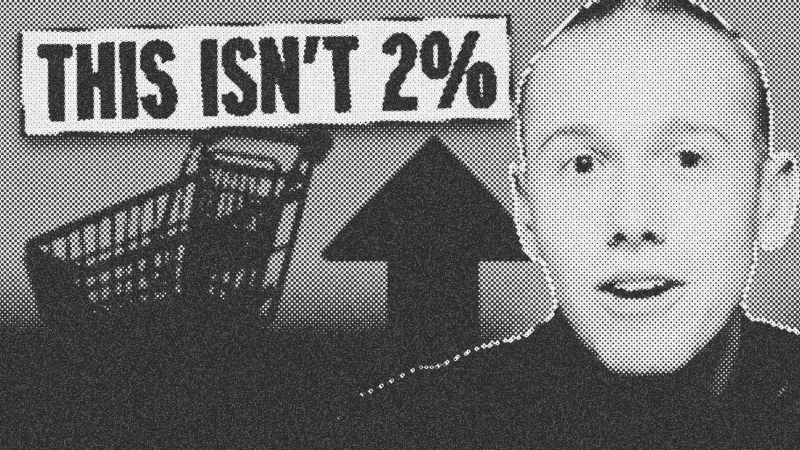
January’s Consumer Price Index (CPI) data presents a veneer of stability that fails to survive a rigorous audit. Headline inflation clocked in at 2.4%, with core inflation at 2.5%, yet these figures are fundamentally compromised by a data vacuum. The October government shutdown prevented the Bureau of Labor Statistics from collecting price data, forcing the agency to assume flat growth for that period. This omission creates a statistical blind spot that artificially depresses current year-over-year comparisons.
Services inflation, excluding energy, surged 4% in January, marking its most aggressive monthly acceleration since July. This "sticky" inflation in the service sector is compounded by a 96% pass-through rate of tariffs from businesses to consumers. Mark Zandi, Chief Economist at Moody's Analytics, suggests that once adjustments are made for these distortions, true inflation sits closer to 3%. The Federal Reserve relies on the Personal Consumption Expenditures (PCE) deflator, which is expected to come in hot, potentially reaching 3.5% by mid-year before any meaningful moderation occurs.
The Collapse of Antitrust Autonomy
The recent ousting of Gail Slater, the Department of Justice (DOJ) antitrust chief, signals a pivotal shift in the regulatory landscape. Slater, initially viewed as a bridge between MAGA populism and traditional enforcement, was removed after less than a year. Her departure follows reports of corporate lobbyists bypassing her office to secure favorable settlements directly through political channels. This undermines the structural independence of the Department of Justice and suggests that the era of aggressive antitrust enforcement—modeled after Lina Khan—is being sacrificed for political expediency.
The ideological coalition between progressive regulators and populist Republicans appears to have dissolved. While there was initial hope that figures like JD Vance would support curbing corporate consolidation, the reality has proven different. Enforcement actions are increasingly viewed through the lens of cultural grievances rather than market competition. This regulatory volatility creates an unpredictable environment for mergers and acquisitions, where political connectivity may now outweigh legal compliance.
Amazon’s Invisible AI Hedge
In the capital markets, Amazon is currently enduring a severe valuation penalty, trading at 28 times earnings—significantly lower than Walmart at 47 times or Costco at 55 times. Wall Street has categorized Amazon as a legacy incumbent vulnerable to AI disruption. However, this narrative ignores a critical strategic asset: Amazon owns a massive stake in Anthropic, the primary rival to OpenAI.
Amazon has deployed roughly $8 billion into Anthropic, with internal valuations suggesting a stake worth over $60 billion. Despite this, the company has remained remarkably opaque regarding the exact terms and percentage of its ownership. This lack of transparency has allowed the market to price in the risk of AI disruption without crediting Amazon for its hedge. If Anthropic represents the future of "vibe coding" and AI-driven commerce, Amazon shareholders are positioned to capture that upside, yet the company’s refusal to integrate this into its investor narrative continues to suppress its multiple.
Implications for Global Markets
The synthesis of these trends points toward a period of heightened market sensitivity. We are witnessing a fundamental rerating of the tech sector where the distinction between "winner" and "loser" is being determined by AI positioning. However, the data driving these decisions—from CPI reports to corporate balance sheets—is increasingly obscured by statistical noise and strategic silence. Investors must look beyond headline figures and recognize that the path to 2% inflation remains fraught with structural hurdles and regulatory shifts.
- Amazon
- 25%· organizations
- Anthropic
- 13%· organizations
- Department of Justice
- 8%· organizations
- Andy Jassy
- 4%· people
- Bureau of Labor Statistics
- 4%· organizations
- Other topics
- 46%
Inflation Is About to Get Worse | Prof G Markets
WatchThe Prof G Pod – Scott Galloway // 30:05

NYU Professor, best-selling author, business leader and serial entrepreneur Scott Galloway cuts through the biggest stories in tech, business, and investing with unfiltered insights, bold predictions and thoughtful advice. Podcasts include Prof G Markets with co-host Ed Elson, Prof G Conversations and Office Hours with Prof G.