The 3 Biggest Investing Lessons of the Year: Navigating the 2025 Master Class
The Resilience of Rational Markets
Financial markets rarely offer a clear roadmap, but the year 2025 provided what can only be described as a master class in institutional behavior and market resilience. We witnessed a sequence of events that would, in any historical vacuum, suggest a significant pullback: trade policy shocks, pandemic-level volatility in the VIX, and the longest government shutdown in American history. Yet, despite these headwinds, the S&P 500 has marched steadily upward.
This paradox teaches us that markets are not merely collections of ticker symbols; they are self-correcting systems. When structural integrity is threatened, the mechanisms of the Federal Reserve and corporate leadership shift toward preservation. Understanding these underlying currents is essential for any investor seeking long-term wealth management rather than short-term speculation.
Lesson 1: Growth Trumps Dogma in Policy Making
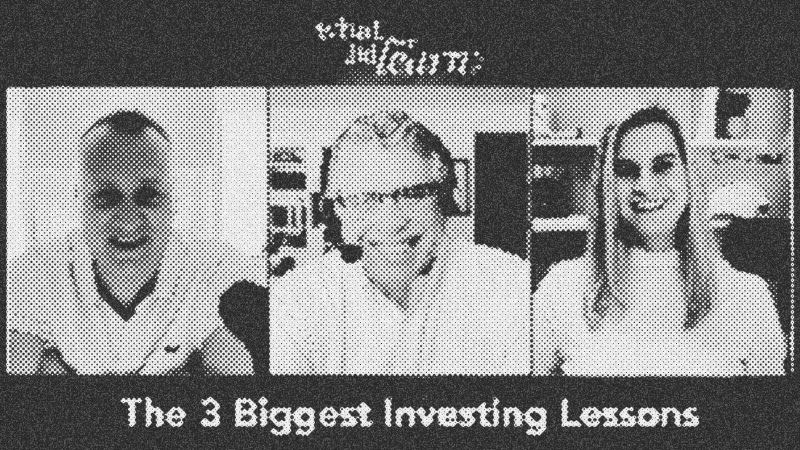
The first critical lesson is that policymakers, regardless of their ideological leanings, will ultimately prioritize economic stability over political dogma. We saw this through the lens of Jessica Rabe, who observed how both presidential trade policy and Jerome Powell's interest rate decisions shifted when growth appeared at risk.
Even when the data became scarce due to the government shutdown, alternative indicators like Google Trends provided a clear signal. Search volumes for terms like "find job" hit 20-year highs, signaling a softening labor market that the Federal Reserve could not ignore. This led to an "insurance cut" in December, proving that the system is essentially rigged to the upside. Policymakers are proactive; they no longer wait for the economy to fully break before intervening. For the prudent investor, this reinforces the "long and strong" philosophy.
Lesson 2: Valuations Require Historical Context, Not Just Math
Nicholas Colas highlights the danger of viewing Price-to-Earnings (P/E) multiples in a vacuum. While the S&P 500 is trading near a 25-year peak of 22 times forward earnings, simply comparing this to the historical average of 16 is a mistake. The composition of the market has changed fundamentally.
We must look at net margins—the pennies of profit for every dollar of sales. Current margins are at 13.1%, matching pandemic-era peaks but achieving them without artificial stimulus. When companies generate more cash and higher returns on capital, they deserve higher valuations. Furthermore, 2025 was an anomaly where earnings estimates actually rose throughout the year because companies consistently outperformed expectations. This "V-shaped" revision trend is extremely rare and suggests that current high valuations are backed by fundamental strength rather than mere market froth.
The Real Story of the Treasury Market
There is a persistent narrative of fear regarding the "risk-free" status of the U.S. Dollar and Treasuries due to rising debt-to-GDP ratios. However, the data tells a different story. Real 10-year Treasury yields currently sit around 2%, exactly where they were between 2003 and 2007 when debt levels were significantly lower.
If the market were truly panicked about sovereign debt sustainability, we would see real rates spike significantly higher to compensate for that risk. Instead, we see stability. This indicates that despite the loud political discourse, institutional investors still view Treasuries as the foundational asset of the global financial system. Betting against this stability has been a losing trade for decades and remains so today.
Lesson 3: The Return of the Vertical Giant
The final lesson involves a fundamental shift in corporate strategy. For decades, the Clayton Christensen model of "disruptive innovation" reigned supreme—upstarts using low-cost models to topple giants like Sears. However, the age of Generative AI is bringing back the Alfred Chandler model of scale and scope.
Because AI is incredibly capital-intensive, companies like Alphabet (Google) are thriving by moving toward vertical integration. They control the silicon, the data centers, and the software. Unlike a startup that relies on the "kindness of strangers" for infrastructure, these giants use their massive capital outlays to create a structural advantage. We are entering a hybrid world where the ability to manage vast amounts of capital is just as important as the ability to disrupt.
Strategic Cultivation for 2026
As we look toward the new year, the path forward requires a blend of humility and resolve. The master class of 2025 taught us that markets are resilient, policymakers are protective, and the largest corporations are evolving to meet the capital demands of the future. Sustainable growth is found by looking past the daily noise of trade wars or data lapses and focusing on the underlying profitability and structural shifts of the winners. Stay disciplined, keep your valuations in context, and remember that the system is designed to correct itself for those who have the patience to stay invested.
- S&P 500
- 13%· companies
- Alfred Chandler
- 6%· people
- Alphabet
- 6%· companies
- Amazon
- 6%· companies
- Clayton Christensen
- 6%· people
- Other topics
- 63%
The 3 Biggest Investing Lessons of the Year | WDWL
WatchThe Compound // 35:41

The Compound brings you the latest in business, investing, economics, finance, and much more! Michael Batnick, Downtown Josh Brown, Barry Ritholtz, Ben Carlson, and the rest of the gang upload new videos weekly! Check out The Compound shop: https://www.idontshop.com Learn more about Ritholtz Wealth: http://ritholtzwealth.com Inclusion of advertisements by podcast sponsors does not constitute or imply endorsement, sponsorship or recommendation thereof, or any affiliation therewith, by the Content Creator or by Ritholtz Wealth Management or any of its employees. For additional advertisement disclaimers click here: http://www.ritholtzwealth.com/advertising-disclaimers Nothing we're doing here should be considered one on one financial advice. We are here to educate and invite you into the conversation. See our disclosures here: https://ritholtzwealth.com/podcast-youtube-disclosures/