The Cannondale Resurrection: Engineering Soul into a Stolen Legacy
The Manhattan Streets and the Birth of a Maker
Every builder has an origin story, a moment where the abstract becomes mechanical. For many, it starts with a bicycle. In the humid, frantic energy of 1980s New York, a young Adam Savage didn't just ride; he integrated with the machine. Navigating the asphalt canyons of Manhattan on a Cannondale SR500 wasn't about leisure—it was a high-stakes masterclass in situational awareness and mechanical empathy. He remembers spotting problematic drivers seven cars ahead, feeling the vibration of the road through thin tires, and the sheer joy of a torrential summer downpour that turned a fifty-block commute into a cinematic experience.
This wasn't just transportation. It was the germination of an engineering mind. When flat tires became a recurring nuisance, the mechanics at Sleepy Hollow Bicycle didn't just take his money; they gave him a ultimatum: "Stay here and watch us do this, and then you can do it." That simple act of mentorship bridged the gap between consumer and creator. The bicycle offered direct feedback—a mechanical simplicity that rewarded curiosity and punished neglect.
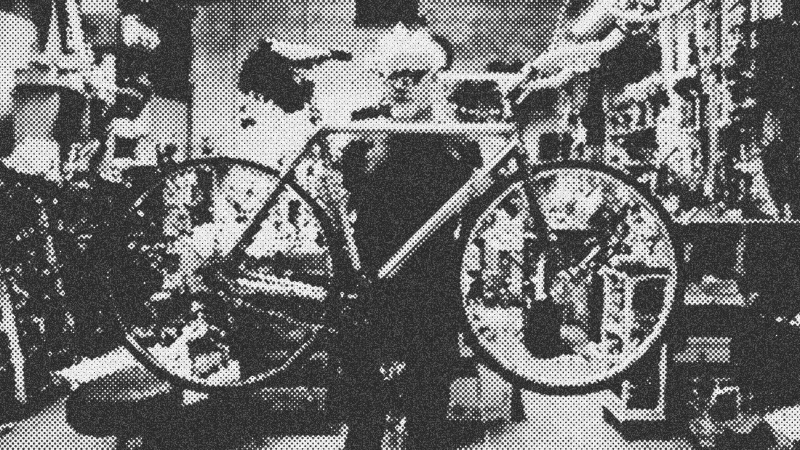
The Heartbreak of the Fifth Avenue Theft
In 1990, the relationship with that original Cannondale came to a screeching halt. A five-minute errand near the Flat Iron Building ended with three shattered pieces of a Kryptonite lock and an empty sidewalk. It’s a specific kind of grief only a cyclist understands—the loss of a tool that feels like a limb. Adding insult to injury, the lock's guarantee famously didn't apply to the "hairy" streets of Manhattan. The bike was gone, but the obsession with that specific aluminum geometry—the fat tubes and the smooth welds—remained etched in his memory for decades.
Stripping the Past to Find the Raw Aluminum
Decades later, fueled by nostalgia and a conversation with fellow enthusiast Tom Krenshaw, the hunt began. Savage tracked down a vintage Cannondale SR500 frame for a mere $120. It wasn't about restoring a museum piece; it was about reimagining the soul of that 1980s ride. The first order of business was removing the period-correct paint to reveal the raw aluminum underneath. This wasn't a simple task. It required three grueling passes with chemical strippers to conquer the tenacity of the original finish.
To preserve the look without the dullness of oxidation, he applied a 2K clear coat—a two-part automotive-grade paint that uses a catalyst to create a rock-hard plastic finish. This process allowed the steel forks to visually harmonize with the aluminum frame, creating a sleek, industrial aesthetic that looks fast even while standing still in the shop.
The Coaster Conversion and San Francisco Streets
While the original bike was a multi-speed road warrior, this rebuild followed a minimalist path. Savage opted for a coaster brake setup. It’s a cheeky nod to his childhood BMX days, eschewing the complexity of derailleurs and the leg-breaking commitment of a fixed-gear (fixie). Building a bike is rarely a linear path; he had to trim a structural member on the fork to clear a slightly oversized wheel, proving that even a seasoned pro has to pivot when the parts don't play nice.
The Philosophy of the Everyday Carry Bike
Testing the finished machine on the hills of the Mission District, the result isn't a showpiece—it’s an "everyday carry" bike. It’s a tool for errands and a vessel for memories. It weighs roughly 25 pounds, a far cry from modern carbon fiber, but it carries a weight of history that no new bike can match. By donating the leftover parts to The Crucible community program, the project closes a loop, ensuring the next generation of builders gets their hands dirty. The lesson is clear: we don't just build machines; we build the versions of ourselves that live within them.
- Cannondale SR500
- 13%· products
- Adam Savage
- 7%· people
- Breaking Away
- 7%· movies
- Cannondale
- 7%· companies
- Flat Iron Building
- 7%· places
- Other topics
- 60%
Adam Savage Rebuilds His Stolen Bicycle!
WatchAdam Savage’s Tested // 23:53

Adam Savage’s Tested is a content platform and community playground for makers and curious minds. On Tested.com, the highly- engaged Tested YouTube channel, and at conventions and events, dynamic makers share ideas and inspire each other to build their obsessions. Led by Adam Savage, the Tested team explores the intersection of science, popular culture, and emerging technology, showing how we are all makers. Adam also takes viewers behind the scenes of films, TV shows, theater, and museums, shining a spotlight on the craftspeople and artists who make the magic we all enjoy. Tested is also: Norman Chan, Joey Fameli, Josh Self, Kristen Lomasney and Thomas Crenshaw.