Beyond the Blueprint: Doug Chiang and the Architecture of the Star Wars Prequels
The Visionary Architect of the Prequel Era
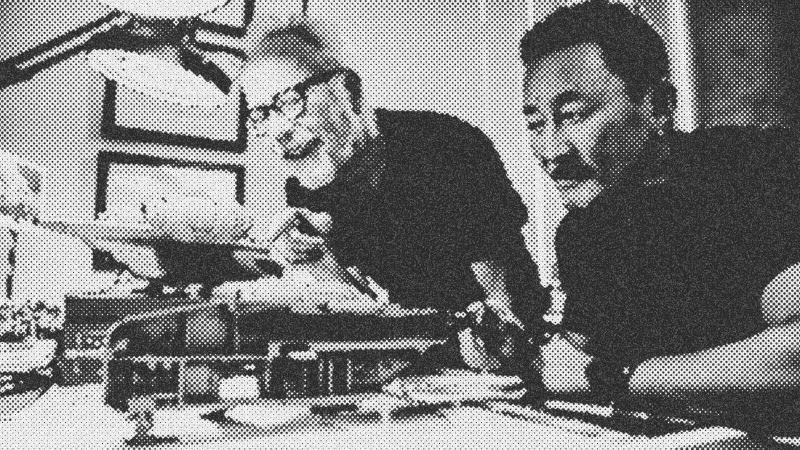
When George Lucas decided to return to the Star Wars universe in the mid-1990s, he faced a monumental challenge: how to design a world that felt ancient yet sophisticated, predating the 'used universe' aesthetic of the original trilogy. The man tasked with this burden was Doug Chiang, a designer whose career bridges the gap between old-school physical craftsmanship and the digital frontier. As Lucasfilm’s executive design director, Chiang’s legacy is not just a collection of cool ships; it is the visual grammar of an entire era. His journey, recently chronicled in a massive two-volume retrospective, reveals a process rooted in triage, observation, and a relentless pursuit of the perfect silhouette.
Chiang did not just land at the top of the art world by chance. His path was forged in a basement with cardboard, white glue, and Lego. Seeing Star Wars at fifteen years old didn't just inspire him; it fundamentally broke his brain and reassembled it around the idea of cinematic world-building. He began by mimicking the masters like Ralph McQuarrie and Joe Johnston, realizing early on that the magic of their work lay in its simplicity and physical believability. This early obsession with how things were actually built—using Lego joints for stop-motion armatures because he couldn't afford professional gear—laid the foundation for a career where functionality informs form.
The Digital Tipping Point: Terminator 2 and the Photoshop Frontier
One of the most pivotal moments in Doug Chiang’s career occurred at Industrial Light & Magic during the production of Terminator 2: Judgment Day. We often think of the T-1000 as a purely digital triumph, but the reality was far more 'hands-on' than history remembers. The technology of 1991 could only get the liquid metal effects about 95% of the way there. To bridge the final gap, Dennis Muren tasked Chiang with using an early beta of Adobe Photoshop to hand-paint corrections directly onto the digital frames.
This was the Wild West of digital filmmaking. Chiang worked frame by frame, often without the benefit of 'onion skinning' layers to see the previous image. He was essentially creating thirty miniature matte paintings for a single second of footage to eliminate chattering and shadow artifacts. This blend of traditional painting skills and emerging software proved that the digital pipeline wasn't a replacement for the artist's hand; it was a new tool that required the same old-school discipline. It was this specific expertise in designing for the limitations of computer graphics that eventually made him the perfect lead for George Lucas’s ambitious prequel plans.
Silhouette and the Soul of a Spaceship
For the Star Wars: Episode I – The Phantom Menace, George Lucas gave Chiang a counter-intuitive brief. He wanted ships that looked like 1920s hood ornaments—handcrafted, sleek, and romantic. This was a radical departure from the kit-bashed, gritty look of the X-wing. Chiang spent months chasing the design for the Naboo N-1 Starfighter, eventually realizing that the 'Star Wars DNA' wasn't about the greebles or the weathering; it was about the silhouette.
Lucas taught Chiang that if you take two robust engines and strap a cockpit in between, the human eye instinctively recognizes it as a high-performance craft. This philosophy reached its peak with the Podracers. Lucas wanted the 'uncontrollability' of a chariot race, insisting on engines that were massive and disconnected from the pilot. By focusing on the silhouette first and the mechanical logic second, Chiang created designs that felt fast even in a static drawing. He continues to start his designs on small Post-it Notes using gray markers, forcing himself to focus on basic shapes before he ever touches a high-resolution digital canvas. If the shape doesn't work at two inches wide, it won't work on an IMAX screen.
Integrating Nature and Technology
If there is a 'signature' to Doug Chiang’s work, it is the seamless fusion of organic biology and industrial machinery. He spent a year of his life on a self-imposed assignment to find his own voice, eventually landing on the intersection of nature and robotics. This is evident in the Trade Federation landing ships, which mimic the form of dragonflies, and the Battle Droid, which were designed in the skeletal likeness of their creators, the Neimoidians.
Chiang looks at insect exoskeletons and sees mechanical hinges. He studies cabinet hardware and Universal Joint to understand how a robotic arm should actually pivot. This commitment to 'mechanical legality' is what makes a world like Kamino and its Tipoca City feel real. Even though the city is a sterile, futuristic environment inspired by oil rigs in stormy seas, every hallway and medical pod was designed with a physical logic that the model shop could actually build. This bridge between the concept artist and the model builder is vital; Chiang intentionally leaves parts of his drawings unfinished because he trusts the builders to bring their own expertise to the table, making the final machine better than the initial sketch.
The Future of Design: VR Scouts and Collaborative Creativity
Today, the pipeline has evolved into something Doug Chiang could only have dreamed of while working on the prequels. For series like The Mandalorian, the art department uses VR scouts to walk through digital sets before a single piece of lumber is cut. This allows directors like Jon Favreau to sit in the cockpit of the Razor Crest and realize that a window mullion is blocking a camera angle, or that the entire ship should be scaled down by 20% to feel more grounded.
Despite these high-tech tools, Chiang remains a student of the craft. He spends an hour every morning with a ballpoint pen and a sketchbook, maintaining the tactile connection between his brain and the paper. He views his role not as a solitary genius, but as a collaborator in a lineage that includes titans like Phil Tippett and Tony Vee. Whether he is collaborating with Porsche to infuse car DNA into a tri-wing starfighter or refining the look of Galaxy's Edge, Chiang’s focus remains on the 'heavy lifting' of the homework. You can't break the rules of design until you've mastered the joints and silhouettes that hold the world together.
- Doug Chiang
- 11%· people
- George Lucas
- 6%· people
- Lego
- 6%· companies
- Star Wars
- 6%· movies
- Adobe Photoshop
- 3%· products
- Other topics
- 69%
Inside the Star Wars Art Department!
WatchAdam Savage’s Tested // 44:12

Adam Savage’s Tested is a content platform and community playground for makers and curious minds. On Tested.com, the highly- engaged Tested YouTube channel, and at conventions and events, dynamic makers share ideas and inspire each other to build their obsessions. Led by Adam Savage, the Tested team explores the intersection of science, popular culture, and emerging technology, showing how we are all makers. Adam also takes viewers behind the scenes of films, TV shows, theater, and museums, shining a spotlight on the craftspeople and artists who make the magic we all enjoy. Tested is also: Norman Chan, Joey Fameli, Josh Self, Kristen Lomasney and Thomas Crenshaw.