Decoding Civilization: How Architecture Echoes Through Time and Space
Cities and buildings are more than just physical structures; they are complex systems imbued with memory, culture, and history. Niveda Vinay encourages us to consider architecture as a language that whispers from the past, shaping our present and influencing our future. By examining how we interact with and modify these spaces, we can gain insight into our values, beliefs, and societal priorities.
The Illusion of Touch and the Allure of Space
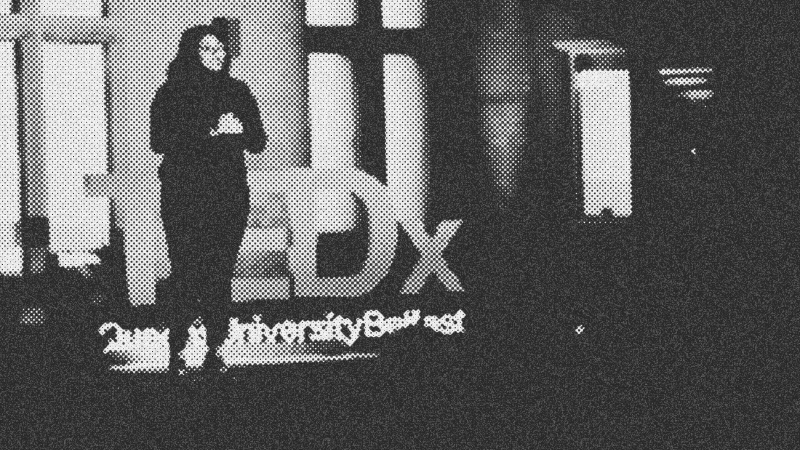
Vinay begins by challenging our perception of reality, drawing on neuroscience to explain that our sense of touch is merely the interpretation of pressure. This notion extends to architecture, which she describes as a "hologram made of memory, light, and matter." Our cities are designed spaces that guide our movements and behaviors, like particles within a machine.
Having moved from Bangalore to Belfast, Vinay reflects on how each city possesses a distinct frequency. Bangalore is a restless, modern circuit board of glass and code, while Belfast is an older engine echoing with historical conflicts yet vibrantly alive. Both cities, however, share a commonality: the presence of what architects call 'pathos,' or what Vinay refers to as the 'ghost layer' – the stories, grief, laughter, and faith that resist systematization and reveal themselves through the cracks of progress.
The Ghost Layer of Civilization
We often overlook the ghost layer, choosing instead to optimize and renovate without truly remembering. Vinay urges us to pause and consider what we are updating and deleting as we modernize our buildings, cities, and lives. Architecture whispers the past, prompting us to contemplate how civilizations strive to make eternity viable. Ancient societies aligned their temples with the stars, explicitly engineering their afterlife. Examples such as the Notre Dame Cathedral exemplify this.
Design Memory and Modern Fantasies
The fire at Notre Dame Cathedral in 2019 sparked global mourning and a rush to restore the iconic landmark. However, some restoration proposals, such as a greenhouse roof, a sci-fi dome, or even a swimming pool, seemed to impose modern fantasies onto a 12th-century core memory. Similarly, Vinay points to local examples in Belfast, such as St. Joe's Sailor Town Church, now a community venue hosting boxing matches and music gigs, and the Donnagal Family Chapel, transformed into a 3BHK apartment, as instances where the past is repurposed for the present.
Vinay delves into the Gothic architectural style, which, after 300 years, was discontinued due to its eerie and macabre features. These structures serve as interfaces between matter and meaning. When we walk through ruins in silence, perhaps we are not visiting them but being remembered by them. This 'design memory' calls us back to what endures.
Architecture as an Operating System
If our reality is a hologram of information, then architecture is one of humanity's oldest operating systems. Buildings program reverence (cathedrals), obedience (prisons), belonging (homes), and discipline (schools). We have been programming reality brick by brick, belief by belief, with architecture once knowing how to speak to our conscious, subconscious, and unconscious minds.
If form follows function and frequency, then the true material of design is consciousness. The blueprint begins in the mind, and the structure appears in the world. We build what we believe, and in turn, what we become.
Rewiring the Machine with Compassion
The challenge is not to build stronger machines but to design wiser realities. Vinay calls for experiments in metaphysics to understand the invisible – core memory, belief, and the systems we create. The machines are not somewhere else; they are in our lives, social feeds, and daily routines. Every vote, click, and policy is a blueprint.
The goal is to rewire the machine with memory, art, and compassion, building with what we have at the moment. By studying the codes taking form, we can rewrite them not for power but for presence. The future of architecture lies in designing with humanity as the pattern, not just performance.
Building a Wiser Reality
Vinay's exploration of architecture extends beyond mere physical structures, delving into the realms of memory, history, and consciousness. She challenges us to recognize the ghost layers of civilization, to question what we preserve and what we erase in the name of progress. By understanding architecture as a language and an operating system, we can consciously design a wiser, more compassionate reality, and build a future grounded in memory, art, and a profound sense of presence.
- Bangalore
- 10%· locations
- Belfast
- 10%· locations
- Donnagal Family Chapel
- 10%· structures
- Gothic
- 10%· styles
- Gothic Revival
- 10%· styles
- Other topics
- 50%
Ghosts in the machine: The archaeology of hope | Niveda Vinay | TEDxQueensUniversityBelfast
WatchTEDx Talks // 10:31

TEDx is an international community that organizes TED-style events anywhere and everywhere -- celebrating locally-driven ideas and elevating them to a global stage. TEDx events are produced independently of TED conferences, each event curates speakers on their own, but based on TED's format and rules. For more information on using TED for commercial purposes (e.g. employee learning, in a film or online course), please submit a Media Request here: https://media-requests.ted.com.