From Refugee to Resilience: Embracing Our 'Stranger-Made' Selves
In a world that often glorifies the self-made individual, Muhammad Talha offers a profound counter-narrative, one rooted in the kindness of strangers and the courage to ask for help. His journey, marked by displacement and resilience, invites us to reconsider our understanding of success and interdependence.
The Illusion of Self-Sufficiency
We are often told stories of individuals who, through sheer grit and determination, rise above adversity to achieve greatness. But as Muhammad Talha challenges, is this narrative truly reflective of our lived experiences? Can anyone genuinely claim to be self-made? This question cuts to the heart of our cultural values, prompting us to examine the often-unacknowledged support systems that underpin our achievements.
The Strength in Vulnerability
Forced to leave his home and studies due to war, Muhammad Talha found himself relying on the compassion of strangers. From a woman in Poland offering directions to families in Germany and America providing shelter and encouragement, these acts of kindness became the building blocks of a new foundation. It was during this time that Muhammad Talha realized asking for help is not a weakness but an act of courage. This shift in perspective is transformative, encouraging us to embrace vulnerability and recognize our interconnectedness.
The Responsibility to See and Act
Beyond the courage to ask for help lies an even more profound lesson: the responsibility to recognize when others need it, even when they cannot ask. Muhammad Talha poignantly recalls being at the border, devoid of energy and hope. It was the unsolicited kindness of strangers that reignited his will to live. This underscores the importance of empathy and proactive support, challenging us to look beyond ourselves and extend a helping hand to those in need.
Building a Future Together
Muhammad Talha's experiences in Iowa further reinforce the power of community. The people he met became his family, offering unwavering belief and encouragement. He recalls Leverne, who became a mentor and a friend showcasing that kindness needs no reason. Each person added a brick to his foundation, demonstrating the collective effort required to rebuild a life.
Embracing Our Interdependence
Muhammad Talha leaves us with a powerful call to action: to take the risk of asking for help and to take the responsibility of seeing when others need it. He reminds us that our futures are intertwined, and that the kindness we extend to strangers today may shape our own destinies tomorrow. By embracing our interdependence, we can create a world where no one is truly alone and everyone has the opportunity to thrive.
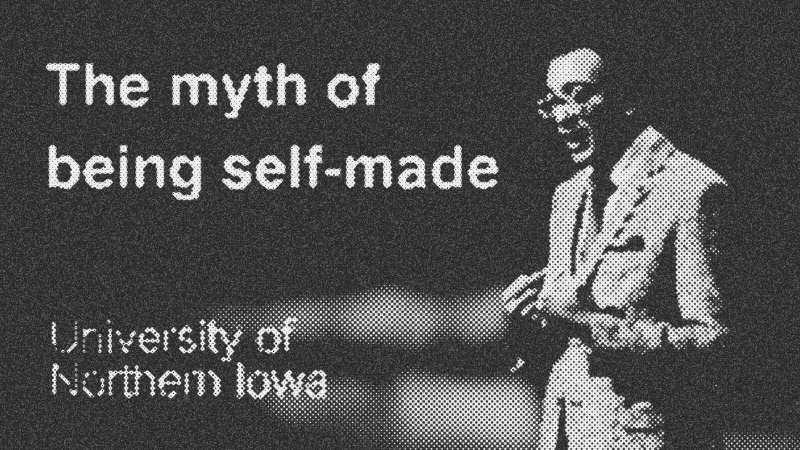
The myth of being self made | Muhammad Talha | TEDxUniversity of Northern Iowa
WatchTEDx Talks // 8:51

TEDx is an international community that organizes TED-style events anywhere and everywhere -- celebrating locally-driven ideas and elevating them to a global stage. TEDx events are produced independently of TED conferences, each event curates speakers on their own, but based on TED's format and rules. For more information on using TED for commercial purposes (e.g. employee learning, in a film or online course), please submit a Media Request here: https://media-requests.ted.com.