Beyond the Classroom: Unlearning to Thrive in Life's Complexities
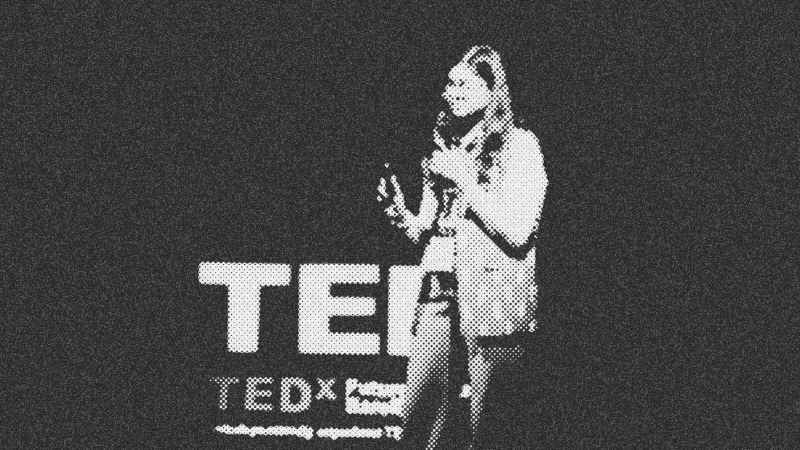
In a reflective discourse, Aradhya Vats elucidates the divergence between the structured environment of academic institutions and the ambiguous landscape of real-world experiences. Vats, a former exemplary student, recounts her personal odyssey of reconciling academic success with a sense of unfulfillment post-graduation. This quest led her to explore alternative avenues of self-discovery, contrasting the predictable nature of formal education with the unpredictable essence of life.
The School of Life: A Revised Syllabus
Vats introduces the concept of the 'school of life,' a metaphorical institution with its own unique curriculum. This involves unlearning certain principles ingrained during formal education that may hinder success and happiness in adulthood. The core of this revised syllabus focuses on mindset shifts necessary to navigate life's inherent uncertainties.
From Zero-Sum Games to Collaborative Ecosystems
One of the initial shifts Vats addresses is the transition from a zero-sum game mentality, prevalent in competitive academic settings, to a positive-sum game, which characterizes the interconnected world. In the former, success is often perceived as contingent upon another's failure, whereas the latter emphasizes collaboration and mutual growth. Vats cites the United Nations and the World Trade Organization as examples of institutions founded on collaborative principles, echoing John F. Kennedy's sentiment that 'a rising tide lifts all boats.' The digital age, exemplified by the internet and social media, further illustrates this concept, as the value of these platforms increases with each additional user.
The Coolness of Cultivating Inner Discipline
Vats contrasts externally enforced discipline in schools with the self-imposed discipline essential for navigating life's complexities. While school discipline may foster aversion, she argues that a disciplined life aligns with the natural order, referencing the regularity observed in natural phenomena. Drawing from Patanjali's Yoga Sutras, Vats underscores the importance of 'Anushasan,' or discipline, as a prerequisite for learning and holistic well-being, advocating for a yogic lifestyle rooted in intrinsic motivation.
Embracing Uncertainty in a VUCA World
The transition from the structured predictability of academia to the volatile, uncertain, complex, and ambiguous (VUCA) reality of life is another critical shift. Vats acknowledges the inherent uncertainty in life's various domains, from career to health, likening it to an overwhelming syllabus without fixed deadlines. Drawing from psychology, she introduces the concept of 'bounded rationality,' recognizing the limitations of human knowledge and foresight. In navigating this uncertainty, Vats advises focusing on immediate actions and relinquishing the need for complete control.
The Nonlinearity of Progress and the Power of Purpose
Vats critiques the linear perception of progress fostered in schools, where advancement is sequential and regression is uncommon. In contrast, she acknowledges the cyclical nature of life, characterized by both advancements and setbacks. To reconcile with this nonlinearity, she suggests adopting a higher purpose to provide stability amid fluctuating circumstances. Quoting Rudyard Kipling, Vats advocates for equanimity in the face of triumph and disaster, a state of emotional balance referenced in the Bhagavad Gita.
Redefining Success: Beyond the Final Exam
The emphasis on final results in academic settings is contrasted with the multifaceted nature of success in life. Vats encourages individuals to avoid defining their self-worth based on singular outcomes, be it a presentation or relationship. Instead, she advocates for gratitude and celebrating small victories, both personal and collective, to cultivate a broader perspective on life's richness.
Authenticity Over Approval: Finding Your Rhythm
Vats cautions against sacrificing authenticity in pursuit of external validation, emphasizing the importance of self-discovery and alignment with one's true nature. Drawing from the theory of ego depletion, she highlights the energetic costs associated with pretense and the benefits of harmonious alignment between thought, word, and action, as echoed in ancient Sanskrit texts.
Reframing Failure as a Stepping Stone
Finally, Vats challenges the negative perception of failure ingrained in academic grading systems. Instead, she reframes failure as a valuable source of data, providing insights into what doesn't work and guiding individuals toward their goals. To overcome the fear of failure, she suggests practicing micro-failures and reframing language to view setbacks as learning opportunities.
Owning Your Truth: The Path to Bliss
Vats concludes by inviting introspection on the relevance of old school rules in one's current life. She advocates for embracing the VUCA world with collaboration, discipline, and courage to fail, emphasizing that the journey to fulfillment begins with owning one's truth. The journey through life requires adaptability, resilience, and a willingness to unlearn and relearn, ultimately leading to a more authentic and fulfilling existence. This exploration of life's syllabus—marked by collaboration, discipline, acceptance of uncertainty, and the embrace of failure—paves the way for a more profound understanding of self and the world.
- a rising tide lifts all boats
- 4%· quote
- Aradhya Vats
- 4%· person
- Bareilly
- 4%· location
- Bhavad Gita
- 4%· text
- bounded rationality
- 4%· concept
- Other topics
- 79%
Why Good Grades Aren’t Enough | Aradhya Vats | TEDxFuture University Bareilly
WatchTEDx Talks // 16:53

TEDx is an international community that organizes TED-style events anywhere and everywhere -- celebrating locally-driven ideas and elevating them to a global stage. TEDx events are produced independently of TED conferences, each event curates speakers on their own, but based on TED's format and rules. For more information on using TED for commercial purposes (e.g. employee learning, in a film or online course), please submit a Media Request here: https://media-requests.ted.com.