From Barefoot Soccer to Global Impact: A Journey of Resilience and Redefining Healthcare Access
Imagine a place where the air is thick with dust, a constant companion that dances with the wind and settles on everything it touches. This is Mandera, a town tucked away in the northeastern corner of Kenya, where Mohamed Noor spent his childhood. He recalls a place seemingly forgotten by the world, yet it was the center of everything he knew. It was here, on dusty fields that doubled as classrooms and marketplaces, that he learned to play soccer, the goalposts merely crooked sticks and the referee whoever could shout the loudest. But even in those carefree days, Mohamed sensed a fragility, a lack of opportunities that made every chance at a scholarship feel like a rare and life-changing rain.
Then came 2020, a year that cracked everything open. Teachers vanished due to insecurity, leaving students to fend for themselves. Mohamed, like many others, found himself without instructors for crucial subjects. In the silence of isolation during COVID-19 lockdowns, he transformed into a self-taught scholar, devouring knowledge from books and online resources. He even tutored younger students to earn enough money for mobile data, spending nights watching YouTube lessons on a cracked phone screen. This period forged in him a habit of learning without permission, a skill that would define his path.
Scrolling through YouTube one night, Mohamed stumbled upon videos showcasing the lives of students at prestigious universities like Harvard, Oxford, and Cambridge. Though he didn't know how to get there, he knew he wanted to. By the time schools reopened, he had completed nearly two years of coursework on his own. When his teachers did not return, he stepped up, teaching biology to his classmates, drawing the brain on the blackboard, and explaining neurons and reflexes. In that dusty classroom, a love for neuroscience was born—not just memorizing diagrams, but understanding the beautiful connection between the brain and body.
When national exams arrived, Mohamed was fueled by a desire to overcome the broken systems and the months of isolation. He emerged as the top student in his region, a local celebrity for a week. But the celebrations faded, leaving him with a pressing question: "Now what?" In Mandera, academic success didn't guarantee a future. This led him to the Equity Leaders Program, where he traded textbooks for ledgers, learning about loans and interest rates. Whispers of the Kenya School Access Program (KenSAP) piqued his interest, offering a chance to apply to top US universities with full financial aid. Guided by his curiosity, Mohamed applied and was accepted, eventually landing at Middlebury College.
Middlebury, defined by snow, was a world away from Mandera's sun-baked landscapes. Declaring neuroscience as his major, Mohamed grappled with how his education could benefit his hometown. He collaborated with Karen from the international admissions office and Heather at the innovation hub, discovering the Davis Projects for Peace. This led to a grant, enabling him to implement a self-designed project in Mandera. He trained youth as peace ambassadors, advocated for female education, and fostered community dialogues around conflict resolution. Visiting local schools, he met a young mother who shared a heartbreaking story of losing her baby due to a lack of timely medical care. This encounter fueled a burning question: "Why should our distance define our destiny?"
Returning to his former high school, Mohamed launched Beyond Borders Orphan Aid, providing scholarships and mentorship. Yet, he realized education alone couldn't solve the systemic issues plaguing his community—the lack of ambulances, the closed clinics, the impassable roads. A class on social entrepreneurship and global health with Professor David Torres crystallized this understanding. He saw how geography, income, education, and environment were all social determinants of health. This realization led to his pilot project, AfriHealth Arc, a free health initiative. His vision was to reimagine healthcare access in Mandera, where distance, roads, heat, and hope define the reality of healthcare.
Mohamed envisions community health workers equipped with blood pressure cuffs and first aid kits, solar-powered clinics providing constant light, and motorbike riders serving as first responders. Transformation, he believes, can start from the bottom up, from the roots. Interning at EY-Parthenon, he saw the other side of healthcare, analyzing policies and strategies that shape the lives of millions. He realized the importance of being fluent in the languages of both empathy and systems. Compassion without structure is merely a wish, while structure without compassion is a machine; together, they create impact.
Standing on the Middlebury campus, Mohamed reflects on the boy playing barefoot soccer in Mandera, who could not have imagined how far his dreams would take him. He sees the cracked walls of his former high school not as a symbol of brokenness, but of resilience. He recognizes the potential in the students sitting quietly at the back, wondering if the world knows they exist. Mohamed's message is clear: your roots remind you who you are, and your reach tells you what's possible. The space between them is where purpose lives, and that's where progress truly begins. As one audience member so eloquently put it, Mohamed's ambition is evident in his daily actions, serving as an inspiration for all to use their education to create meaningful change. Another person from a similar background to Mohamed expressed their support, reinforcing that the children of Mandera look up to him and believe in his ability to make a significant impact.
- AfriHealth Arc
- 5%· projects
- Beyond Borders Orphan Aid
- 5%· projects
- Cambridge
- 5%· organizations
- David Torres
- 5%· people
- Davis Projects for Peace
- 5%· organizations
- Other topics
- 75%
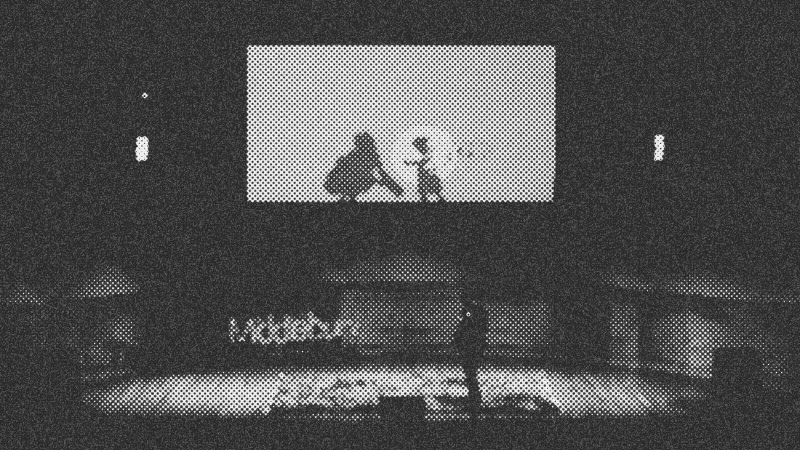
Bending the Arc to Flip the System | Mohamed Noor | TEDxMiddlebury
WatchTEDx Talks // 22:06

TEDx is an international community that organizes TED-style events anywhere and everywhere -- celebrating locally-driven ideas and elevating them to a global stage. TEDx events are produced independently of TED conferences, each event curates speakers on their own, but based on TED's format and rules. For more information on using TED for commercial purposes (e.g. employee learning, in a film or online course), please submit a Media Request here: https://media-requests.ted.com.