Timeless Wisdom: How Ancient Philosophers Can Help Modern Women Overcome AI Bias
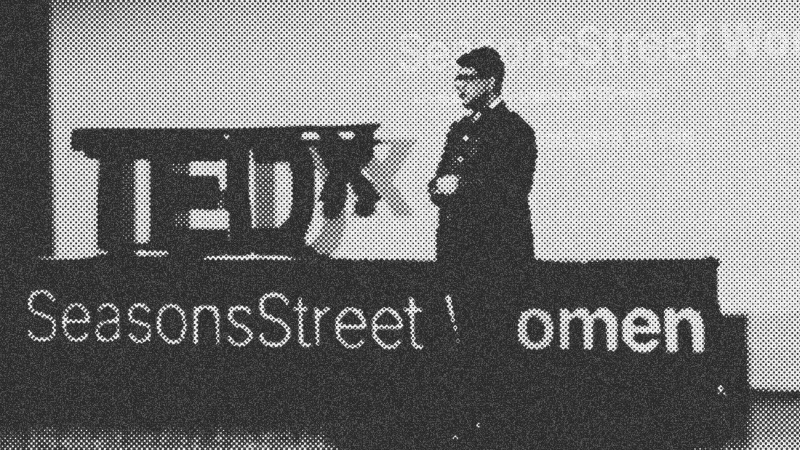
In an era increasingly shaped by algorithms and artificial intelligence, it's easy to assume that complex problems require cutting-edge solutions. However, Dr. Karthik Ramesh, in his TEDx talk, proposes a different approach, suggesting that ancient wisdom, particularly from 12th and 18th-century Indian women philosophers, holds valuable lessons for reducing bias in AI systems.
Challenging the Status Quo
Dr. Ramesh begins with a stark illustration: a qualified woman rejected for a job by an AI-driven HR system, without any human interaction. This scenario, devoid of malicious intent, highlights the insidious nature of AI bias, stemming from the historical data used to train the algorithms. To combat this, Dr. Ramesh introduces two remarkable mystics: Laleshwari (Lald), a Kashmiri saint, and Akka Mahadevi, from Karnataka, each embodying principles that can guide us in the age of AI.
Authority Beyond Structure
Laleshwari, or Lald, a 14th-century Kashmiri mystic, defied societal norms and religious dogma. Her life story, marked by personal torment and a quest for inner understanding, led her to abandon conventional structures. Lald's example teaches us that authority does not reside in human-built structures but within oneself. Her poems, known as Lal Vakhs, are still chanted in Kashmir, transcending religious boundaries.
In the context of AI, Lald's wisdom challenges the notion that algorithms and codified biases should dictate our decisions. She empowers individuals, especially women, to question conventional systems and recognize that true authority comes from within, not from external hierarchies or rituals.
The Power of Individuality
Akka Mahadevi, a mystic from Karnataka, parallels Lald in her rejection of societal norms. Born into royalty, she relinquished her privileged life to pursue a path of individuality and inner strength. Akka Mahadevi's life emphasizes that the power of centering within is more valuable than outward riches and luxuries.
Dr. Ramesh applies this to AI, suggesting that while AI may possess power and authority, it should not silence human voices. Instead, AI should serve to empower individuals. This lesson is particularly relevant for modern women navigating an AI-dominated society, urging them to prioritize their individuality and inner strength over the allure of external validation.
Access as Power
Lald's teachings extend to the importance of accessibility. Her poems, composed in vernacular Kashmiri, ensured that her wisdom reached every household. This principle of access is crucial in the context of AI, which is often hidden behind complex dashboards, algorithms, and jargon.
To counter this, Dr. Ramesh argues for democratizing decisions and placing accessible tools in the hands of women leaders. By making AI more transparent and understandable, we can empower individuals to shape their own futures.
Courage as an Inherent Design
Ultimately, Dr. Ramesh concludes that courage is an inherent design, urging us to challenge the dogma that AI may bring. Drawing back to the initial anecdote of the woman rejected by an AI system, he emphasizes the need to encode values into technology. AI should not merely build code but embody ethical principles, walking hand-in-hand with humans.
A Vision for the Future
By invoking the wisdom of Lald and Akka Mahadevi, Dr. Ramesh offers a path forward. He envisions a future where AI empowers rather than oppresses, where ancient wisdom guides modern technology, and where individuals have the courage to challenge bias and shape a more equitable world. This talk is dedicated to these mystical ladies, whose teachings continue to inspire and empower women to reduce algorithmic bias by looking into their ancient wisdom.
- Akka Mahadevi
- 17%· person
- Karnataka
- 17%· location
- Karthik Ramesh
- 17%· person
- Kashmir
- 17%· location
- Lald
- 17%· person
- Laleshwari
- 17%· person
Ancient wisdom for a Algorithmic world | Dr. Karthik Ramesh | TEDxSeasonsStreetWomen
WatchTEDx Talks // 8:16

TEDx is an international community that organizes TED-style events anywhere and everywhere -- celebrating locally-driven ideas and elevating them to a global stage. TEDx events are produced independently of TED conferences, each event curates speakers on their own, but based on TED's format and rules. For more information on using TED for commercial purposes (e.g. employee learning, in a film or online course), please submit a Media Request here: https://media-requests.ted.com.