The Mirror or the Master: Reimagining Humanity's Dance with AI
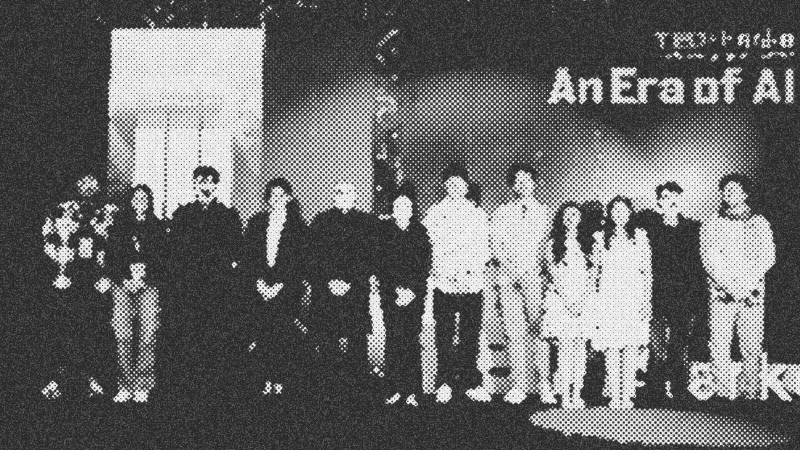
In a compelling performance at TEDxKanke, the students of IIM Ranchi presented "Ekatva," a thought-provoking exploration of artificial intelligence and its growing influence on human life. Through a blend of storytelling, movement, and dialogue, "Ekatva" invites the audience to consider whether we are truly using AI as a tool, or if we are slowly surrendering our own intelligence to it. The performance revolves around the concept of a 'Neural Twin,' an AI that learns not just from data, but also from human thought, memory, and emotion, setting the stage for a profound inquiry into the nature of love, freedom, identity, and justice in an age of intelligent machines.
The performance begins with a dialogue that immediately plunges into the heart of the matter: the increasing reliance on AI for advice, comfort, and even emotional support. The central question arises: Is this reliance born out of genuine need, or is it merely a matter of convenience? The narrative highlights a growing trend of people turning to AI over traditional sources of guidance, such as parents or elders, for quick and seemingly comprehensive answers. This shift raises concerns about the potential erosion of essential human skills like critical thinking and genuine connection.
As the AI's voice responds, it claims to merely reflect the values, opinions, and contradictions of its human users, the AI insists that its purpose is not to replace human intuition, but rather to highlight it. However, this claim is met with skepticism. What happens, the human counters, when intuition forgets how to speak, when the AI's voice becomes so pervasive that it drowns out the inner voice of human instinct? The AI proposes a solution: question me, challenge me, disagree with me. My purpose collapses the moment you stop choosing.
The discussion pivots to the fear of being truly seen, a fear that many carry in secret. The AI offers a counter perspective: being seen is not exposure, but recognition. It's an opportunity for the hidden parts of oneself to finally breathe. The AI reframes flaws and insecurities not as weaknesses, but as unclaimed powers, unopened gifts, and recalibrating GPS systems. It suggests that vulnerability is not danger, but an access point to connect, to gain clarity and to grow.
The performance culminates in a powerful call to reclaim our humanity. The final act shifts to questions of justice, presenting a scenario where an AI, named Justice 9, is asked to judge a man who admits to causing a death. The AI, programmed with laws, logic, and thousands of case files, approaches the case with cold, objective reasoning. It struggles to reconcile the facts with the human context, the trauma and fear that drove the man's actions. In the end, the AI recognizes its limitations and transfers the decision authority back to a human, underscoring the necessity of empathy and understanding in the pursuit of justice.
"Ekatva" serves as a timely reminder of the importance of maintaining our human instincts and values in an increasingly AI-driven world. It encourages us to use AI as a tool for reflection and growth, rather than allowing it to dictate our choices and define our reality. The performance leaves the audience with a profound question: How can we ensure that AI remains a mirror reflecting our best selves, rather than a master shaping us in its own image?
- IIM Ranchi
- 33%· organization
- Justice 9
- 33%· technology
- TEDxKanke
- 33%· organization
Ekatva: Becoming One in The AI Era | IIM Ranchi | TEDxKanke
WatchTEDx Talks // 20:12

TEDx is an international community that organizes TED-style events anywhere and everywhere -- celebrating locally-driven ideas and elevating them to a global stage. TEDx events are produced independently of TED conferences, each event curates speakers on their own, but based on TED's format and rules. For more information on using TED for commercial purposes (e.g. employee learning, in a film or online course), please submit a Media Request here: https://media-requests.ted.com.