From Rural Struggle to Global Change: The Transformative Power of Education in India
In the vast and diverse landscape of India, a profound challenge persists for millions: a life where aspirations are constrained by the harsh realities of poverty, systemic discrimination, and entrenched societal barriers. For communities like the Dalit, historically termed 'untouchables,' the Adivasis, and the Nomadic and Denotified Tribes, education often remains a distant privilege rather than an inherent right, a daily battle for access and recognition. It is against this backdrop that Raju Kendre, the visionary founder and CEO of Eklavya India Foundation, emerges as a guiding force, democratizing higher education for these very communities. This is not merely his personal journey but a resonant narrative shared by countless first-generation students who, despite formidable obstacles, are resolutely shaping their futures and the destinies of their communities. As Nelson Mandela famously articulated, education truly is the most potent instrument for global transformation, a truth vividly demonstrated through Kendre’s life and work.
Kendre's journey commenced in a small, rural village nestled in central India, within a nomadic tribal agricultural community where existence was defined by hardship and economic scarcity. His parents, both married at ages seven and nine in the 1970s, began working on farms in their tender youth, their lives shaped by a struggle that denied them even primary schooling. A mere decade ago, his family's monthly income barely surpassed $300. Yet, despite their own lack of formal education, his parents harbored an unwavering dream: to ensure their children received a quality education and led a life of dignity. Their conviction that education held the key to a brighter future proved prescient.
Kendre's early education unfolded in a local government school before he transitioned to a public residential school at the district level, sharing a compact 100-square-meter hall with 60 other students for several formative years. By age 18, he envisioned himself as an Indian Administrative Service officer, a prestigious bureaucratic role he believed could uplift those like his parents, who toiled their entire lives without experiencing socioeconomic advancement. In 2011, he embarked on a 300-mile journey from his village to the bustling metropolis of Pune, aspiring to access higher education—a monumental step as the first in his entire generation to seek a university degree. With his mother's painstakingly saved $100, a meager sum for city life, he found himself adrift. Despite an admirable academic record, he grappled with a severe lack of financial support, mentorship, and the cultural navigation skills required for urban living. Within months, he was compelled to withdraw from Pune University, feeling profoundly alienated by the city's elite system that rejected his language, culture, and dialect. This experience mirrors the struggles of many first-generation university students in India, often leading to tragic outcomes like dropouts and suicides within a system frequently touted as meritocratic yet exclusionary.
Returning to his village, Kendre continued his studies through distance learning, a period that proved transformative. He joined a grassroots social organization, working intimately with indigenous tribal communities in central India. Over two years, he bore witness to their profound struggles: children undertaking arduous 100-mile journeys for basic degrees, entire communities devoid of fundamental resources and opportunities. It was during this time that he had a powerful epiphany: a desk job as a bureaucrat, confined to an air-conditioned office, was not his destiny. His true calling lay in direct engagement with his community, addressing the root causes of generational poverty and lack of access to quality education. This firsthand immersion, coupled with his own experiences, ignited an unwavering passion for systemic change. To formalize this commitment, he pursued a postgraduate degree in social work at the Tata Institute of Social Science (TISS), one of Asia's preeminent social science institutions. This marked his first foray into an English-language education system, where he often felt alienated among classmates from privileged backgrounds, many of whom were fluent English speakers and products of multi-generational university attendance. Yet, this time, he was fortified by a deeper understanding: his lived experiences and intimate knowledge of his community were his true strengths, enabling him to persevere.
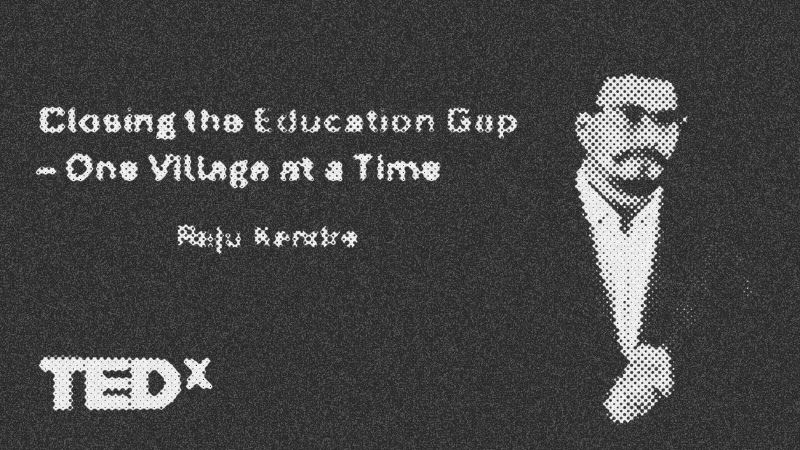
Upon completing his postgraduate degree, Kendre deliberately bypassed corporate placements. Instead, he returned to the Verba region in central India, the very place his journey began. In 2017, he commenced work with a social work college in Autal, serving as a faculty member for two years. This pivotal period saw the launch of the pilot Eklavya India Foundation with a modest seven students. Today, the foundation’s impact has burgeoned, with over 70,000 students actively participating in its year-long mentorship programs. Kendre’s dedication garnered international recognition; in 2021, he was awarded the prestigious Chevening Scholarship by the FCDO, the UK government, enabling him to pursue his master's at SOAS University of London. This scholarship, valued at $50,000, was equivalent to his family's entire lifetime income, starkly illustrating education's power to bridge generational socioeconomic divides. His subsequent accolades, including recognition in Forbes 30 Under 30, the Ashoka and Echoing Green Fellowships, and the German Chancellor Fellowship, stand as powerful endorsements of the profound work undertaken in India, continually empowering him to uplift his community.
The work of Eklavya India Foundation extends far beyond statistics, fundamentally addressing issues of representation, dignity, and the cultivation of a new generation of leaders poised to drive systemic change. India's entrenched caste system, a rigid social hierarchy shaping socioeconomic status for millennia, still impacts a significant portion of its 1.4 billion people. Even with affirmative action policies, historically underrepresented communities remain marginalized in crucial decision-making sectors such as law, policy, media, arts, culture, business, and academia, often comprising less than a single-digit percentage of leadership roles. In higher education, the disparity is equally stark, with only two to three out of ten students from these backgrounds enrolling. Eklavya India Foundation actively dismantles these educational and career barriers, championing equitable leadership and socioeconomic mobility. Their programs offer comprehensive year-long mentorship, residential training, scholarships, and global exposure, expanding access to higher education and leadership opportunities both domestically and internationally. The foundation has conducted hundreds of workshops, reaching half a million first-generation and marginalized individuals. Over 2,000 Eklavya students have been admitted to more than 90 prestigious universities and fellowship programs globally, including the Indian Institutes of Technology (IIT), Indian Institutes of Management (IIM), the University of Cambridge, and Harvard University. They have successfully secured over $6 million in scholarships for their students. A testament to their success, over 500 alumni now hold dignified positions, lifting their families out of poverty, often multiplying their income tenfold, and serving as invaluable role models and advocates within their communities. One compelling example is Akash Murak, from the Dalit community, who, after losing his father in childhood, joined Eklavya. Through mentorship and unwavering dedication, he not only pursued higher education but now serves as the co-founder and chief finance officer of the organization, guiding hundreds of students toward their own success stories.
This journey, however, is merely the beginning. Kendre harbors an ambitious dream: to establish an interdisciplinary university specifically designed to empower marginalized communities, a beacon of learning that will stand among the world's leading institutions. This university will transcend traditional education, actively fostering systemic change by shaping leaders deeply committed to societal betterment, leaders with the potential to become future Nobel laureates. This grand vision draws profound inspiration from Dr. B.R. Ambedkar, the esteemed social reformer and architect of the Indian constitution. Dr. Ambedkar, who bravely navigated immense caste discrimination to study at Columbia University in the USA and the London School of Economics in the UK a century ago, famously declared, “Education is the milk of a tigress. Those who drink it cannot stay without roaring.” These powerful words resonate deeply with Kendre, fueling his tireless commitment to a future where education acts as a potent catalyst for broad social change. Imagining a world unburdened by the limitations of caste, class, gender, and privilege, where every child, irrespective of origin, can dream and flourish, is a vision within reach. Through collective support and an unwavering belief in education's transformative power, a generation of leaders can be forged to build a more equitable, just, and inclusive world. The path ahead remains long, but investing in education and human potential promises a brighter future for all.
- Adivasis
- 3%· communities
- affirmative action
- 3%· concepts
- Akash Murak
- 3%· people
- Ashoka Fellowship
- 3%· awards / fellowships
- Autal
- 3%· places
- Other topics
- 85%
Closing the education gap, one village at a time | Raju Kendre | TEDxPFH Goettingen
WatchTEDx Talks // 15:28

TEDx is an international community that organizes TED-style events anywhere and everywhere -- celebrating locally-driven ideas and elevating them to a global stage. TEDx events are produced independently of TED conferences, each event curates speakers on their own, but based on TED's format and rules. For more information on using TED for commercial purposes (e.g. employee learning, in a film or online course), please submit a Media Request here: https://media-requests.ted.com.