Unlocking the Beauty of Dreams: Re-evaluating Freudian Theory in a World of Scientism
In a world increasingly dominated by scientific thought, Jason Tong invites us to reconsider the value of theories that may not stand up to rigorous scientific scrutiny, particularly Sigmund Freud's dream interpretation. Tong challenges the audience to think about dream analysis not as a failed science, but as a unique art form that enhances our understanding of the human condition.
The Two Sides of a Dream
Tong begins by explaining Freud's model of dream interpretation, which distinguishes between the manifest content and the latent content of dreams. The manifest content refers to the elements of a dream that we remember upon waking, while the latent content represents the unconscious desires that underlie our dreams. According to Freud, the manifest content is a superficial layer that conceals the true reality of the dream, which is the latent content.
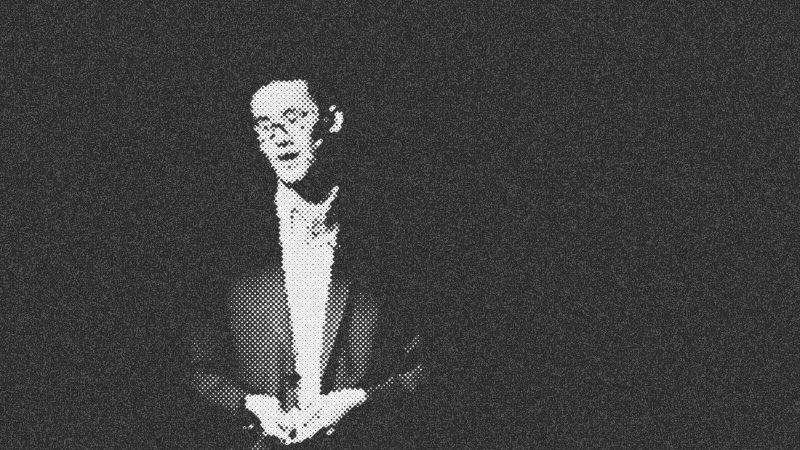
To illustrate the relationship between these two aspects of dreams, Tong uses the metaphor of a palace. In this analogy, the latent content represents the forces that work together to construct the palace, while the manifest content is the palace itself. Tong notes that we can only access the manifest content, the thing we remember, and not the latent content directly.
Deciphering the Dreamwork
Central to Freud's theory is the concept of dreamwork, the process by which the latent content transforms into the manifest content. Tong likens this process to cryptography, where the latent content is the plain text, the dreamwork is the encryption process, and the manifest content is the cipher text. The analyst's job, then, is to reverse this process, to decrypt the cipher text and uncover the plain text.
Tong then explains the three mechanisms of dreamwork that Freud proposes:
- Condensation: This mechanism involves the distillation and crystallization of a large amount of latent content into a few manifest elements. Tong points out that due to condensation, it is never possible to be sure that a dream has been completely interpreted, as some things may be overlooked in the reversal process.
- Displacement: This mechanism refers to the transference of psychical intensity, where a symbol in the latent content is not necessarily the same symbol in the manifest content. Tong explains that this displacement may be due to censorship, where disturbing desires are displaced to avoid disrupting the dream.
- Secondary Revision and Representation of Relations: This mechanism emphasizes the importance of spatial relations and the presence or absence of gaps in dreams. Tong references Roman Jakobson's work to explain that symbols in a dream are organized through metaphor (A is B) and metonymy (A and B), conjuring a poetic function that Freud calls dreamwork.
Beyond the Realm of Science
Tong anticipates the skepticism of those who argue that Freud's theories have not been scientifically proven. He challenges the audience to question why science should be the default standard for evaluating Freud's work. Tong suggests that by treating science as the ultimate answer, we risk overlooking the beauty and value of alternative frameworks and theories.
To illustrate this point, Tong reinterprets Freudian displacement through the lens of Jacques Derrida's theory of différance. He explains that displacement can be seen as an infinite chain of signifiers, where one symbol points to another, without ever reaching the signified, or the latent content. While a scientist might critique this endless chain, Tong argues that it is precisely through this exploration of different significations that we uncover deeper meanings and significances.
Embracing the Unconscious
Ultimately, Tong suggests that the most important question is not whether Freud is right, but what Freud has done for us. He argues that Freud's courage to explore the unconscious is a significant contribution, as is the freedom he gives us to interpret our dreams in our own way. Tong encourages us to embrace our dreams and desires, to understand and comprehend the workings of the unconscious, rather than rejecting them.
Tong concludes with a call to embrace the desires and dreams that are part of ourselves, inviting the audience to imagine what would happen to our dreams and the world we dream of if we did so.
A Lasting Legacy
Jason Tong's analysis of Freudian dream interpretation compels us to re-evaluate how we approach knowledge and understanding. By advocating for the appreciation of theories through a lens beyond strict scientific validation, Tong highlights the enduring value of exploring the human psyche through artful interpretation and embracing the complexities of our inner lives.
- Condensation
- 7%· concept
- Différance
- 7%· concept
- Displacement
- 7%· concept
- Dreamwork
- 7%· concept
- Jacques Derrida
- 7%· person
- Other topics
- 64%
How to Interpret a Dream | Jason Tong | TEDxYouth@BWYA
WatchTEDx Talks // 14:39

TEDx is an international community that organizes TED-style events anywhere and everywhere -- celebrating locally-driven ideas and elevating them to a global stage. TEDx events are produced independently of TED conferences, each event curates speakers on their own, but based on TED's format and rules. For more information on using TED for commercial purposes (e.g. employee learning, in a film or online course), please submit a Media Request here: https://media-requests.ted.com.