The Neuroscience of Joy: How Rat Studies Illuminate the Pursuit of Happiness
The pursuit of happiness, a concept deeply ingrained in human culture, has long been a subject of philosophical and psychological inquiry. Kelly Lambert, a behavioral neuroscientist, takes a novel approach to this age-old question by studying joy and anticipation in an unlikely subject: rats. Her research reveals surprising insights into the neurobiological underpinnings of positive emotions and their impact on mental well-being.
The Rat-Driving Revelation
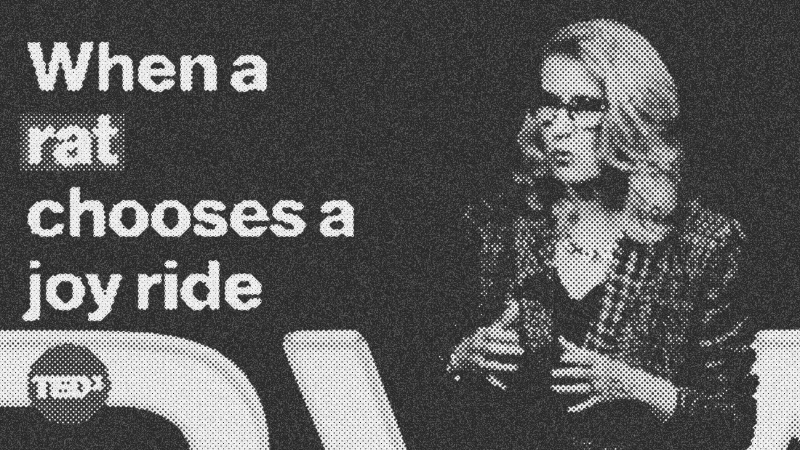
Lambert's journey began with teaching rats to drive miniature cars, or as she calls them, rodent-operated vehicles (ROVs). Initially designed to study agency, control, and skill acquisition, this project unexpectedly steered her toward exploring the concept of joy. Observing the rats' behavior, especially their seemingly excited reactions, during the experiment prompted Lambert to investigate the neuroscience of positive emotions. This departure marked a shift from her previous focus on negative emotions like fear, stress, and anxiety, which she had explored extensively in the context of depression research.
The Power of Effort-Based Rewards
Central to Lambert's work is the concept of "behaviors," the idea that intentionally changing our behavior can therapeutically alter our neurochemistry. She initially explored this by training rats to exert physical effort for Froot Loops, their favorite treat. The rats that worked for their rewards showed enhanced emotional resilience, more effective coping strategies, and signs of neuroplasticity, compared to a control group that received the same treats without having to work for them. This suggested that the relationship with the reward, and the sense of control over obtaining it, was crucial.
Unpredictable Positive Event Responses (UPERs)
To delve deeper into the neuroscience of joy, Lambert and her team developed a protocol called Unpredictable Positive Event Responses, or UPERs. This involved exposing rats to a series of enjoyable activities—playing with a Lego block, receiving a sunflower seed, and spending time in a "rat park"—at unpredictable times. The anticipation of these positive events led to observable changes in the rats' behavior and brain activity.
In the transport cage, brief bursts of activity signaled excitement. Male rats exhibited a shift toward optimism in a rat optimism task, while both males and females showed increased exploration in novel environments. Ultrasonic vocalizations, or "rat laughter," became more frequent, and levels of brain growth factors in the hippocampus, a region involved in learning and memory, increased.
One striking observation was that the tails of the UPER-trained rats would sometimes stick straight up. This phenomenon, previously associated with opioid administration, hinted that the "behaviors" might be triggering similar neurochemical responses.
Historical Context and the Importance of Hope
Lambert draws a parallel between her findings and the classic research of Kurt Richter, who studied swim behavior in lab rats and wild rats. Richter found that wild rats, unlike their lab counterparts, quickly gave up and drowned in a turbulent swim tank. However, when Richter's assistants briefly picked up the wild rats, giving them a sense of hope for rescue, their survival rates improved dramatically. This highlights the crucial role of hope and positive expectations in resilience and well-being.
Echoing this sentiment, Lambert references a study on children in the Make-A-Wish Foundation program. The study found that the children's physical and mental health outcomes improved during the period between being told their wish and having it granted, suggesting that anticipation itself can have therapeutic benefits.
Cultural Implications and a Call for Joyful Anticipation
Lambert points out a cultural bias toward negativity, noting that English has a word for anticipating something negative ("dread") but lacks a corresponding term for joyful anticipation. She cites the German word "foida," which captures this concept, and suggests that it's time for our own language to embrace the importance of looking forward to positive experiences.
She challenges the Puritan work ethic that often equates busyness with virtue, advocating for the recognition of pleasure and positive events as essential for brain health. Her research suggests that engaging in activities we enjoy is not merely an indulgence but a critical component of maintaining a healthy and resilient mind.
The Ride of Their Lives
In a final experiment, Lambert and her team gave the rats a choice: walk directly to a Froot Loop or take a detour to drive there. The majority of the rats chose to drive, indicating a preference for the enjoyable activity over efficiency. As Lambert puts it, "I taught rats to drive cars, but they taught me to enjoy the ride."
Conclusion: Embracing the Neuroscience of Joy
Kelly Lambert's work with rats offers a compelling case for the importance of positive emotions in mental health and well-being. By studying anticipation, reward, and joyful experiences in these intelligent creatures, she sheds light on the neurobiological mechanisms that underpin happiness and resilience. Her research encourages us to re-evaluate our cultural attitudes toward pleasure, embrace the power of anticipation, and prioritize activities that bring us joy. As we move forward, understanding and incorporating the neuroscience of joy may prove essential to improving mental health outcomes and enhancing our overall quality of life.
- Froot Loops
- 17%· product
- Johns Hopkins University
- 17%· location
- Kelly Lambert
- 17%· person
- Kurt Richter
- 17%· person
- sunflower seed
- 17%· product
- University of Richmond
- 17%· location
What teaching rats to drive taught me about joy | Kelly Lambert | TEDxRVA Youth
WatchTEDx Talks // 14:34

TEDx is an international community that organizes TED-style events anywhere and everywhere -- celebrating locally-driven ideas and elevating them to a global stage. TEDx events are produced independently of TED conferences, each event curates speakers on their own, but based on TED's format and rules. For more information on using TED for commercial purposes (e.g. employee learning, in a film or online course), please submit a Media Request here: https://media-requests.ted.com.