Resonance and Relevance: Reimagining Music Education for the Modern Student
The Timelessness of Music, the Rigidity of Curriculum
Music, a universal language, binds us through shared experience and emotion. Yet, as Kevin Droe observes, music education often remains trapped in tradition, failing to resonate with contemporary students. The challenge lies in bridging the gap between classical pedagogy and the diverse musical landscape that captivates today's youth.
The Modern Band Movement: A New Cadence
About a decade ago, Kevin Droe encountered a transformative approach: the modern band movement. Rooted in the belief that all students deserve access to music, it embraces genres beyond the classical canon. Originating 30 years prior with David Wish, an ESL teacher in California, the movement champions inclusivity, enabling students to form bands, learn by ear, and compose original songs in styles ranging from rock to hip-hop. This approach fosters engagement and empowers students to make their own musical choices.
Statistics reveal that while 94% of U.S. high schools offer band and choir, only one in five students participate. This disconnect suggests that the traditional music curriculum fails to meet the needs and interests of most students. Modern band addresses this by offering a space where students can explore their musical identities.
From Exclusion to Empowerment: Jordan's Story
Kevin Droe shares the story of Jordan, a middle school student who felt excluded from traditional music programs due to his inability to read music. Jordan's journey led him to AMP Camp, a modern band program where he discovered a passion for creating and leading. Without auditions or sheet music, he thrived, writing three original songs for his band's concert. This illustrates the power of modern band to invite students to express themselves authentically.
More Than Music: Access, Belonging, and Creativity
Modern band is more than just a music class; it is a gateway to access, belonging, and creativity. By offering diverse pathways to musical expression, schools affirm the value of all students' musical preferences and learning styles. Kevin Droe, despite his deep appreciation for traditional ensembles, advocates for extending the invitation to all children to experience the joy of music-making.
Envisioning a Harmonious Future
Imagine a high school music wing with a mariachi band, a video game music composition lab, a songwriting class, and a country band preparing for a gig. This vision reflects a reality where music is a right, not a privilege. Achieving this requires a collective effort, starting with colleges that train future music educators. These institutions must offer degrees in popular music education, equipping teachers to guide students in various genres.
Music teachers can integrate songwriting projects or student-led arrangements into their curriculum. School administrators play a crucial role in creating space for new classes, signaling that all music matters. Parents can advocate for diverse music opportunities, and community members can provide platforms for young musicians to showcase their talents.
Spectrum Jamfest in Cedar Falls, Iowa, exemplifies this transformative power. Starting with 20 bands, it has grown to over 50, offering hundreds of young musicians a public stage. Expanding the definition of school music enriches the classics and ensures that every student finds a place to belong.
Expanding Horizons, Not Diminishing Traditions
The expansion of school music programs does not diminish the classics but enriches them, ensuring that every student can find a music class where they belong. The alternative is a shrinking music program that deprives students of the opportunity to create music together. Kevin Droe urges a shift from a stagnant curriculum to one that embraces growth and inclusivity, opening doors for students to flourish.
Universities must offer degrees in popular music education, and current teachers can incorporate modern music projects into their classrooms. School administrators and parents should advocate for diverse music opportunities, and community members can provide stages for young musicians. By working together, we can ensure that music education resonates with all students, fostering creativity, belonging, and a lifelong love of music.
- AMP Camp
- 4%· event
- basses
- 4%· instrument
- California
- 4%· location
- Cedar Falls
- 4%· location
- classical
- 4%· music genre
- Other topics
- 81%
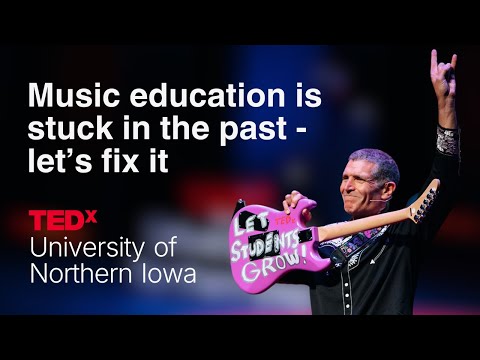
Music Education is Stuck in the Past—Let's Fix It | Kevin Droe | TEDxUniversity of Northern Iowa
WatchTEDx Talks // 12:44

TEDx is an international community that organizes TED-style events anywhere and everywhere -- celebrating locally-driven ideas and elevating them to a global stage. TEDx events are produced independently of TED conferences, each event curates speakers on their own, but based on TED's format and rules. For more information on using TED for commercial purposes (e.g. employee learning, in a film or online course), please submit a Media Request here: https://media-requests.ted.com.