Unlock Your Inner Wisdom: Embracing 'Kizuki' for a More Connected Life
In a world that often prioritizes external achievements, it's easy to lose sight of our inner selves. Mae Yoshikawa's exploration of 'kizuki' offers a profound reminder of the importance of self-awareness and connection. Let's delve into this concept and how it can transform our lives.
The Challenge: Reconnecting in a Disconnected World
Yoshikawa poignantly observes that the greatest poverty of our time isn't financial, but rather a "loss of our attention." We're caught in a cycle of performance, productivity, and speed, often at the expense of genuine human connection and a deeper understanding of ourselves. This pursuit leaves us with an internal void, a yearning for truth, meaning, and authentic relationships.
Many of us can relate to feeling lost and isolated, even in crowded spaces. But what if the key to rediscovering our connection lies not in external pursuits, but in turning inward, in those moments we've already lived?
Unveiling the Core of 'Kizuki'
Yoshikawa introduces the Japanese concept of 'kizuki' as a pathway to reconnection. 'Kizuki', at its heart, involves directing your energy and attention to bring something from the shadows into the light of awareness. It's a moment of epiphany, an "aha" realization that unveils a new dimension of truth. It signifies incremental growth, a shift from ignorance to a broader understanding – a knowing that transforms you.
Yoshikawa emphasizes that awareness is the cornerstone of reconnection. When shared, it fosters resonance, linking us not only to ourselves but to the interconnectedness we share with all of humanity. This concept, though universal, is perceived differently across cultures. In Japan, the focus tends to shift quickly to action after a 'kizuki', whereas in the West, the emphasis on individual choice can sometimes overshadow the initial moment of realization.
Actionable Steps: Igniting Change Through Awareness
To harness the power of 'kizuki', Yoshikawa urges us to recognize the heightened awareness that precedes choice and action. This awareness, she believes, is what sparks true change. Her personal story underscores this point. Faced with her mother's early-onset Alzheimer's diagnosis, she found herself trapped in a cycle of "why," a question that brought only pain and no resolution. It was through yoga and meditation that she eventually realized the question itself was misdirected.
What practices can help cultivate this awareness?
Consider these steps:
- Cultivate Spaciousness: Practices like yoga and meditation can create mental space, softening rigid thinking and fixed mindsets.
- Reframe Your Questions: Challenge the questions you ask yourself. Are they serving you, or are they keeping you stuck?
- Embrace New Perspectives: Be open to different viewpoints. Humility and acknowledging our own ignorance can be powerful catalysts for change.
- Share Your 'Kizuki': Talk about your moments of realization with others. Sharing your insights can spark reflection and connection.
Shifting Mindsets: From Questioning to Understanding
Yoshikawa's journey highlights the importance of shifting from unproductive questioning to seeking understanding. Instead of dwelling on "why," she began to ask, "why not?" This simple shift opened her to a new perspective, revealing the universality of suffering and the arrogance of expecting life to conform to her expectations. This shift ultimately allowed her to release the grip of a limiting question and reconnect with herself on a deeper level.
Empowerment Through Connection
'Kizuki' doesn't end with personal transformation; it extends outward, creating ripples of change in the world. Yoshikawa's experience of a student expressing gratitude not just for her teaching, but for her mother's illness, beautifully illustrates this point. The student recognized that Yoshikawa's journey, born from hardship, had profoundly impacted her life and family. This is the essence of resonance: a shared recognition of truth that moves through our collective humanity.
In essence, 'kizuki' invites us to awaken co-resonance, an inner echo that affirms, "I know this, too." By allowing our moments of realization to shape our choices and actions, we spark something in others, creating a "quiet contagion of kizuki" that spreads outward, connecting us in profound and meaningful ways.
- kizuki
- 50%· concept
- Mae Yoshikawa
- 50%· person
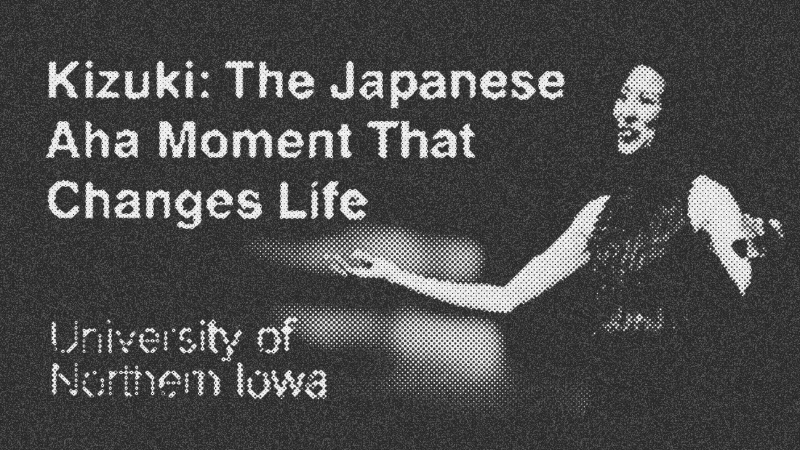
Kizuki: The Japanese Aha Moment That Changes Life | Mae Yoshikawa | TEDxUniversity of Northern Iowa
WatchTEDx Talks // 16:31

TEDx is an international community that organizes TED-style events anywhere and everywhere -- celebrating locally-driven ideas and elevating them to a global stage. TEDx events are produced independently of TED conferences, each event curates speakers on their own, but based on TED's format and rules. For more information on using TED for commercial purposes (e.g. employee learning, in a film or online course), please submit a Media Request here: https://media-requests.ted.com.