Six Degrees of Swish: Building a Cable-Actuated Robotic Basketball Hoop
Overview: The Third Dimension of Accuracy
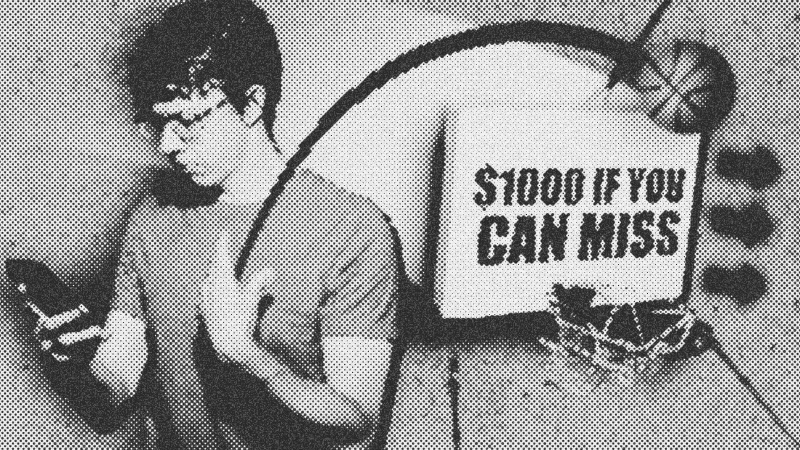
Designing a machine that intercepts a projectile in real-time is the ultimate stress test for any hardware enthusiast. This project moves beyond static backboards and 2D rails to create a 6-DOF (Degrees of Freedom) cable-actuated robot. By utilizing a network of six high-tension cables, we can move a basketball hoop to any coordinate in a room while simultaneously adjusting its pitch, yaw, and roll. This technique matters because it solves the inertia problem; a heavy gantry system would flex and fail under the massive acceleration required to track a ball in mid-air. Instead, we use a lightweight, fiberglass-entombed foam backboard and the geometric strength of triangles to achieve lightning-fast response times.
Prerequisites: The Builder's Toolkit
To tackle a project of this scale, you need a solid foundation in both the physical and digital realms. On the software side, comfort with C++ for microcontroller logic and Python for high-level math is essential. You should understand linear algebra (specifically vector math and coordinate transformations) and the basics of calculus, including first and second derivatives for trajectory prediction. Mechanically, you need experience with high-torque brushless motors, power distribution, and the willingness to troubleshoot complex electrical interference on custom PCBs.
Key Libraries & Tools
- OptiTrack Camera System: A high-speed infrared tracking array that provides sub-millimeter position data at hundreds of frames per second.
- Microcontrollers (Teensy/Arduino): Acts as "Little Boss," handling the low-level PWM signals and motor synchronization.
- Custom Python Simulation Engine: The "Big Boss" program that processes tracking data and runs trajectory algorithms.
- Gradient Descent Algorithms: Used for optimizing pulley locations and minimizing measurement error.
- Inverse Kinematics (IK) Solver: Translates the desired 3D hoop position into six specific cable lengths.
Code Walkthrough: Trajectory and Tracking
1. Identifying the Ball in Flight
The system must distinguish between a ball held in a hand and one in freefall. We use the second derivative of the ball's position to identify a parabolic path consistent with gravity.
def is_in_air(points):
    # Calculate angles between adjacent points
    slopes = [calculate_slope(p1, p2) for p1, p2 in zip(points, points[1:])]
    # If the rate of change in slope matches gravity (9.8m/s^2), it's flying
    acceleration = calculate_derivative(slopes)
    return np.isclose(acceleration, EARTH_GRAVITY, atol=0.5)
2. Inverse Kinematics Implementation
Because we use a cable-driven system, calculating the required motor rotation is surprisingly straightforward once the pulley coordinates are known. We use the distance formula between the fixed pulley $P$ and the attachment point $A$ on the backboard.
def calculate_cable_lengths(target_pos, target_rotation):
    lengths = []
    # Transform local attachment points to world coordinates
    world_anchors = apply_transform(attachment_points, target_pos, target_rotation)
    for i in range(6):
        # Distance = sqrt((x2-x1)^2 + (y2-y1)^2 + (z2-z1)^2)
        dist = np.linalg.norm(pulley_locations[i] - world_anchors[i])
        lengths.append(dist)
    return lengths
Syntax Notes: Derivative Optimization
In the real-time loop, efficiency is king. We avoid heavy iterative solvers where possible. For the Inverse Kinematics, we use closed-form geometric solutions rather than numerical approximations. However, for Calibration, we employ Gradient Descent. This involves taking a "terrible guess" at a pulley's location and iteratively moving the point in the direction that minimizes the distance to all measured rays. It's the same math that powers modern machine learning, applied here to physical hardware alignment.
Practical Examples: Beyond the Swish
This technology isn't just for sinking baskets. Cable-actuated robots are used in Skycams at football stadiums to move cameras over large areas with minimal infrastructure. In manufacturing, they provide a way to move heavy loads across large factory floors without the need for massive, ceiling-mounted steel beams. For the DIY builder, this setup is a blueprint for any project requiring high-speed motion across a large 3D volume, such as a room-scale 3D printer or an automated theatrical rigging system.
Tips & Gotchas: Hard Lessons
- The Slack Cable Nightmare: If your math is off by even a few millimeters, one cable will go slack while another tries to tear the robot apart. Always include mechanical tensioners (springs) to provide a small buffer of error.
- Emergency Braking: High-power motors have massive inertia. Use a fail-safe disc brake system that engages when power is lost. If you rely solely on software to stop the machine, a single crash in your code could result in a 250 mph backboard through your wall.
- Tracking Noise: Reflective tape on a standard basketball can be inconsistent. For professional-grade tracking, embed your markers inside a foam ball and use a CNC to ensure perfect symmetry.
- Calculus
- 13%· concepts
- Degrees of Freedom
- 13%· concepts
- Gradient Descent
- 13%· concepts
- Inverse Kinematics
- 13%· concepts
- KiwiCo
- 13%· products
- Other topics
- 38%
I made a ball seeking hoop
WatchStuff Made Here // 26:32

I've been building things for as long as I can remember. It all started when my dad exposed me to plastic model building and soldering when I was around 4 years old. That set me on a path to building increasingly complex things and becoming an engineer. My goal is to do the same for as many people as possible by exposing them to the joy of engineering, fabricating and creating things out of nothing. If I'm lucky a few people may become engineers, which would be great for the world. Engineering is awesome.