Engineering the Impossible: The Physics of 115 MPH Disc Golf
The Quest for Supersonic Plastic
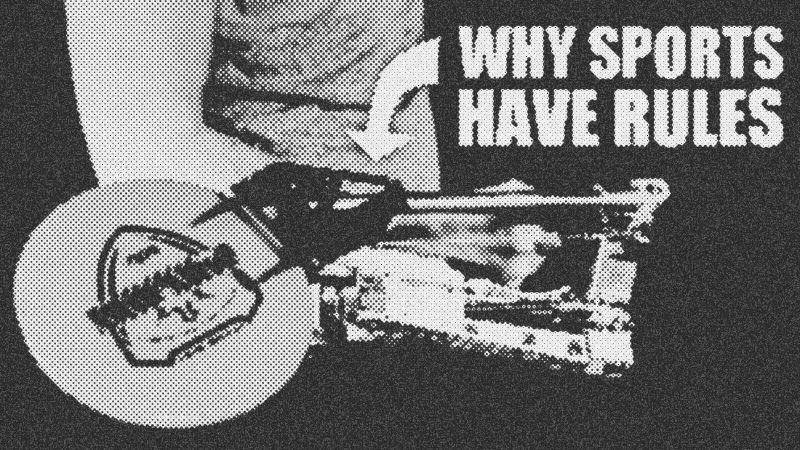
Building a machine to outperform human biology is a classic engineering challenge, but doing so within the constraints of Disc Golf regulation adds a layer of beautiful complexity. The benchmark to beat stands at 89.5 miles per hour, a record set by Simon Lizotte. Surpassing this speed isn't just about raw power; it's about managing extreme mechanical stresses, aerodynamics, and the volatile nature of pneumatic energy. The result of this obsession is a forearm-mounted gauntlet that pushes the boundaries of material science and kinetic energy.
Solving the Newton Problem: Recoil and Reaction
When you accelerate a 175-gram disc to nearly 100 miles per hour in a fraction of a second, the reaction forces are violent. Isaac Newton dictates that for every action, there is an equal and opposite reaction. In a handheld launcher, this manifests as a kickback capable of fracturing a human arm. The initial design attempted to solve this through a counter-rotating mass system—two arms spinning in opposite directions to cancel out the torque.
However, real-world physics revealed a secondary issue: the vertical offset of the arms. Because the arms weren't on the exact same plane, the opposing forces created a twisting torque comparable to the output of a Honda Civic. This necessitated a pivot to a single-arm system, prioritizing weight reduction and extreme skeletonization of the components to minimize the momentum transferred back to the user's arm.
Overcoming Pneumatic Bottlenecks
To drive the arm, standard pneumatic systems fall short. Most off-the-shelf valves are designed for consistent, low-speed flow—perfect for a factory assembly line, but useless for an explosive launch. The discovery of "tiny hole" syndrome in high-pressure regulators proved that even at 3,000 PSI, the volume of air reaching the cylinder was insufficient to achieve record-breaking speeds.
The solution was a custom-engineered high-flow piston valve. By using a small, weak valve to trigger a much larger, high-volume piston, the system can dump a massive volume of air into the cylinder nearly instantaneously. This required moving away from regulated tanks to a dual-tank system where a secondary reservoir holds unregulated, high-pressure air ready for immediate discharge. It's the difference between a garden hose and a dam breaking.
The G-Force Crisis and Material Failure
As the launcher reached higher power levels, the discs began to fail in fascinating ways. At 0-to-60 acceleration happening in thousandths of a second, the Disc Golf disc experiences over 100 pounds of force. This causes the plastic to deform, effectively "squeezing" out of traditional mechanical grippers.
Iterative testing showed that pushing the disc from behind caused it to buckle and fail. The engineering fix was a "pulling" mechanism that grips the front rim, stretching the disc during acceleration rather than compressing it. To handle these forces, the arm transitioned from 3D-printed polymers to aerospace-grade aluminum, Titanium, and carbon fiber. Even then, the centrifugal forces were so high they occasionally stripped the gripper assembly clean off its mounting rods.
Aerodynamics vs. Raw Velocity
Speed is only half the battle in Disc Golf. A disc is both a wing and a gyroscope. While the launcher successfully clocked speeds estimated up to 115 miles per hour—well past the human record—the distance didn't follow linearly. Standard discs are not designed for these velocities; they become aerodynamically unstable and undergo "high-speed turn," rolling over into the ground.
To achieve true distance, the machine needs more than just exit velocity; it needs a massive increase in spin rate to provide gyroscopic stability. Without thousands of extra RPMs, the disc cannot maintain its flight angle, proving that in the world of DIY hardware, precision and stability are just as vital as raw, unbridled power. This project serves as a masterclass in the iterative process: identify the bottleneck, engineer a solution, and move to the next point of failure.
- Disc Golf
- 38%· tv shows
- Brilliant
- 13%· companies
- Honda Civic
- 13%· products
- Isaac Newton
- 13%· people
- Simon Lizotte
- 13%· people
- Titanium
- 13%· products
Wrist rocket: worlds fastest disc launcher
WatchStuff Made Here // 28:21

I've been building things for as long as I can remember. It all started when my dad exposed me to plastic model building and soldering when I was around 4 years old. That set me on a path to building increasingly complex things and becoming an engineer. My goal is to do the same for as many people as possible by exposing them to the joy of engineering, fabricating and creating things out of nothing. If I'm lucky a few people may become engineers, which would be great for the world. Engineering is awesome.