The Cognitive Labyrinth: Ancient Echoes in Modern Mechanics
The very notion of a 'backwards brain' challenges our fundamental understanding of learned behavior and instinct. It is not merely a curious mechanical anomaly, but a profound lens through which we might examine the enduring human capacity for adaptation. The modern struggle with a re-engineered tractor's cylinder or a reversed bicycle's steering mechanism whispers of a far older, persistent human question: How do we unlearn the deeply ingrained and forge new cognitive pathways when our world demands it?
"The Backwards Bicycle" and the Mind's Resilience
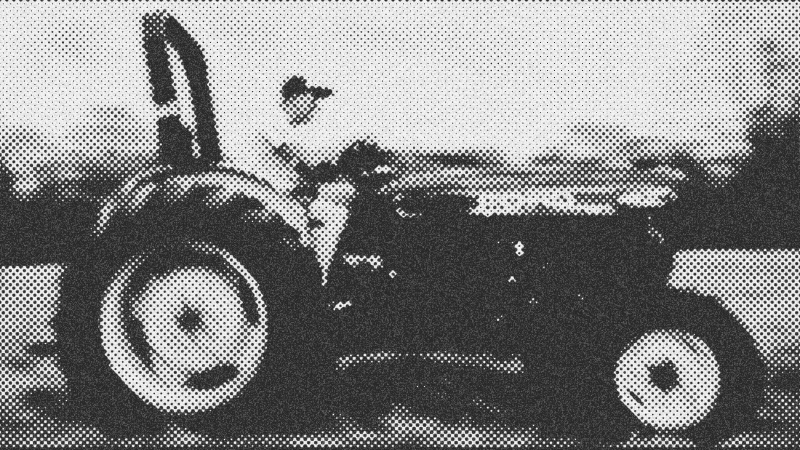
The phenomenon of the 'backwards bicycle,' where a turn of the handlebars to the right results in a leftward movement, serves as a compelling metaphor for the brain's profound resistance to cognitive recalibration. For years, the act of riding a conventional bicycle becomes an automatic, subconscious reflex. The body knows, without conscious thought, precisely how to balance and steer. This is muscle memory, yes, but more profoundly, it is a deeply encoded neurological program.
The 'backwards bicycle' experiment forces a conscious disruption of this program. An individual must actively override decades of ingrained habit, engaging the prefrontal cortex in a painstaking process of deliberate thought for every subtle movement. What feels instinctual becomes a deliberate, arduous task. This is the 'backwards brain' at work, struggling to re-encode the most basic motor functions. The recent experience of replacing a cylinder on a tractor, creating a similar counter-intuitive mechanical response, mirrors this very challenge, illustrating how easily our expectations can be upended by a simple change in the system.
Unlearning and the Ancient Artisan
Consider the parallels with ancient societies. Imagine an artisan, honed over generations in a specific method of pottery or weaving, suddenly confronted with a new material or a novel tool that demands an entirely different approach. The instinctive grip, the familiar rhythm, the ingrained sequence of movements – all rendered inefficient, perhaps even detrimental. The initial frustration, the clumsy attempts, the slow, deliberate practice to master the new way. This is not simply learning a new skill; it is the arduous process of unlearning the old, clearing neurological space for a new schema. The mastery of bronze tools after millennia of stone, the shift in agricultural practices due to sudden climate change, or the adoption of new navigational techniques for uncharted waters – these were not merely technical advancements. They demanded immense cognitive flexibility, a willingness to dismantle established mental models, and the patience to build new ones, much like mastering a 'backwards brain tractor.'
Such challenges underscore the profound plasticity of the human mind, but also its inherent conservatism. Our brains prefer efficiency, relying on established patterns. Yet, the human story is one of relentless adaptation. The ability to unlearn, to consciously override deeply embedded assumptions, proved essential for survival and innovation across civilizations. The ruins we study do not just tell tales of grand collapses; they whisper of the daily, gritty cognitive struggles of people grappling with change, much like a modern individual wrestling with a 'backwards' machine. Their resilience, their capacity to re-imagine their interactions with the world, is a testament to this very human trait.
The 'backwards brain tractor' stands as a potent modern metaphor for an ancient, universal truth: wisdom often resides not merely in what we know, but in our profound capacity to question, to unlearn, and to painstakingly rebuild our understanding of the world when circumstances demand it. This continuous cycle of adaptation, of challenging our own cognitive frameworks, remains a cornerstone of human ingenuity and survival, echoing through the ages from the earliest tool-makers to the engineers of today.
- backwards bicycle
- 17%· concepts
- cylinder
- 17%· concepts
- Destin
- 17%· people
- Gordon McGladdery
- 17%· people
- Smarter Every Day
- 17%· organizations
- tractor
- 17%· concepts
The Backwards Brain Tractor - Smarter Every Day 305
WatchSmarterEveryDay // 9:58

I explore the world using science. That's pretty much all there is to it. Watch 2 videos. If you learn something AWESOME, please subscribe if you feel like I earned it. Contact: http://www.smartereveryday.com/contact. I currently get lots of correspondence so please forgive me if I'm unable to reply. I mean well, but want to focus on being a better Dad.