Echoes of Ingenuity: The Multi-Barreled Pistol and its Place in Antiquity
The human drive for tactical advantage, for certainty in moments of peril, echoes through history in our weaponry. Consider the peculiar allure of a multi-barreled pistol, a device that, at first glance, appears to defy the very principles of elegant design. Yet, these artifacts speak volumes about the challenges faced by their creators and the desperate measures required in chaotic eras.
The Volley's Promise: Early Concepts
The notion of firing multiple projectiles simultaneously or in rapid succession is not a modern innovation. It represents a fundamental response to the inherent limitations of early single-shot firearms: their slow reload times and often questionable accuracy. The "volley gun" emerges from this exigency—a design philosophy prioritizing a concentrated burst of fire over sustained engagement. These were instruments designed for immediate, overwhelming impact, particularly valuable in close quarters where a second chance might not materialize. The cap and ball mechanism, common to many such designs, required meticulous loading of powder and shot for each barrel, a testament to the dedication, or perhaps desperation, of the user.
The 'Duckfoot' and its Naval Necessity
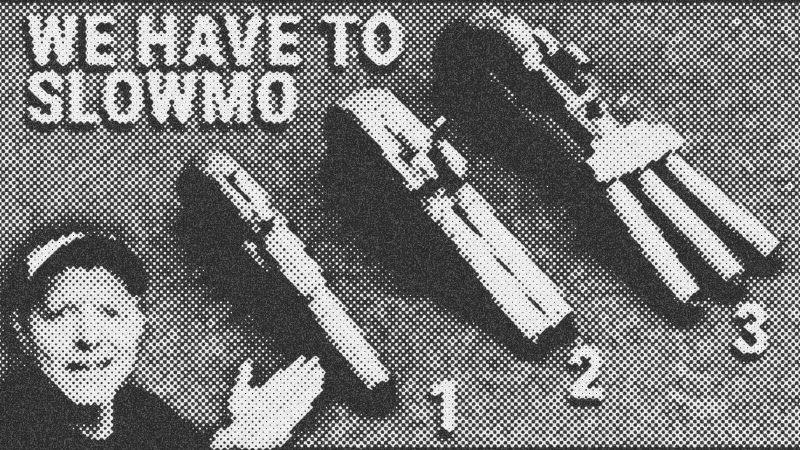
Among the more distinctive variants, the "duckfoot pistol" commands attention. Its splayed barrels, often three or four, aimed to cover a broad arc. This specific configuration points directly to its primary application: naval boarding actions. Imagine the confined, brutal chaos of a ship-to-ship encounter. A single shot held little guarantee of deterrence against multiple assailants. A duckfoot pistol, with its wide dispersion, offered a greater probability of hitting at least one target, or several, without the need for precise aim in a pitching, rolling environment. It was a tool of last resort, a desperate gambit to clear a deck or defend a captain's cabin. These were not dueling pistols; they were instruments of survival in extreme circumstances, reflecting the brutal realities of maritime warfare in previous centuries.
Dissecting Ballistic Histories
To truly comprehend these historical curiosities, we turn to the rigorous methods of scientific inquiry. High-speed camera technology, coupled with ballistic imagery, allows us to transcend mere speculation. Through slow motion capture, we observe the complex interplay of ignition, gas expansion, and projectile trajectory. This modern analysis strips away assumptions, revealing the subtle physics governing these antiquated mechanisms. It permits us to understand the forces at play, the inherent compromises in their design, and ultimately, the practical efficacy (or lack thereof) that shaped their adoption and eventual obsolescence. Such detailed examination helps us reconstruct the original intent and the lived experience of those who relied upon these peculiar arms.
Wisdom from the Arsenal
These multi-barreled designs, whether the triple-barreled pistol or its duckfoot cousins, are more than mere curiosities in an armory. They serve as tangible records of human problem-solving under duress. Their very existence speaks to an era where technological constraints spurred ingenious, if sometimes clumsy, solutions. They force us to consider the cultural context: the individual's need for self-preservation, the tactical demands of historical conflicts, and the material limitations that shaped an entire generation of inventors and combatants. These pieces remind us that every artifact, no matter how specialized, holds a narrative of ingenuity, adaptation, and the enduring human struggle against uncertainty. They are chapters in a larger story of invention, adaptation, and the relentless pursuit of an edge in a perilous world.
- Ballistic imagery
- 13%· concepts
- Cap and ball pistol
- 13%· weapon types
- Destin Sandlin
- 13%· individuals
- Duckfoot pistol
- 13%· weapon types
- Physics
- 13%· concepts
- Other topics
- 38%
The Incredibly Unique Triple Barreled Pistol... - Smarter Every Day 304
WatchSmarterEveryDay // 19:39

I explore the world using science. That's pretty much all there is to it. Watch 2 videos. If you learn something AWESOME, please subscribe if you feel like I earned it. Contact: http://www.smartereveryday.com/contact. I currently get lots of correspondence so please forgive me if I'm unable to reply. I mean well, but want to focus on being a better Dad.